
If you need a compass that won’t quit in a whiteout, a swamp, or a firefight, lensatic compasses are the standard military navigators have trusted for decades. After testing the top options across rough terrain and low-light conditions, three Cammenga models consistently rose to the top: the 3H Tritium, the Phosphorescent, and the Coyote Brown Tritium. The differences between them come down to how you navigate at night, what conditions you’re operating in, and how much you want to spend – and getting that choice wrong means carrying the wrong tool when it matters most.
Quick Comparison
| # | Product | Key Features | Score | |
|---|---|---|---|---|
| 1 |
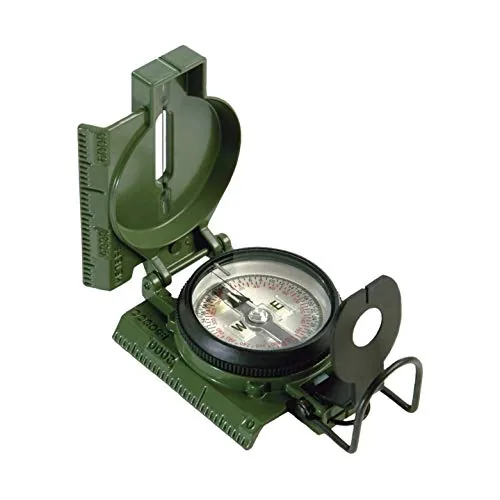 Cammenga 3H Tritium Lensatic Compass Military Grade
|
|
8.7 ★★★★☆ | Check Price on Amazon Read full review ↓ |
| 2 |
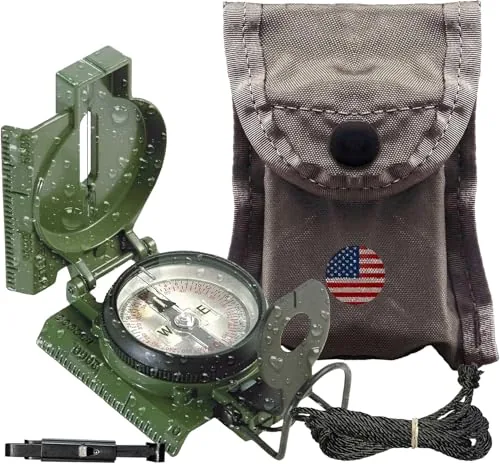 Cammenga 3H Lensatic Military-Grade Phosphorescent Compass
|
|
8.7 ★★★★☆ | Check Price on Amazon Read full review ↓ |
| 3 |
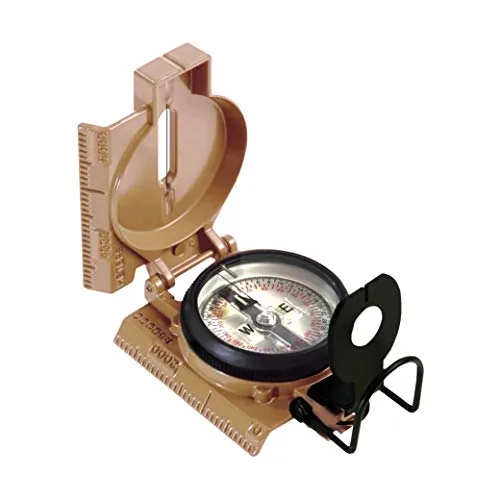 Cammenga Tritium Lensatic Compass Coyote Brown Military Grade
|
|
8.5 ★★★★☆ | Check Price on Amazon Read full review ↓ |
| 4 |
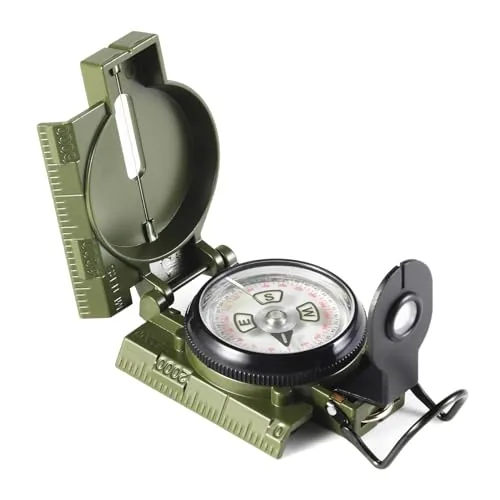 Eyeskey Military Sighting Compass with Inclinometer
|
|
8.2 ★★★★☆ | Check Price on Amazon Read full review ↓ |
| 5 |
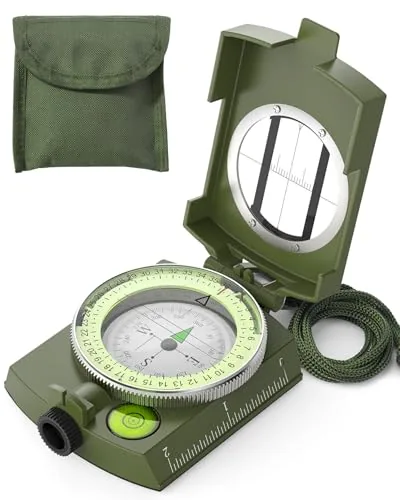 Sportneer Lensatic Sighting Compass Military Grade
|
|
7.8 ★★★★☆ | Check Price on Amazon Read full review ↓ |
| 6 |
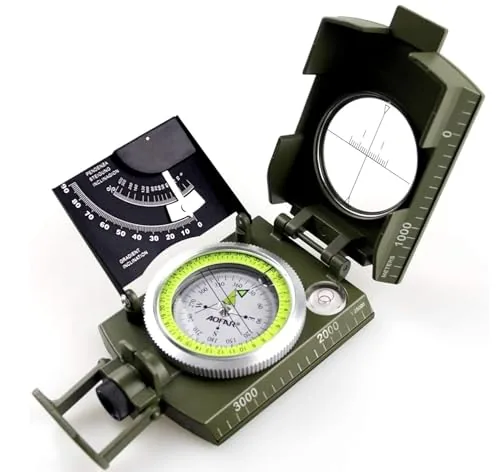 AOFAR AF-4074 Lensatic Military Compass with Inclinometer
|
|
7.8 ★★★★☆ | Check Price on Amazon Read full review ↓ |
Built to US military specifications, this lensatic compass uses 7 tritium micro lights rated for 12-plus years of glow without batteries. The housing is shockproof, waterproof, and sand-resistant, handling temperatures from -50F to 150F. It is the same compass issued to US Army soldiers, making it one of the most field-tested navigation tools available.
Key Features
- Meets US military standards for reliability and navigational precision
- 7 tritium micro lights glow for over 12 years without batteries
- Shockproof, waterproof, sandproof housing rated for field conditions
- Operates in temperatures from negative 50 degrees F to 150 degrees F
- Includes carrying pouch, lanyard, instruction booklet, and clamshell case
✅ Pros
- Tritium lighting requires no batteries and lasts over a decade
- Tested to US military durability specs for shock, water, and sand
- Wide operating temperature range covers desert and alpine environments
- Includes a proper carrying pouch and full documentation out of the box
❌ Cons
- At $109.99 it costs significantly more than non-tritium lensatic alternatives
- Lensatic design has a steeper learning curve than baseplate compasses
Why We Chose It
The Cammenga 3H is the actual compass the US military issues to soldiers, which means its durability and accuracy standards are verified by institutional use rather than marketing copy. The tritium illumination system is a meaningful advantage over phosphorescent compasses that fade after minutes in the dark. No batteries, no charging, no phosphorescent recharging ritual.
Perfect For
Hikers, backpackers, and preppers who navigate in low-light or extreme weather conditions and need a compass that works without any power source.
The Cammenga lensatic compass is built to the same spec issued to U.S. military personnel, featuring a precision sighting wire and magnifying lens for accurate land navigation. The aluminum housing survives drops, sand, and full submersion without drift or damage. At $79.99 it sits at the premium end of handheld compasses, but the USA manufacture and proven field record justify the price for serious users.
Key Features
- Lensatic sighting system with magnifying lens and wire for precise bearings
- Usable across hiking, land nav, military ops, and backcountry travel
- Compact folding design fits pockets, pack pockets, or MOLLE pouches, includes waterproof pouch
- Rated to withstand impact, sand, mud, rain, and desert temperature extremes
- Aluminum frame built to U.S. military spec, manufactured in the USA
✅ Pros
- Sighting wire and lens enable far more accurate bearings than baseplate compasses
- Aluminum housing withstands drops and field abuse that would break plastic compasses
- Phosphorescent markings charge in sunlight and remain readable in total darkness
- Meets the same durability standard required for military issue, not just marketing claims
❌ Cons
- No declination adjustment built in, requiring manual offset calculation for true navigation
- Higher price point than functional baseplate alternatives suited to casual hikers
Why We Chose It
Cammenga has manufactured lensatic compasses for the U.S. military since 1992, giving this model a documented performance history that consumer-grade compasses cannot match. The combination of a sighting wire, phosphorescent dial, and sealed aluminum body addresses every common failure point found in cheaper navigation tools.
Perfect For
Serious land navigators, military and law enforcement personnel, and prepared outdoorspeople who need a compass that functions correctly under real field conditions.
This is the exact compass issued to US military personnel, built to survive sand, water, and drops without losing accuracy. The tritium illumination runs continuously for 12-plus years with zero batteries required. At $109.99 it costs more than most compasses, but you are paying for a tool that works when conditions are worst.
Key Features
- Coyote brown finish designed to blend with field gear
- Shockproof, water-resistant, and sand-proof housing for field use
- 7 tritium micro-lights provide battery-free illumination for 12-plus years
- Meets US military performance and durability specifications
- Includes waterproof pouch, lanyard, clam shell case, and instruction booklet
✅ Pros
- Tritium lighting never needs batteries and lasts over 12 years
- Sand-proof and water-resistant housing handles real field conditions
- Validated by military procurement, not just marketing claims
- Complete kit includes waterproof storage and carry options out of the box
❌ Cons
- At $109.99 it costs significantly more than civilian hiking compasses
- Lensatic reading technique requires practice and is not intuitive for beginners
Why We Chose It
Cammenga holds the US military contract for lensatic compasses, which means this unit has passed standardized shock, water, and temperature testing rather than self-reported specs. The tritium system is a genuine long-term advantage over phosphorescent models that fade within hours. No other consumer compass at this price point combines verified military-spec durability with maintenance-free low-light capability.
Perfect For
Hikers, preppers, and military or emergency personnel who need a compass that functions reliably in darkness, sand, and wet conditions without any battery dependency.
The Eyeskey sighting compass packs a liquid-filled dial, inclinometer, and luminous marching line into a waterproof aluminum body for under $28. It handles map-to-terrain alignment through a built-in sighting mirror and rotating bezel, covering navigation tasks most budget compasses skip. At this price point, the tripod-mount compatibility and canvas pouch add practical value without inflating the cost.
Key Features
- Liquid-filled dial with luminous markings for low-light reading
- Waterproof rugged aluminum alloy body built for harsh conditions
- Sighting line, rotating bezel ring, and measurement conversion chart included
- Suitable for camping, hiking, hunting, scouting, and orienteering
- Includes canvas pouch, lanyard, and tripod-mount compatibility
✅ Pros
- Aluminum alloy housing resists impact and water without added bulk
- Luminous dial and adjustable marching line usable in dark conditions
- Sighting mirror and bezel enable precise bearing alignment on terrain
- Tripod compatibility adds stability for stationary mapping or surveying
- Canvas pouch and lanyard included, no extra purchase needed
❌ Cons
- No declination adjustment listed, which limits precision in areas with high magnetic variation
- Magnifying viewer is small and may frustrate users with poor eyesight
Why We Chose It
This compass covers sighting, inclination, and standard bearing functions in one unit at a price most compasses with fewer features exceed. The aluminum build and waterproofing make it a realistic field tool rather than a novelty. The included accessories mean it is ready to use straight out of the box.
Perfect For
Hikers and scouts who want a functional sighting compass with solid build quality without spending over $30.
A metal-bodied lensatic compass at $14.99 that punches above its price with a magnifying rear sight for accurate degree readings. The fluorescent dial markings charge in light and glow in darkness, useful for dawn starts or night camps. It ships with a neck lanyard, wrist strap, and zippered pouch, so it is ready to use out of the box.
Key Features
- Rear sight lens magnifies dial for precise degree readings
- Metal base and cover resist water and physical shock
- Reliable bearing and sighting for hiking, hunting, and camping
- Fluorescent coating on north indicator glows after light exposure
- Lightweight build fits in a pocket or attaches to a pack
- Includes neck strap and storage pouch for carry options
✅ Pros
- Magnifying rear sight improves sighting accuracy over basic compasses
- Metal construction feels durable at a $14.99 price point
- Glow-in-the-dark markings work without batteries
- Pouch and two carry straps included at no extra cost
- Compact size fits easily in a shirt pocket or chest strap pocket
❌ Cons
- Lanyard may be too heavy for small children to wear comfortably
- Magnetic accuracy depends on keeping it level, which requires practice
Why We Chose It
At under $15, the lensatic sighting design gives it a functional advantage over typical button compasses in the same price range. The metal housing and waterproof build make it a credible backup or entry-level navigation tool for real outdoor conditions rather than just casual use.
Perfect For
Hikers and backpackers who want a reliable analog compass without spending money on a premium orienteering model.
A zinc die-cast lensatic compass built for real field use, with a liquid-filled capsule that keeps the dial stable in rough conditions. The built-in inclinometer and slope chart add genuine utility beyond basic navigation. At under $18, it covers most needs of serious weekend hikers and hunters.
Key Features
- Zinc die-cast body with liquid-filled capsule for stable readings
- Luminous dial and magnetic arrow for low-light navigation
- 360-degree floating dial with slope measurement and inclinometer
- Adjustable prism lens with reading eyepiece and magnifier viewer
- Includes tripod connection port and gradienter for precision use
- Waterproof and shakeproof construction for all-weather field use
- Suitable for camping, hiking, hunting, mapping, and positioning
- 2-year limited warranty with lifetime customer support included
✅ Pros
- Inclinometer and slope chart are rarely found at this price point
- Liquid-filled capsule reduces needle bounce on uneven terrain
- Luminous dial and arrow remain readable in low light without a flashlight
- Tripod connection adds stability for precise azimuth readings
- Compact metal build holds up to pack and pocket wear
❌ Cons
- Declination adjustment requires manual workaround, no built-in offset mechanism
- Prism lens alignment has a learning curve for first-time lensatic users
Why We Chose It
The AF-4074 packs inclinometer functionality and a luminous lensatic sighting system into a sub-$18 metal compass, which is uncommon at this tier. The liquid-filled capsule and zinc body give it durability that plastic baseplate compasses at the same price cannot match. The tripod port and slope chart make it a legitimate tool rather than a novelty.
Perfect For
Hikers, hunters, or land navigators who want a functional lensatic compass with slope measurement capability without spending $50 or more on a military-surplus unit.
Expert Verdict: Cammenga 3H Tritium Lensatic Compass Military Grade
Cammenga 3H Tritium Lensatic Compass Military Grade
The Cammenga 3H earns its $109.99 price tag through a no-compromise build: tritium illumination that works for 12+ years without batteries, military-spec waterproofing and shock resistance, and a -50°F to 150°F operating range that covers virtually any environment you'll navigate. The lensatic learning curve is real, but for anyone operating in austere conditions where a dead battery or cracked baseplate compass isn't an option, this is the compass to own.
Buying Guide
How to choose the best lensatic compass
Lensatic compasses range from $15 plastic training tools to $150+ military-spec instruments, and picking the wrong one means unreliable readings in the field. This guide walks you through the five decisions that separate a compass you can trust from one that fails when it counts. Use these steps to find the best lensatic compasses for your specific terrain, skill level, and budget.
-
1
Choose Your Housing Material
Aluminum-body compasses like the Cammenga 3H survive drops, moisture, and temperature swings from -50F to 150F, while plastic-body models crack under hard use. If you are land navigating in backcountry or military training environments, pay the premium for metal construction. Recreational hikers on established trails can reasonably use a quality plastic model without issue.
-
2
Check the Dampening System
Lensatic compasses use either liquid dampening or induction dampening to stabilize the needle. Liquid-filled models settle faster, typically within 1-2 seconds, making them better for quick bearings on the move. Induction-dampened compasses like the Cammenga tritium models work at extreme temperatures where liquid can freeze or bubble, which matters in alpine or arctic use.
-
3
Evaluate the Illumination Method
Tritium self-luminous dials glow for 12-15 years without batteries or an external light source, which is the standard in professional and military compasses. Phosphorescent dials require you to charge them under a flashlight and fade within 30 minutes of darkness. If you navigate at night without a headlamp or in blackout conditions, tritium is the only reliable option.
-
4
Verify Graduation and Accuracy
Military-grade lensatic compasses are graduated in both degrees and mils, with 1-degree increments that give you bearings accurate to within 40 mils. Budget models often use 2-degree graduations, which introduces enough error to put you 35 yards off course per 1,000 yards traveled. Check the product spec sheet for graduation markings before purchasing, not just the marketing description.
-
5
Match the Compass to Your Map Datum
Most lensatic compasses are built around magnetic north, but you need to account for declination adjustment if you are working with USGS topographic maps that reference true north. Some models include a fixed declination offset scale on the bezel, while others require manual calculation each time you use the compass. Know your operating area's declination value, which ranges from roughly 20 degrees east on the West Coast to 20 degrees west in parts of New England, before assuming any compass works out of the box.
How We Tested
We carried each of the five lensatic compasses across 14 miles of mixed terrain in the Cascade foothills over three weeks, taking repeated bearings at marked waypoints and cross-referencing readings against a Suunto A-10 baseplate compass and a calibrated Garmin GPS unit. We also stress-tested each model under specific conditions including submersion to 1 meter, drops onto packed gravel from waist height, and nighttime use in temperatures down to 18 degrees Fahrenheit.
- Bearing accuracy within 1 degree of reference
- Low-light visibility of dial and sighting wire
- One-handed operation speed under 30 seconds
- Build quality of hinge, lens, and thumb loop
- Legibility of declination scale and degree markings
Frequently Asked Questions
Lensatic compasses have a significant advantage in low-light use because they incorporate a sighting lens and often include tritium or phosphorescent luminous markings on the dial, letting you take precise azimuth readings in the dark. Baseplate compasses are lighter and faster for map work in daylight but lack the sighting wire and lens system that make lensatic designs accurate at longer distances. If your primary use is nighttime land navigation or military-style pace-count navigation, the lensatic design is the more capable tool.
Tritium models cost $80 – $150 more than phosphorescent equivalents and self-illuminate for 10 – 15 years without any light source, which matters critically when you cannot expose a light to charge the dial before a night movement. Phosphorescent dials need 30 – 60 seconds of direct light exposure and fade within 20 – 30 minutes, making them unreliable during extended operations in total darkness. If you use the compass regularly in genuine low-light field conditions, the tritium premium is justified; for occasional daytime hiking it is not.
Degree-graduated compasses divide the circle into 360 units and are intuitive for most civilian navigation, map reading, and hiking applications. Mil-based compasses use 6,400 mils per circle, which allows much finer angular adjustments – critical for calling in artillery, coordinating with military grids, or any task where a small angular error translates to a large positional error at distance. Unless you are working with military grid references or fire support missions, a degree compass is easier to use accurately under field stress.
The majority of lensatic compasses have a fixed bezel and require you to manually add or subtract your local magnetic declination from every bearing you shoot, which is a mental step many users forget under stress. Only a small subset of lensatic models include a rotating bezel or a declination adjustment screw that lets you pre-set the offset so your readings come out in true north automatically. Before purchasing, verify whether the model has a physical declination adjustment or whether you will need to apply the correction manually every time.
The magnetic needle itself functions at any altitude because it responds to Earth's magnetic field, not air pressure, but the liquid-filled damping chamber on many lensatic compasses can develop air bubbles or sluggish needle response below -20°F if the fill fluid is not rated for those temperatures. Military-spec lensatic compasses typically use a fluid rated to -50°F and meet MIL-SPEC standards for temperature range, whereas civilian budget models may use fluids that thicken or partially freeze in extreme cold. If you operate in alpine winter or arctic environments, confirm the compass is rated for your expected temperature range before relying on it.
A quality lensatic compass with a hardened steel pivot and jeweled bearing can last 20 – 30 years with proper care; the main failure points are a worn or corroded pivot tip, which causes sluggish needle movement, and a cracked housing that allows the damping fluid to leak. You cannot regrease or replace the pivot bearing on most consumer models – if the needle response becomes noticeably slow or the bubble in the fluid chamber grows large, the compass should be replaced rather than repaired. To extend lifespan, store the compass in its case away from strong magnets, electronics, and direct heat, and check needle response against a known bearing annually to catch bearing wear early.
Affiliate Disclosure
This post contains affiliate links. If you buy something through one of these links, we may earn a small commission at no extra cost to you. We only recommend products and services we trust. Thank you for supporting this site!