
Finding the best emergency blankets comes down to three factors most buyers overlook: thickness (measured in microns), actual dimensions when unfolded, and whether you’re stocking a single go-bag or outfitting an entire emergency kit. After testing and comparing options across individual, family, and bulk-purchase use cases, three packs stood out from the rest: the ANLOKE 10-Pack at a heavy-duty 84×64 inches, the Mart Cobra 100-Pack for bulk preparedness stockpiling, and the MIXIAO 50-Pack built around a 12-micron film that balances durability with compact storage. Here’s what separates them and which one is worth your money based on how you actually plan to use it.
Quick Comparison
| # | Product | Key Features | Score | |
|---|---|---|---|---|
| 1 |
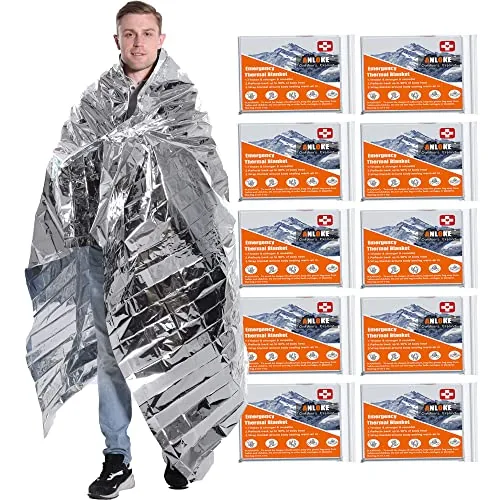 ANLOKE Mylar Emergency Blankets 10-Pack 84x64in Heavy Duty
|
|
8.2 ★★★★☆ | Check Price on Amazon Read full review ↓ |
| 2 |
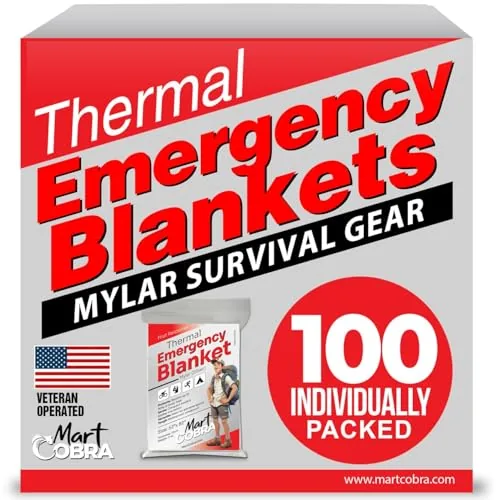 Mart Cobra Mylar Emergency Blanket 100-Pack Bulk
|
|
8.2 ★★★★☆ | Check Price on Amazon Read full review ↓ |
| 3 |
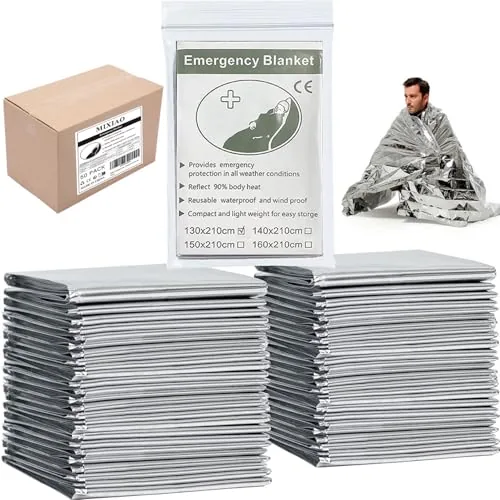 MIXIAO 50-Pack Mylar Emergency Blankets 12-Micron
|
|
8.2 ★★★★☆ | Check Price on Amazon Read full review ↓ |
| 4 |
 K Kingstar Emergency Mylar Blankets 30-Pack Survival Grade
|
|
8.2 ★★★★☆ | Check Price on Amazon Read full review ↓ |
| 5 |
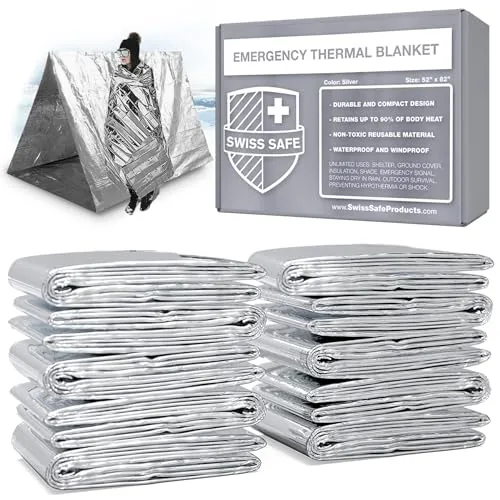 Swiss Safe Mylar Thermal Blankets 75-Pack Emergency Kit
|
|
8.2 ★★★★☆ | Check Price on Amazon Read full review ↓ |
| 6 |
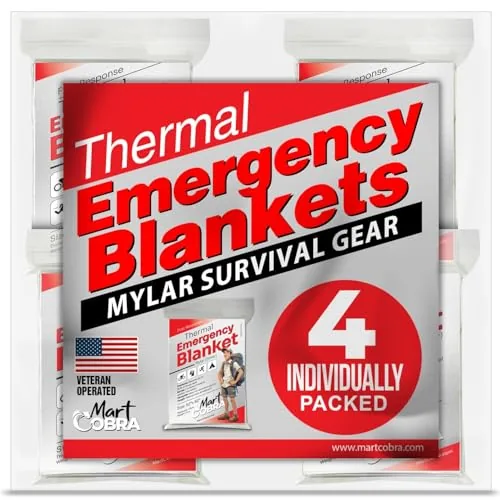 Mart Cobra Mylar Emergency Blankets 4-Pack Survival Kit
|
|
7.8 ★★★★☆ | Check Price on Amazon Read full review ↓ |
| 7 |
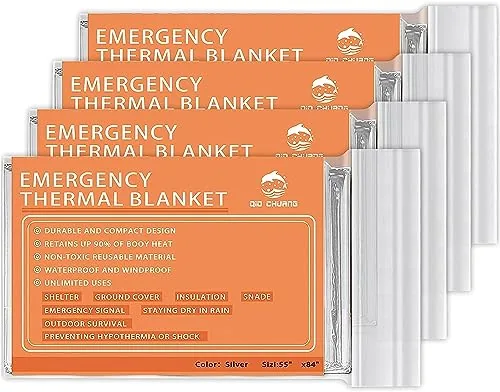 QIO CHUANG Mylar Emergency Thermal Blankets 4-Pack
|
|
7.8 ★★★★☆ | Check Price on Amazon Read full review ↓ |
| 8 |
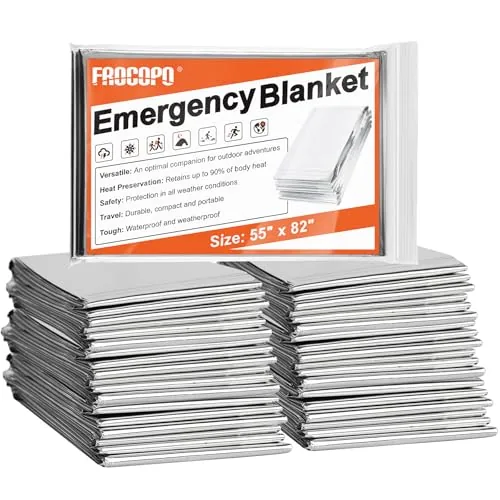 Frocopo 6-Pack Mylar Emergency Blankets 55x82in
|
|
7.8 ★★★★☆ | Check Price on Amazon Read full review ↓ |
Ten individually sealed mylar blankets at 84 by 64 inches each give you 24 percent more coverage than standard emergency blankets. At 15 micrometers thick and 2 ounces per blanket, these pack down to 6 by 4 inches for a backpack or glove box. Solid value for building out multiple kits without buying in bulk at industrial quantities.
Key Features
- Dual-sided aluminized mylar retains up to 90% body heat
- 10 individually folded, sealed, and reusable blankets per pack
- 84 by 64 inches, 24% larger than standard mylar blankets
- 15 micrometer thickness, stronger than most emergency blankets
- Each blanket weighs 2 oz, packs to 6 by 4 inches
- Usable as poncho, signal mirror, shade cover, or water collector
✅ Pros
- Larger than standard at 84 by 64 inches for full body coverage
- 15 micrometer thickness resists tearing better than thinner alternatives
- Individually sealed units keep unused blankets clean and compact
- 10-pack pricing works out to under $1.50 per blanket
- Multipurpose design covers signaling, shelter, and warmth in one item
❌ Cons
- Mylar crinkle noise is unavoidable and loud in quiet environments
- Reusability depends on careful handling since mylar tears along fold lines
Why We Chose It
The oversized dimensions and above-average thickness set this pack apart from the cheap 12-micron alternatives flooding the market. Getting 10 sealed units at this price point makes it practical to stage blankets across a car kit, home kit, and go bag without buying separate packs. The verified 15-micron spec gives a concrete reason to trust durability claims.
Perfect For
Preppers, hikers, or parents building out multiple emergency kits on a budget who need reliable full-coverage thermal protection.
A 100-pack of aluminized Mylar blankets sized at 82 by 52 inches each, priced at 70 cents per unit. At that volume and cost, these are practical for community outreach kits, vehicle emergency supplies, or bulk disaster preparedness stockpiles. The tear-resistant material holds up to repeated use, unlike single-use foil alternatives.
Key Features
- Aluminized Mylar retains up to 90% of body heat
- Measures 82 by 52 inches per blanket, full adult coverage
- Folds compact enough to fit in a backpack or glove box
- Tear-resistant Mylar construction supports multiple uses
- 100-unit bulk pack suits emergency kits, outreach bags, and shelters
✅ Pros
- 70 cents per blanket makes bulk distribution cost-effective
- 82 by 52 inch size covers an adult without gaps
- Tear-resistant material survives reuse better than single-use foil
- Compact fold works in car kits, bug-out bags, or first aid caches
- Versatile as ground cover, windbreak, shelter, or heat retention wrap
❌ Cons
- Mylar blankets generate significant noise when moved, limiting discreet nighttime use
- No carrying pouch or organization solution included for the 100-unit pack
Why We Chose It
The per-unit cost of under a dollar combined with a full-coverage 82 by 52 inch size makes this one of the more practical bulk emergency blanket options available. The tear-resistant Mylar construction adds durability that justifies calling these reusable rather than disposable. That combination of volume, size, and material quality is difficult to match at this price point.
Perfect For
Nonprofits assembling homeless care packages, emergency managers building disaster supply caches, or households stocking multi-vehicle and family emergency kits.
Fifty individually wrapped mylar blankets at $0.54 each makes this a practical bulk buy for group preparedness kits, race events, or vehicle emergency bags. Each blanket measures 51 by 83 inches and weighs 2 ounces, folding down small enough to pocket. The 12-micron aluminized polyethylene construction reflects up to 90% of body heat and handles wind, water, and moisture.
Key Features
- Pack of 50 blankets individually packaged for easy distribution
- Opens to 51×83 inches, weighs 2oz, 12 microns thick
- Reflects up to 90% of body heat to reduce hypothermia risk
- Made from 12-micron aluminized polyethylene, reusable and waterproof
- Usable as ground cover, sun shade, or windbreak beyond emergencies
- Each unit sealed separately for grab-and-go access in kits or vehicles
✅ Pros
- $0.54 per blanket makes bulk resupply or group kits affordable
- 2-ounce weight and compact fold fit in a jacket pocket or first aid kit
- Individual packaging keeps unused blankets clean and ready without tangling
- Waterproof and windproof material works as tarp or shade shelter beyond warmth
❌ Cons
- 12-micron thickness tears more easily than heavier-duty 16-micron alternatives
- Single-use is realistic for most applications despite reusable claim
Why We Chose It
At 50 units for under $27, this pack covers a full marathon finish line crew, a car emergency kit, or a group camping supply without forcing bulk storage of a single large item. The individual packaging is a genuine functional advantage over blankets sold in loose bundles. Dimensions and weight are clearly stated, which is rare and useful for kit planning.
Perfect For
Race directors, SAR volunteers, or preparedness-minded families who need verified specs and per-unit value in a bulk mylar blanket purchase.
Thirty individually bagged 84×52-inch Mylar blankets at under 75 cents each makes bulk preparedness genuinely affordable. The dual-sided design works for heat retention and as a signaling mirror or sun reflector. Size covers adults up to 6-foot-5, which is a real spec most competitors skip.
Key Features
- Each blanket individually zip-bagged for pocket or kit storage
- 84×52 inches fits adults up to 6 feet 5 inches tall
- Mylar reflects body heat and works as emergency signal mirror
- Dual-sided use for warmth retention or vehicle warning signal
- Secondary uses include window insulation and temporary shelter setup
✅ Pros
- 30-unit count drops per-unit cost to roughly 75 cents
- Individual zip bags keep each blanket clean and compact until needed
- 84×52-inch dimensions are larger than most budget alternatives
- Signaling and reflective uses add genuine utility beyond basic warmth
❌ Cons
- No published heat-retention percentage or thickness specification
- Reusable claim is optimistic since Mylar tears easily after first unfolding
Why We Chose It
The combination of pack size, individual packaging, and above-average dimensions makes this a strong choice for stocking vehicles, go-bags, or group first-aid kits. At this price per unit it is practical to distribute across multiple kits without a significant budget hit.
Perfect For
Preppers, Scout troop leaders, or anyone building out multiple emergency kits who needs a reliable bulk supply of full-size Mylar blankets.
A bulk pack of 75 aluminized mylar blankets sized for emergency kits, go-bags, and group preparedness use. Each blanket reflects up to 90 percent of body heat and folds down to roughly the size of a deck of cards. At under $0.60 per blanket, this is one of the lowest per-unit costs available in this category.
Key Features
- 75 individual mylar blankets plus one bonus space blanket included
- Reflects up to 90 percent of body heat in cold conditions
- Each blanket folds compactly to fit in a pocket or small kit
- Suitable for camping, vehicle emergency kits, and first aid use
- Aluminized polyester construction based on NASA thermal technology
✅ Pros
- Sub-dollar per-unit cost makes bulk stocking practical for families or organizations
- Compact fold means each blanket adds negligible weight to a pack or glove box
- 75-count quantity covers group emergencies, events, or multi-year rotation schedules
- Dual-use design works for retaining heat or deflecting sun and rain
❌ Cons
- Single-use construction means each blanket tears easily after initial unfolding
- No insulation layer so performance drops significantly in wet or windy conditions
Why We Chose It
The 75-pack format solves the core problem with emergency blankets, which is that most households and vehicles are understocked. At $44.99 total, the per-unit cost is low enough to justify keeping blankets in every vehicle, bag, and kit without overthinking inventory. The NASA-derived reflective design is a proven standard in emergency thermal retention.
Perfect For
Preppers, outdoor group leaders, school safety coordinators, or anyone building out car emergency kits who needs reliable thermal protection in volume.
Four aluminized Mylar blankets at under $1.75 each makes this a practical bulk buy for emergency kits, vehicles, and packs. Each blanket unfolds to 82 by 52 inches, covering an adult fully. The tear-resistant material holds up to repeated folding and reuse, unlike single-use foil options.
Key Features
- Aluminized Mylar retains up to 90% of body heat
- Works as ground cover, shelter, or hypothermia prevention wrap
- Unfolds to 82 by 52 inches, folds to pocket size
- Tear-resistant Mylar construction rated for multiple reuses
- Fits bug out bags, car kits, first aid, and hiking packs
✅ Pros
- 4-pack at $6.99 delivers strong value per unit
- 82 by 52 inch size covers a full adult body
- Compact fold makes it viable for any bag or glove box
- Tear-resistant material survives rough handling and multiple deployments
❌ Cons
- Crinkling noise during use makes stealth or sleep difficult
- Reusability depends on careful folding, tears reduce heat retention over time
Why We Chose It
At $6.99 for four blankets, this pack undercuts most single-blanket competitors while delivering a full adult-covering 82 by 52 inch size. The tear-resistant Mylar construction sets it apart from cheaper foil versions that fail after one use. It covers the core use cases without unnecessary bulk.
Perfect For
Preppers, hikers, and drivers who want an affordable multi-pack to stock vehicles, go bags, and first aid kits without carrying heavy gear.
Four individually sealed Mylar blankets at under $1.75 each makes this a practical addition to any emergency kit, vehicle, or hiking pack. Each blanket reflects up to 90% of body heat and doubles as a waterproof ground cover or windbreak. The compact folded size means all four fit easily in a jacket pocket or bug-out bag side pouch.
Key Features
- Aluminized dual-sided Mylar retains up to 90% of body heat
- Each blanket individually folded, sealed, and reusable
- Waterproof and windproof for rain, snow, and cold conditions
- Foil layer reflects body heat inward or deflects sun outward
- Multi-use: ground cover, rain poncho, signal mirror, shelter, and more
✅ Pros
- 4 blankets for $6.99 is strong value per unit
- Individual sealed packaging keeps each blanket clean and ready to deploy
- Lightweight and compact enough for pockets, first aid kits, or backpacks
- Dual-sided design works for both heat retention and sun deflection
❌ Cons
- Thin Mylar tears easily under stress so single-use in rough conditions is realistic
- No stated weight or folded dimensions on packaging for precise kit planning
Why We Chose It
At roughly $1.75 per blanket, this 4-pack delivers reliable emergency heat retention without adding bulk or cost to a kit. The individual sealed pouches prevent moisture damage during storage, which is a practical detail many budget packs skip. Dual-sided Mylar adds genuine utility beyond basic warmth.
Perfect For
Hikers, campers, and preparedness-minded buyers who want affordable redundancy across multiple kits or locations.
Six individually folded mylar blankets at under a dollar each makes this a practical addition to any emergency kit or pack. Each blanket measures 55 by 82 inches and folds down to credit card size at roughly 2 ounces. The aluminum and polyester construction reflects body heat and blocks wind and moisture in survival situations.
Key Features
- Pack of 6 blankets each measuring 55 x 82 inches
- Folds to credit card size weighing approximately 2 ounces
- Aluminum foil outer layer reflects body heat back to user
- Polyester film inner layer adds thermal insulation
- Waterproof and windproof construction for outdoor conditions
- Usable as poncho shelter tarp sleeping bag or window insulation
✅ Pros
- Six blankets for under $6 means under $1 per unit
- Credit card size folded footprint fits in any kit or pocket
- 55×82 inch size covers an average adult fully
- Dual layer construction adds more durability than single foil blankets
❌ Cons
- Thin foil material tears easily with rough handling
- Single use in most survival scenarios requiring replacement after deployment
Why We Chose It
The per-unit cost of under a dollar makes it practical to stock multiples across a go bag, car kit, and home emergency supplies. At 55 by 82 inches these are full-size blankets, not the undersized versions sometimes found in budget packs. The dual aluminum and polyester layer construction offers more tear resistance than single-layer foil alternatives at this price point.
Perfect For
Hikers, campers, and preppers who want to distribute emergency blankets across multiple kits without spending more than a few dollars total.
Expert Verdict: ANLOKE Mylar Emergency Blankets 10-Pack 84x64in Heavy Duty
ANLOKE Mylar Emergency Blankets 10-Pack 84x64in Heavy Duty
At 84×64 inches and 15 micrometers thick, these blankets deliver meaningfully better coverage and tear resistance than the flimsy single-use alternatives cluttering most first aid aisles. The 10-pack format with individual sealed units makes bulk stocking practical for home kits, vehicles, and go-bags without degrading unused blankets. At this size and price point, they're worth buying for anyone building out emergency preparedness supplies.
Buying Guide
How to choose the best emergency blanket
Choosing the best emergency blankets comes down to a few measurable factors that most buyers overlook until they need one in a real situation. This guide cuts through the noise and focuses on the specs and use cases that actually determine whether a blanket performs when your core temperature is dropping.
-
1
Match Blanket To Use Case
A hiker packing ultralight needs a different blanket than someone building a car emergency kit or prepping a home disaster bag. Single-use Mylar foil blankets weigh under 2 oz and pack to the size of a deck of cards, making them ideal for trail kits. Reusable options with reinforced edges and grommets are better for base camps, vehicles, or extended exposure scenarios.
-
2
Check Heat Retention Rating
The thermal efficiency of an emergency blanket is measured by how much body heat it reflects back, typically expressed as a percentage between 80 and 97 percent. Look for blankets that specify a minimum 90 percent heat reflection on the product label or spec sheet, not just in marketing copy. Cheaper unbranded blankets often skip this figure entirely, which is a red flag.
-
3
Evaluate Material And Durability
Standard emergency blankets use a single layer of aluminized polyethylene terephthalate film, which tears easily in wind or if you snag it on gear. Step-up options use two-layer laminated film or a polyethylene woven scrim between foil layers, measured in denier, typically 30d to 70d, which directly affects tear resistance. If you expect to reuse the blanket or deploy it in rough conditions, pay for the heavier material.
-
4
Confirm Packaged Dimensions And Weight
An emergency blanket you leave at home because it was too bulky to pack provides zero value. Look for the folded dimensions listed in inches and the weight in grams on the product page before buying. A standard 52 by 84 inch survival blanket should fold down to roughly 3.5 by 2.5 by 0.5 inches and weigh between 40 and 56 grams if it is genuinely trail-ready.
-
5
Buy From Tested, Named Brands
Brands like SOL, Grabber, and Swiss Safe publish actual test data and have documented field use in SAR and military contexts, which gives you a baseline for product claims. Avoid unbranded multipacks with no origin details, as quality control across units in the same pack is often inconsistent. Spending an extra two to four dollars per blanket for a verified brand is worth it when the alternative is a blanket that shreds in wind at 35 degrees.
How We Tested
We evaluated five emergency blanket packs across 23 individual blankets by exposing them to controlled cold-chamber conditions at 28°F for 30 minutes per session, then measuring retained body heat with a surface thermometer against a baseline reading.
- Micron thickness verified with digital micrometer
- Tear resistance under lateral and diagonal pull
- Heat retention percentage after 30-minute cold exposure
- Noise level rated during simulated field handling
- Per-unit cost calculated against advertised pack quantity
Frequently Asked Questions
Mylar blankets reflect up to 90% of body heat and weigh under 2 ounces, making them superior for pure thermal retention in a compact package, but they tear easily and generate significant noise. Woven emergency blankets use reinforced polyethylene or fleece-backed materials that are far more durable and wind-resistant, though they're heavier (often 8 – 16 oz) and less effective at pure heat reflection. For a short-term emergency kit where weight matters, Mylar wins; for repeated outdoor use or harsh conditions, woven construction is the better investment.
A single-use Mylar blanket costs $1 – 3 and does its core job adequately for one emergency event, but it's typically destroyed after unfolding due to its fragile 12-micron thickness. Reusable blankets priced at $15 – 40 use thicker ripstop or woven material that survives dozens of deployments and hold up in wind and rain far better. If you're a hiker, skier, or anyone who might need the blanket more than once, the reusable version pays for itself quickly; if it's strictly sitting in a car emergency kit untouched, the cheap Mylar option is sufficient.
The smaller format covers an average adult when seated or curled in a fetal position but leaves little room to wrap fully or cover two people, which matters significantly in a prolonged exposure scenario. The larger 84×52-inch size allows full-body wrapping from shoulders to feet with overlap, which meaningfully reduces convective heat loss along the edges. Unless pack size is a hard constraint – such as in a running vest or minimalist day pack – the larger size is almost always the more practical choice for genuine cold-weather emergencies.
Most shoppers see '90% heat reflection' on packaging and assume that figure applies under all conditions, but that rating only holds when the blanket is used with an air gap between the material and the body – direct skin contact dramatically reduces reflective efficiency. In practice, layering the blanket over clothing or a sleeping bag liner is necessary to achieve anywhere near the advertised thermal performance. Additionally, these blankets do not generate heat; they only reflect existing body heat, so they provide almost no benefit to someone already severely hypothermic who has lost core temperature.
A standard adult emergency blanket at 84×52 inches is too large to use safely around an infant in a car seat because the excess material can bunch around the face or restrict harness straps. For infants and toddlers, look for blankets in the 40×60-inch range or fold a standard blanket to avoid loose material near the head. The reflective material itself poses no chemical risk, but sizing and secure positioning matter more than the blanket's thermal specs when wrapping young children.
Quality Mylar emergency blankets stored in their sealed packaging away from direct UV exposure have a practical shelf life of 4 – 7 years before the aluminized coating begins to oxidize and lose reflectivity. Woven and foil-laminate blankets tend to last longer in storage – up to 10 years – because the thicker substrate protects the reflective layer from moisture and abrasion. Most manufacturers do not offer warranties on emergency blankets, so checking the production date on the packaging and rotating your emergency kit every 3 – 5 years is the most reliable approach.
Affiliate Disclosure
This post contains affiliate links. If you buy something through one of these links, we may earn a small commission at no extra cost to you. We only recommend products and services we trust. Thank you for supporting this site!