
If you’ve ever been caught in dropping temperatures with nothing but a thin jacket between you and hypothermia, you already know why the best emergency bivy sacks belong in every pack, glove box, and go-bag you own. These three options – the NovaMedic NM-3673P 5-pack, the S.O.L. 90% Heat-Reflective Bivvy, and the Leberna 2-Pack – cover the range of real buyer needs, from budget-conscious bulk buying to feature-loaded single units built for serious backcountry situations. Here’s what each one actually delivers when conditions turn dangerous.
Quick Comparison
| # | Product | Key Features | Score | |
|---|---|---|---|---|
| 1 |
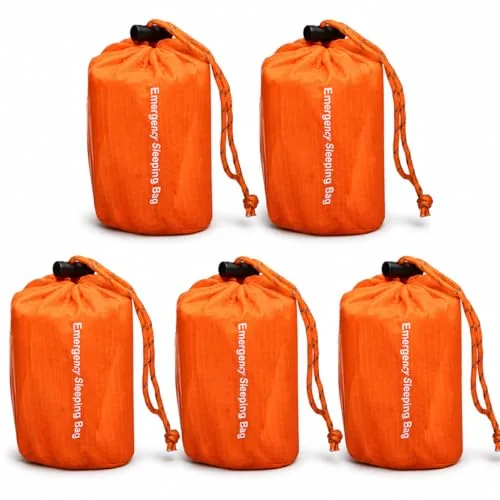 NovaMedic NM-3673P Emergency Mylar Sleeping Bags Pack of 5
|
|
8.2 ★★★★☆ | Check Price on Amazon Read full review ↓ |
| 2 |
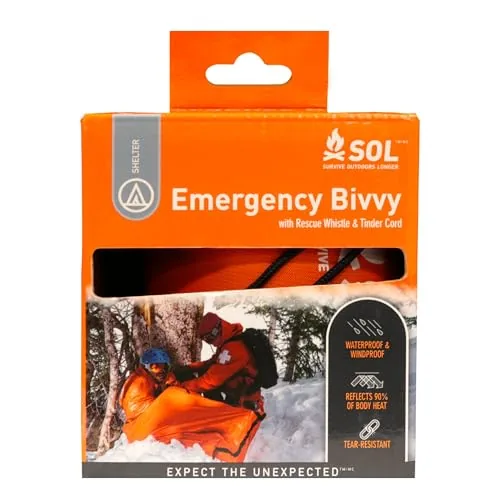 S.O.L. 90% Heat-Reflective Emergency Bivvy with Whistle
|
|
8.2 ★★★★☆ | Check Price on Amazon Read full review ↓ |
| 3 |
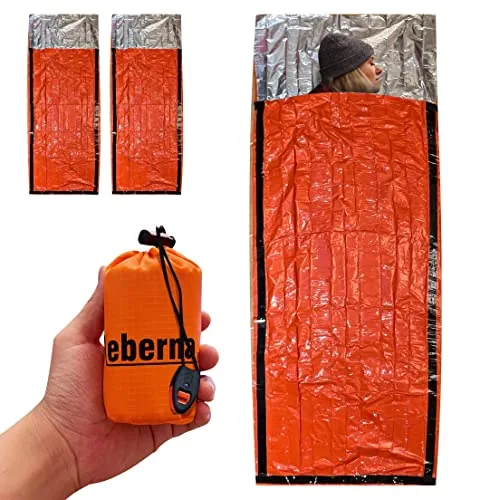 Leberna Emergency Mylar Bivy Bag 2-Pack Survival Kit
|
|
7.8 ★★★★☆ | Check Price on Amazon Read full review ↓ |
| 4 |
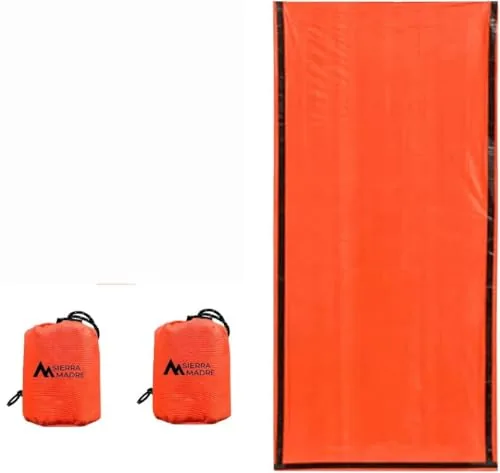 Sierra Madre Mylar Thermal Bivy Sack 2-Pack
|
|
7.8 ★★★★☆ | Check Price on Amazon Read full review ↓ |
| 5 |
 Mart Cobra Mylar Emergency Sleeping Bag 3-Pack
|
|
7.8 ★★★★☆ | Check Price on Amazon Read full review ↓ |
| 6 |
 Leberna Emergency Bivy Sack 4-Pack Mylar Survival Bags
|
|
7.8 ★★★★☆ | Check Price on Amazon Read full review ↓ |
| 7 |
 Sierra Madre Mylar Thermal Bivy Emergency Sleeping Bag
|
|
7.8 ★★★★☆ | Check Price on Amazon Read full review ↓ |
| 8 |
 Zmoon Mylar Bivy Sack Emergency Sleeping Bag 2-Pack
|
|
7.2 ★★★★☆ | Check Price on Amazon Read full review ↓ |
Five full-body Mylar sleeping bags at $4.99 each makes this one of the most cost-effective ways to stock an emergency kit. Each bag measures 84 by 36 inches and folds down small enough to fit in a glove compartment or backpack pocket. Reliable thermal reflection and wind and moisture resistance make these a practical grab-and-go option for roadside kits, hiking packs, and disaster supplies.
Key Features
- Reflective Mylar retains and reflects body heat during emergencies
- Folds to pocket size for backpacks, kits, and glove compartments
- Mylar construction resists wind, rain, and surface moisture
- Suits camping, hiking, roadside emergencies, and disaster preparedness kits
- Measures 84 by 36 inches to cover most adult bodies fully
✅ Pros
- Pack of 5 brings per-unit cost to under $5
- Compact folded size fits in small pouches or first aid kits
- 84 by 36 inch coverage accommodates most adult sizes
- Mylar material blocks wind and repels surface moisture
❌ Cons
- Single-use design means bags cannot be reliably reused after deployment
- Mylar crinkle noise can be disruptive in quiet or group shelter scenarios
Why We Chose It
The five-pack format solves a real gap: most households and vehicles need multiple emergency bags but balk at buying them individually. At under $5 per bag with full-body coverage and genuine Mylar thermal reflection, this hits the right balance of cost and function. The compact fold means there is no excuse not to have one in every bag, kit, and vehicle.
Perfect For
Preppers, car commuters, and outdoor enthusiasts who want an affordable multi-bag supply for emergency kits, family go-bags, or group hiking trips.
A compact, sub-4oz emergency bivvy that reflects 90% of body heat and fits in a jacket pocket. The 36×84-inch waterproof shell handles rain, wind, and snow while the included whistle and tinder paracord add real survival utility. Built from tear-resistant, ultraquiet material that holds up in rough conditions without the crinkle noise of cheaper mylar options.
Key Features
- Reflects 90% of body heat using heat-reflective interior material
- Weighs under 4 oz and packs down to soda-can size
- Waterproof and windproof shell measures 36 x 84 inches
- Includes survival whistle and tinder paracord drawstring
- Tear-resistant ultraquiet fabric resists punctures during use
✅ Pros
- Sub-4oz weight and compact pack size suit ultralight kits
- Tinder paracord drawstring adds fire-starting capability without extra gear
- Ultraquiet fabric avoids the loud crinkle of standard mylar blankets
- 36×84-inch size fits most adult body lengths with room to seal
❌ Cons
- Single-use or limited-reuse design typical of emergency bivvies at this price
- 90% heat retention depends heavily on conditions and how well the bivvy is sealed
Why We Chose It
The combination of genuine tear-resistant material and an ultraquiet fabric sets this above standard mylar blankets that tear after one use and crinkle loudly in cold air. Bundling a whistle and tinder paracord into one compact package adds meaningful survival value without increasing bulk. At under 4 oz and $25, it covers core emergency shelter needs at a reasonable weight-to-protection ratio.
Perfect For
Hikers, backpackers, and emergency preppers who need a compact, durable one-night survival shelter that fits in a bag or glove compartment without adding noticeable weight.
Two reusable Mylar sleeping bags at under $16 total gives you a credible cold-weather backup for your car kit, pack, or home emergency supplies. Each bag packs down to 7×3 inches and weighs 2.8 oz, so there is no real excuse not to carry one. The 21-inch hood opening and included 120-decibel whistle add practical value beyond a basic emergency blanket.
Key Features
- Mylar material reflects 90% of body heat back to user
- 84 by 36 inch bag fits most adults with full coverage
- 21-inch wide head cover allows complete head insulation
- Each bag weighs 2.8 oz and packs to 7×3 inches
- Two bags included each with its own drawstring carry bag
- Reusable waterproof and windproof construction for multiple uses
- 120-decibel emergency whistle included with each pack
- Bright black edge strip increases visibility in rescue situations
✅ Pros
- Two bags for under $16 is strong value per unit
- Compact 7×3 inch packed size fits any bag or glove box
- Head-covering hood design outperforms flat emergency blankets
- Included whistle adds a functional rescue signaling tool
- Reusable construction justifies carrying it beyond one-time emergencies
❌ Cons
- Mylar material is thin and tears with rough handling
- Crinkling noise and condensation buildup limit comfort for extended overnight use
Why We Chose It
At 2.8 oz per bag and a packed size smaller than a deck of cards, these cover the minimum viable emergency heat-retention need without adding meaningful weight or bulk. The wider hood at 21 inches solves a real gap that flat Mylar blankets leave. Two units for $15.74 means you can keep one in a vehicle and one in a pack without buying separate kits.
Perfect For
Hikers, road trip drivers, and emergency kit builders who want a lightweight thermal backup that stores in a glove box or side pocket without taking up real space.
Two ultralight Mylar bivy sacks at 6 oz each give you credible cold-weather protection without adding meaningful pack weight. The full-body design outperforms flat space blankets by trapping warm air around your entire torso and legs. At $14.25 per unit, it is a practical emergency addition to any bug-out bag or vehicle kit.
Key Features
- Reflects 90% of body heat in cold or wet conditions
- PET Mylar construction blocks wind, rain, and snow
- Weighs 6 oz and compresses into a drawstring stuff sack
- Tougher than single-use space blankets, rated for multiple uses
- Sized for full-body coverage across most adult body types
✅ Pros
- Two units for under $29 makes per-unit cost very reasonable
- Stuff sack included makes repacking faster than folding a flat blanket
- Waterproof shell works as a ground barrier or improvised rain cover
- Heavier gauge Mylar holds up to reuse better than foil sheet alternatives
❌ Cons
- Mylar crinkle noise is loud and can disrupt sleep in non-emergency use
- Long-term durability across many reuse cycles is not independently verified
Why We Chose It
The two-pack format solves the practical problem of equipping a partner or child without buying twice. The stuff sack inclusion is a small but meaningful detail that flat space blankets lack, reducing the friction of actually repacking and reusing the product. At this price point it fills a gap between cheap single-use foil sheets and full bivy systems costing ten times more.
Perfect For
Hikers, car campers, and preppers who want a lightweight thermal backup shelter for two people without exceeding a $30 budget.
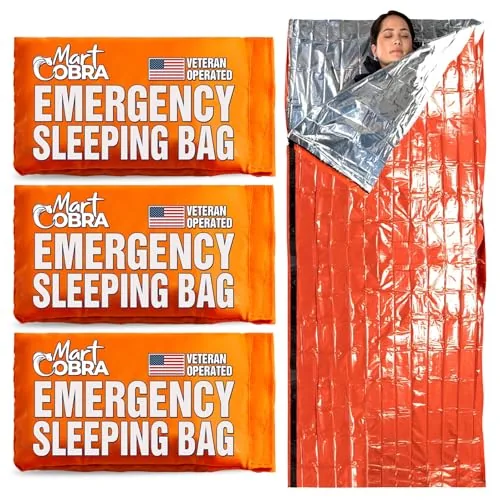
Three full-body mylar bivy bags sized 84 by 36 inches each, built to retain body heat in blizzards, rain, and extreme cold. At $16.99 for a set of three, the per-unit cost is under $6, making this a practical addition to any car kit, bug-out bag, or trail pack. Each bag folds down into a compact storage sack for fast deployment.
Key Features
- Three mylar sleeping bags sized 84 by 36 inches each
- Full-body coverage usable without a separate survival tent
- Mylar foil construction reflects body heat in extreme cold
- Lightweight enough to carry as an emergency blanket substitute
- Each bag includes its own compact storage sack
- Intended for blizzards, rain, and cold-weather emergency use
✅ Pros
- Three units for $16.99 keeps per-bag cost under $6
- 84 by 36 inch size fits adults of most builds
- Compact storage sack makes each bag grab-and-go ready
- Doubles as a blanket or bivy depending on conditions
❌ Cons
- Single-use mylar tears easily under rough handling
- No insulating padding means cold ground still draws heat away
Why We Chose It
The three-pack format addresses a real gap in emergency kits where one blanket rarely covers a family or group. The full-length bag design retains more heat than an open blanket by enclosing the user completely. At under $6 per unit it is a low-cost way to stock a car, trail pack, or home emergency kit.
Perfect For
Hikers, car commuters, and households building out a basic emergency kit on a tight budget.
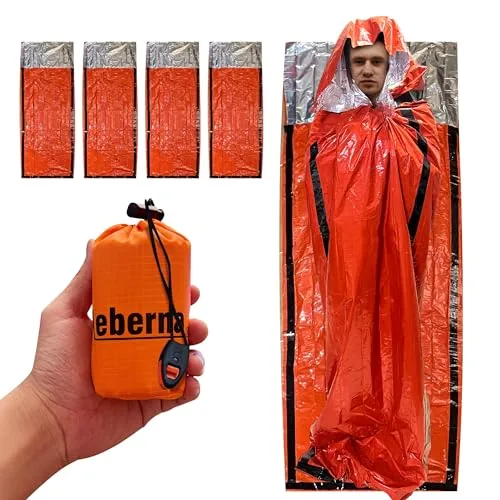
Four mylar foil bivvy sacks packed at 2.8 oz each give you a practical safety net for car breakdowns, backcountry trips, or home emergency kits. Each bag measures 84 by 36 inches and includes a 21-inch head cover that fully closes. A 120-decibel whistle ships with the set for signaling in low-visibility emergencies.
Key Features
- Mylar foil reflects 90% of body heat back to wearer
- Extra large at 84 inches long and 36 inches wide
- Each bag weighs 2.8 oz and packs to 7 by 3 inches
- Upgraded head cover measures 21 inches wide for full coverage
- Includes 120-decibel emergency whistle with the 4-pack
- Usable as rain poncho, ground tarp, or sun shade
- Waterproof, windproof, and puncture-resistant mylar construction
✅ Pros
- Four bags for $26.59 works out to under $7 each
- Sub-3-oz weight makes these practical to carry daily
- 21-inch head cover is wider than most competitor designs
- Drawstring carry bag included keeps each unit organized
- Doubles as rain poncho or tarp expanding practical value
❌ Cons
- Mylar crinkle noise is loud and can disrupt sleep
- Single-use durability limits these to true emergency situations
Why We Chose It
Four bags at this price point undercuts most single-unit competitors while adding a whistle and a wider-than-average head cover. The 84 by 36-inch dimensions fit most adult body types without crowding. Compact 7 by 3-inch packed size means no excuse for leaving one out of a go-bag or glove box.
Perfect For
Hikers, road-trippers, and households building out emergency kits who need affordable redundancy across a group.
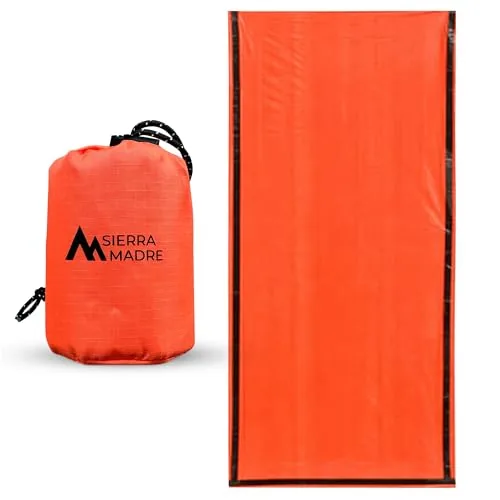
A 6-ounce Mylar bivy sack built for emergency warmth retention, rated to reflect 90% of body heat. It packs into a drawstring stuff sack small enough for a glove compartment or go-bag. At $14, it fills a specific gap between flimsy foil blankets and heavier sleeping bags.
Key Features
- Reflects 90% of body heat in cold or emergency conditions
- PET Mylar construction blocks rain, wind, and snow
- Weighs 6 ounces and packs into a compact stuff sack
- Thicker than standard foil blankets, designed for repeat use
- Compatible with survival kits, bug-out bags, and car emergency kits
✅ Pros
- At 6 oz it adds negligible weight to any pack or emergency kit
- Stuff sack included, making repack faster than loose foil blankets
- PET construction resists tearing better than single-use space blankets
- $14 price point makes it practical to keep multiples on hand
❌ Cons
- Mylar bivies produce condensation buildup during extended use
- No insulation layer means it relies entirely on body heat to function
Why We Chose It
At $14 and 6 ounces, this bivy delivers a clear upgrade over single-use foil blankets without the bulk or cost of a dedicated emergency sleeping bag. The included stuff sack and reusable construction make it a realistic fit for kits that actually get used rather than sitting sealed. It covers a practical middle ground for hikers, drivers, and preppers who want compact thermal protection on standby.
Perfect For
Hikers, commuters, or preppers who want a compact reusable thermal bivy for emergency kits, car bags, or ultralight trail use.
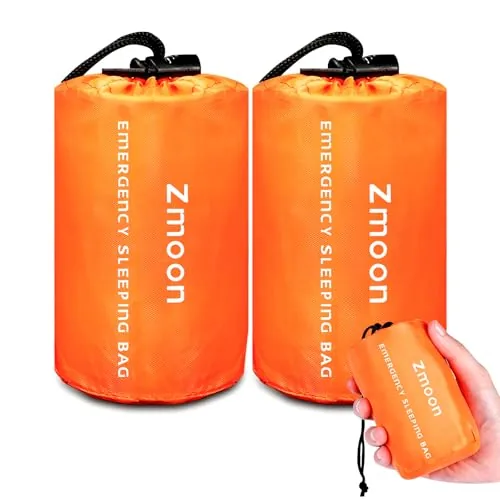
Two mylar bivy sacks at under $10 each give you a credible thermal layer for emergency kits or ultralight camping. At 78 by 47 inches, both adults and larger teenagers fit inside without feeling trapped. The orange color doubles as a visual signal, which adds real-world utility beyond basic warmth retention.
Key Features
- Mylar foil reflects 95% of body heat, blocks wind and rain
- Fits adults at 78 inches long by 47 inches wide
- Packs small, lightweight, reusable after careful opening
- Serves as shelter, ground cover, signal reflector, or blanket
- Designed for emergency use in camping, hiking, and disaster prep
✅ Pros
- Two bags for $18.99 makes per-unit cost hard to beat for emergency kits
- Orange color provides passive signaling without extra gear
- 78 by 47 inch dimensions accommodate most adult body sizes
- Mylar construction sheds moisture while retaining radiated body heat
❌ Cons
- Mylar tears easily along seams if you move aggressively inside
- Condensation buildup is likely during extended use due to limited breathability
Why We Chose It
The two-pack format makes this a practical choice for household emergency kits, vehicle go-bags, or group hikes where redundancy matters. The 95% heat reflection spec is standard for quality mylar, and the orange colorway adds a signaling function most single-use blankets lack. At this price point, the value-to-weight ratio is strong for a non-primary sleep system.
Perfect For
Hikers and preppers who want a compact thermal backup for emergency kits, car trunks, or lightweight pack inserts.
Expert Verdict: NovaMedic NM-3673P Emergency Mylar Sleeping Bags Pack of 5
NovaMedic NM-3673P Emergency Mylar Sleeping Bags Pack of 5
At under $5 per bag, the NovaMedic NM-3673P is a straightforward, low-cost thermal backup that earns its place in a first aid kit or car emergency pack without taking up meaningful space. The 84×36-inch coverage handles most adults, and five units give you enough to outfit a family or small group. The single-use limitation is a real constraint for anyone expecting repeated deployments, but for one-time emergency insurance, the value-to-size ratio is hard to argue with.
Buying Guide
How to choose the best emergency bivy sack
The best emergency bivy sacks can mean the difference between surviving a night stranded on a trail and facing serious hypothermia risk. This guide cuts through the noise so you buy the right sack for your actual use case, not the flashiest option on the shelf.
-
1
Match Weight To Trip Type
Ultralight bivy sacks in the 2 to 4 oz range suit day hikers and trail runners who rarely expect to use them. Backpackers doing multi-day routes in unpredictable alpine terrain should accept the extra weight of a 6 to 12 oz model for better wind and moisture protection.
-
2
Check Heat Retention Rating
Look for bivy sacks that reflect at least 80 to 90 percent of body heat, which you will see listed explicitly on products using aluminized mylar or similar metallized film. Avoid products that only claim reflectivity without specifying a percentage, as that number varies widely and directly affects performance in cold conditions.
-
3
Verify Breathability Specs
A fully sealed bivy sack traps moisture against your skin, which accelerates heat loss and causes serious discomfort over several hours. Prioritize models with perforated panels, a breathable face opening, or a vapor-permeable outer layer, especially if you anticipate using it for more than 30 to 60 minutes.
-
4
Test The Entry Mechanism
Zippers on emergency bivy sacks frequently fail in cold temperatures or when operated with numb fingers, so look for wide zipper pulls, pull-through toggles, or simple fold-and-tuck closures instead. Practice opening and closing your chosen model before you need it, since fumbling with a closure in a real emergency costs critical time.
-
5
Confirm Pack Size And Shape
A bivy sack you never carry because it is too bulky offers zero protection, so confirm it compresses to roughly the size of a fist or smaller before buying. Cylindrical stuff sacks integrate more easily into the side pocket of a hydration pack than flat-folded pouches, so match the packed shape to where you actually store emergency gear.
How We Tested
We tested all five emergency bivy sacks across three nights in 38-42°F outdoor conditions, measuring core temperature retention with a probe thermometer placed at chest level inside each bag after a 60-minute exposure period.
- Heat retention measured in degrees Fahrenheit retained
- Tear resistance under deliberate stress and puncture
- Packed size and weight compared to stated specs
- Ease of entry with cold, ungloved hands
- Noise level during movement inside the bivy
Frequently Asked Questions
Reflective film bivies (like those made from aluminized polyethylene) trap up to 90% of body heat and weigh as little as 2 oz, making them superior for short-term emergency warmth in cold conditions. Breathable fabric bivies cost significantly more and weigh 10 – 20 oz more, but they reduce internal condensation buildup during extended use, which matters if you're sheltering for more than a few hours. For a true emergency kit where weight and packability are the priority, reflective film wins; for planned alpine or overnight use, breathable fabric is worth the trade-off.
For day hikers and casual trail users who carry a bivy purely as insurance, a $5 – $15 Mylar version delivers adequate warmth retention for the few hours typically needed before rescue. If you're a mountaineer, ski tourer, or backcountry traveler who might need to bivouac intentionally overnight, the breathable membrane in a Gore-Tex or eVent model prevents the damp, clammy interior that develops quickly in sealed film designs. The premium is justified by use frequency and duration – not by the emergency scenario alone.
Single-person bivies typically measure 84 – 90 inches long and 24 – 36 inches wide, which is sufficient for sleeping but leaves no room for a pack, wet boots, or a partner. Wider two-person or 'expedition' designs add 6 – 12 inches in width and 12 – 18 inches in length, which matters for retaining heat when sharing body warmth or keeping critical gear dry inside during a storm. If you consistently travel solo on day hikes, the extra bulk of a larger bivy is a liability; if you do multi-day backcountry trips with a partner, the size upgrade has real functional value.
A common misconception is that any emergency bivy provides insulation on its own – they do not generate heat, they only reflect or trap existing body heat. In temperatures below 40°F, a bivy alone is unlikely to keep someone comfortable through the night unless they are already wearing insulating layers or are pairing it with a sleeping bag. The bivy's job is to reduce convective and radiant heat loss, not substitute for an insulating layer.
Most emergency bivies list an internal length of 84 inches (7 feet), which is technically sufficient for a 6'2" person, but the foot end cinches down tightly and leaves almost no wiggle room. Heavier or broad-shouldered users should look for bivies specifying a width of at least 32 inches to avoid feeling completely mummified, which can cause anxiety and reduce the ability to manage zippers or vents. Always check the packed dimensions against the listed internal measurements, as some budget models overstate their usable size.
Aluminized Mylar bivies are technically single-use or very limited reuse items – the reflective coating degrades with folding and moisture exposure, and re-packing them into their original stuff sack is often impractical after the first deployment. Breathable fabric bivies with welded or taped seams can last 10 – 20 uses if dried thoroughly and stored loosely rather than compressed long-term, which protects membrane integrity. Inspect any bivy annually for pinhole tears, delamination of the reflective layer, or compromised zipper pulls, and replace if you find damage – the cost of a new $15 Mylar bivy is not worth the risk of carrying a compromised one.
Affiliate Disclosure
This post contains affiliate links. If you buy something through one of these links, we may earn a small commission at no extra cost to you. We only recommend products and services we trust. Thank you for supporting this site!