
Picking the right trail camera comes down to three questions: how fast does it trigger, how reliably does it send images, and what does it actually cost per month to run? After testing dozens of options across wooded terrain and open fields, three cameras consistently earned their place on the short list – the Moultrie Edge 3 Cellular 40MP (available as a single unit or 2-pack), the Moultrie Edge 3 40MP AI, and the SPYPOINT Flex-M Twin Pack 28MP. Whether you’re monitoring a food plot, scouting a new property, or keeping tabs on multiple stand locations, this guide breaks down exactly which camera fits which situation.
Quick Comparison
| # | Product | Key Features | Score | |
|---|---|---|---|---|
| 1 |
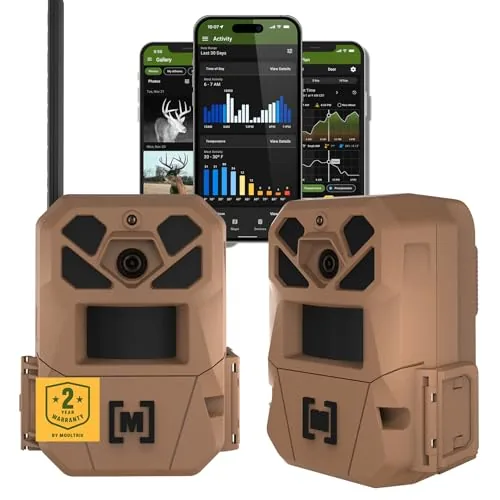 Moultrie Edge 3 Cellular Trail Camera 2-Pack 40MP
|
|
8.5 ★★★★☆ | Check Price on Amazon Read full review ↓ |
| 2 |
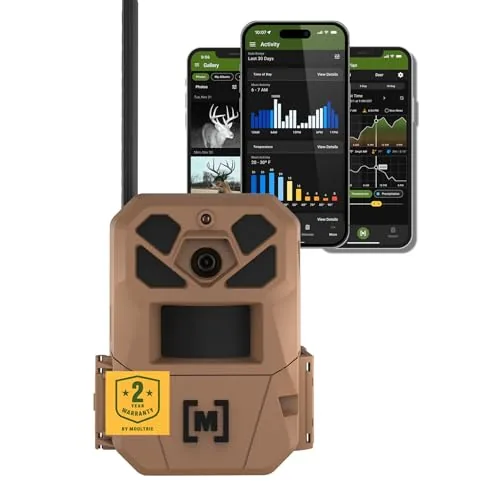 Moultrie Edge 3 Cellular Trail Camera 40MP AI
|
|
8.5 ★★★★☆ | Check Price on Amazon Read full review ↓ |
| 3 |
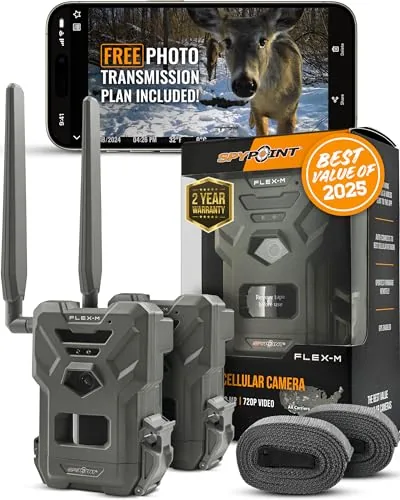 SPYPOINT Flex-M Twin Pack Cellular Trail Camera 28MP
|
|
8.2 ★★★★☆ | Check Price on Amazon Read full review ↓ |
| 4 |
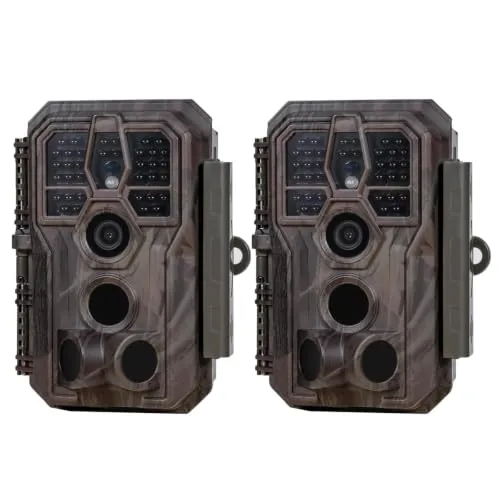 GardePro E5S 2-Pack Trail Camera 64MP 1296P
|
|
8.2 ★★★★☆ | Check Price on Amazon Read full review ↓ |
| 5 |
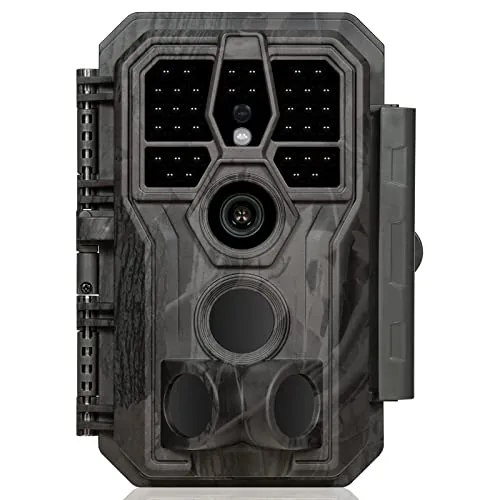 GardePro E5S Trail Camera 64MP 1296P Non-Cellular
|
|
8.2 ★★★★☆ | Check Price on Amazon Read full review ↓ |
| 6 |
 WOSPORTS Trail Camera 64MP 4K No-Glow Night Vision
|
|
7.8 ★★★★☆ | Check Price on Amazon Read full review ↓ |
| 7 |
 WOSODA Mini Trail Camera 4-Pack 30MP 1080P
|
|
7.8 ★★★★☆ | Check Price on Amazon Read full review ↓ |
| 8 |
 WOSODA Trail Camera 48MP 1080P Night Vision 2-Pack
|
|
7.8 ★★★★☆ | Check Price on Amazon Read full review ↓ |
| 9 |
 WOSODA 2-Pack Trail Camera 48MP 1080P Night Vision
|
|
7.5 ★★★★☆ | Check Price on Amazon Read full review ↓ |
Two cellular trail cameras for $99 is a competitive price point, and the Edge 3 backs it up with 40MP stills, 1080p video, and auto-connecting 4-carrier nationwide coverage with no SIM setup required. AI buck detection filters out false alerts and sends instant photo or video notifications when a shooter walks through. Built-in GPS and Live Aim simplify placement and keep both cameras mapped in the Moultrie app.
Key Features
- AI identifies bucks and sends instant high-res photo or video alerts
- Auto-connects to strongest of four U.S. networks, no SIM required
- 40MP photos and 1080p HD video with low-glow infrared night flash
- 0.5-second trigger speed with 100-foot detection range
- Live Aim previews camera view in real time for precise placement
- Built-in GPS maps camera locations automatically in the app
- Controls compatible feeders and monitors battery and feed levels remotely
- No-contract data plans starting at $9.99 per month
✅ Pros
- Two cameras included at $99 makes per-unit cost very competitive
- 4-carrier auto-connect removes the manual SIM and network guesswork
- AI buck filtering reduces notification fatigue from non-target triggers
- Built-in GPS and Live Aim cut down scouting time in the field
❌ Cons
- Ongoing subscription required to use cellular features, minimum $9.99 per camera monthly
- AI accuracy depends on image quality and angle, so some misidentification is likely in dense cover
Why We Chose It
At roughly $49.50 per camera, this two-pack undercuts most single-unit cellular cameras with comparable specs. The 4-carrier auto-connect and no-SIM setup lower the barrier for hunters unfamiliar with cellular camera configuration. GPS mapping and feeder control consolidate multiple scouting tasks into one app.
Perfect For
Deer hunters managing multiple stand locations who want real-time buck movement data without frequent property visits.
The Edge 3 sends 40MP photos and 1080p video directly to your phone via four-carrier auto-connect, no SIM card required. AI detection filters out non-buck triggers so you get alerts that actually matter. At $55.73 with plans from $9.99 per month, it undercuts most cellular cameras in its class without sacrificing image quality.
Key Features
- AI identifies bucks and sends instant high-resolution photo alerts
- Auto-connects to strongest of four major US networks, no SIM needed
- 40MP stills and 1080p HD video with low-glow infrared flash
- 0.5-second trigger speed with 100-foot detection range
- Live camera preview and built-in GPS for precise placement
- Controls compatible feeders and monitors battery remotely via app
- No-contract cellular plans starting at $9.99 per month
✅ Pros
- Four-carrier auto-connect removes the guesswork of network coverage in remote areas
- AI buck filtering cuts down on irrelevant trigger alerts
- Built-in GPS maps camera locations automatically in the app
- 40MP resolution at this price point is genuinely competitive
❌ Cons
- Ongoing cellular plan cost adds to the annual ownership expense
- AI detection accuracy in dense brush or poor lighting is unverified without field testing
Why We Chose It
Four-carrier auto-connect and AI buck detection together solve the two most common pain points with cellular cameras: dead zones and alert fatigue. The built-in GPS is a practical addition that most competitors charge more to include. For a sub-$60 camera, the 40MP sensor and 1080p video capability are hard to match at this price.
Perfect For
Deer hunters managing multiple stand locations who want real-time buck movement data without physically checking cameras.
Two cellular trail cameras for $89.99 means roughly $45 per unit, making this one of the lowest entry points for LTE-connected scouting hardware. Each camera transmits photos directly to your phone via dual-SIM LTE with no WiFi required, and SPYPOINT includes a free tier of 100 photos per month per camera at no ongoing cost. The IP65 rating handles rain and dust, and the app supports remote settings changes and AI-based species filtering.
Key Features
- Twin-pack cellular cameras activate via mobile app with on-camera buttons
- Free plan transmits 100 photos monthly, paid plans from $5
- Dual-SIM LTE automatically selects best available carrier network
- Four capture modes including Time-Lapse+ with motion sensor trigger
- App delivers photos to phone, tablet, or computer without WiFi
✅ Pros
- Two cameras at $45 each is a strong price for LTE-capable hardware
- Free 100-photo monthly plan per camera removes mandatory subscription costs
- Dual-SIM auto-carrier switching reduces dead zones without manual setup
- IP65 rating confirmed for reliable outdoor exposure in rain and dust
- Simultaneous send-and-capture prevents transmission delays during active periods
❌ Cons
- microSD card not included, adding cost to an already budget-priced unit
- 720p video resolution is below average for cameras at this price tier
Why We Chose It
The combination of two cameras, no-commitment free photo transmission, and automatic carrier selection addresses the three most common pain points in budget cellular scouting setups: upfront cost, recurring fees, and connectivity gaps. At $89.99 for the pair, the per-camera cost undercuts most single-unit LTE competitors. The BUCK TRACKER AI species filtering in the app adds practical utility beyond basic photo delivery.
Perfect For
Hunters or landowners covering multiple stand locations who want cellular photo delivery without committing to a monthly subscription.
Two non-cellular trail cameras at $140 total is a strong value for anyone covering multiple game trails or property corners. The 64MP sensor and 0.1s trigger speed handle fast-moving deer without the connectivity costs or monthly fees of cellular models. SD card retrieval keeps things simple and battery life long.
Key Features
- 64MP photos and 1296P HD video via optical lens sensor
- Non-cellular non-WiFi operation reduces power draw and disturbances
- IP66 waterproof rating with 1/4-20 thread mount for stable placement
- 0.1s trigger speed across three PIR motion sensors
- Runs on 8xAA batteries with optional solar panel support sold separately
- Motion detection time-lapse and hybrid recording modes up to 512GB SD
✅ Pros
- Two cameras included for the price cuts per-unit cost to roughly $70 each
- 0.1s trigger speed with three PIR sensors reduces missed fast-moving animals
- 512GB SD card support and loop recording allow long unattended deployments
- IP66 rating handles rain mud and dust without extra weatherproofing
❌ Cons
- No cellular or WiFi means physical SD card retrieval every check
- Batteries and SD cards sold separately add to the real out-of-pocket cost
Why We Chose It
The two-camera bundle makes this a practical choice for hunters or landowners who need coverage across multiple locations without doubling their budget. The triple PIR setup and 0.1s trigger are hardware specs that hold up against cameras priced well above this range. Solar panel compatibility extends remote deployment time significantly for those willing to add the accessory.
Perfect For
Hunters or property owners who want to monitor two separate trails or entry points without paying for cellular plans or swapping batteries constantly.
The E5S shoots 64MP stills and 1296P video through a triple PIR setup that triggers in 0.1 seconds, catching fast-moving deer before most cameras wake up. It runs on 8 AA batteries with no cellular or WiFi drain, so battery changes are infrequent even on long deployments. You retrieve footage by pulling the SD card, keeping setup simple and disturbance-free.
Key Features
- 64MP photos and 1296P HD video via advanced optical sensor
- Non-cellular, non-WiFi design reduces power draw significantly
- IP66 waterproof rating with 1/4-20 thread for secure mounting
- Three PIR sensors deliver 0.1-second trigger speed
- Runs on 8 AA batteries, compatible with optional solar panel
- Motion detection, time-lapse, and hybrid modes, supports up to 512GB SD
✅ Pros
- 0.1-second trigger speed catches deer and fast wildlife reliably
- IP66 rating handles rain, dust, and rough outdoor conditions
- 512GB SD card support means weeks of footage without swapping cards
- No cellular fees or app dependency keeps ongoing costs at zero
❌ Cons
- Batteries and SD card sold separately, adding to the true out-of-pocket cost
- No remote access means a physical site visit to retrieve any footage
Why We Chose It
At $48.99, the E5S delivers 64MP resolution and a genuine 0.1-second trigger with three PIR zones, specs that typically appear on cameras priced $20 to $30 higher. The IP66 waterproof rating and broad storage support up to 512GB make it a practical long-term field camera without recurring subscription costs.
Perfect For
Hunters and wildlife observers who want a low-maintenance, budget-friendly trail camera for remote locations without cellular coverage.
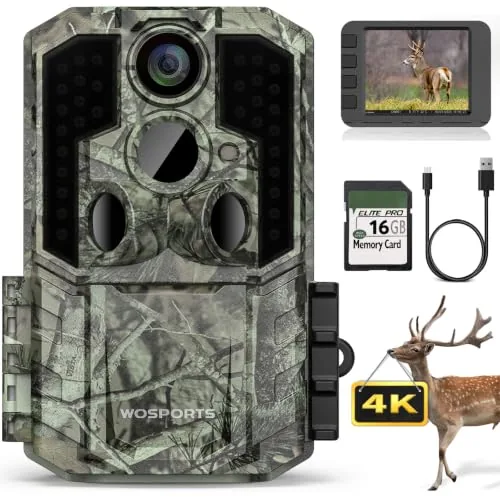
At $39.99, this trail camera covers the core bases: 64MP stills, 4K video, and a 0.2-second trigger speed that catches fast-moving deer or intruders before they clear the frame. The 32 940nm IR LEDs keep the flash invisible to animals, and the built-in 2-inch LCD lets you review footage without pulling the SD card. For the price, the feature-to-dollar ratio is hard to ignore.
Key Features
- Shoots up to 64MP photos and 4K 3840×2160 video
- 0.2-second trigger speed with 120-degree detection zone
- 32 no-glow 940nm IR LEDs for invisible night capture
- 2-inch color LCD for on-device photo and video preview
- Supports AA batteries, lithium pack, or solar panel
- Waterproof build with timer, time stamp, and password lock
✅ Pros
- 0.2-second trigger is competitive at this price point
- No-glow 940nm LEDs avoid spooking deer or alerting trespassers
- Three power options including solar add flexibility for remote placement
- On-device LCD preview removes the need for a separate card reader
- Adjustable resolution down to 5MP extends battery and storage life
❌ Cons
- No cellular or WiFi means manual SD card retrieval for remote locations
- 8 AA batteries required but not included, adding upfront cost
Why We Chose It
The combination of a sub-0.2-second trigger, invisible IR illumination, and three power configurations gives this camera genuine utility for both wildlife monitoring and property security at a price most competitors charge for fewer features. The 120-degree detection angle reduces the need for multiple units to cover wide clearings or driveways.
Perfect For
Hunters and homeowners who want a capable, budget-friendly trail camera for spots without cellular coverage.
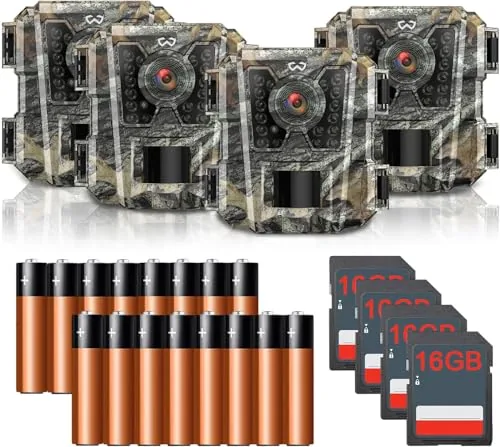
Four cameras for $129.99 means roughly $32 per unit, each shooting 30MP stills and 1080P video with a 0.3-second trigger. Every camera ships with a 16GB SD card and four AA batteries, so you can deploy all four the same day they arrive. The camo housing and compact size help keep them hidden from animals and trespassers.
Key Features
- 30MP photos and 1080P video day and night included
- 0.3 second trigger captures fast moving subjects reliably
- Runs on 4 AA batteries with extended standby life
- Camouflage housing blends into natural outdoor environments
- Simple setup suits security, wildlife, and farm monitoring
✅ Pros
- Four cameras plus four 16GB SD cards and 16 AA batteries in one purchase
- 0.3 second trigger is competitive for this price tier
- Compact camouflage body reduces detection by animals
- No subscription or app required for basic operation
❌ Cons
- No wireless connectivity means physically retrieving the SD card to view footage
- Night footage is black and white only, which limits detail identification in low light
Why We Chose It
The four-pack bundle delivers genuine value for anyone needing to cover multiple locations without buying cameras individually. Each unit includes its own SD card and batteries, removing the usual hidden setup costs. The 0.3-second trigger keeps it competitive against pricier single-unit options.
Perfect For
Property owners, hunters, or wildlife researchers who need to monitor several spots simultaneously on a tight budget.
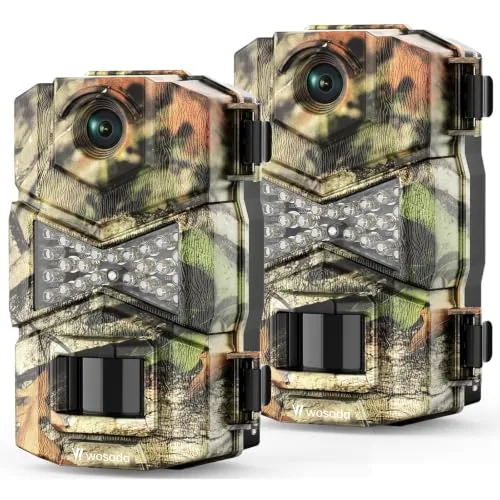
Two cameras for under $70 makes this a practical option for covering multiple locations on a property. The 0.3-second trigger speed and 60-foot detection range are competitive specs at this price point. Night vision runs on 850nm low-glow IR, so the flash stays dim enough to avoid spooking deer or other wildlife.
Key Features
- 0.3-second trigger speed, 60-foot motion detection range
- 48MP photos and 1080P video in daylight conditions
- 850nm low-glow IR for black-and-white night shots
- Camouflage housing with strap mount and stand mount included
- Time switch, timer, and timestamp modes reduce false triggers
✅ Pros
- Two-camera pack delivers strong value at $66.99 total
- 0.3-second trigger is fast enough to catch quick-moving animals
- Low-glow 850nm IR reduces the chance of spooking wildlife
- Waterproof build suits year-round outdoor deployment
- Multiple recording modes help conserve SD card space and battery
❌ Cons
- No cellular or WiFi connectivity requires manual SD card retrieval
- Night footage is black-and-white only, limiting color detail in low light
Why We Chose It
Getting two trail cameras with 48MP resolution and sub-half-second trigger speed for $67 is difficult to beat in this category. The low-glow IR and false-trigger reduction modes show attention to practical field use rather than spec-sheet padding.
Perfect For
Hunters or landowners who want to monitor two separate spots simultaneously without spending over $100.
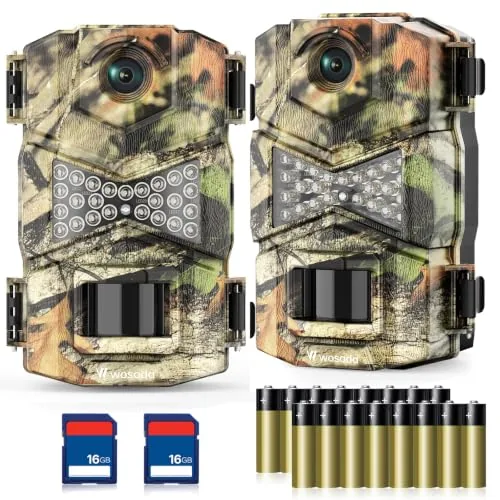
Two cameras for the price of one entry-level unit, each shooting 48MP stills and 1080P video with a 0.3-second trigger and 60-foot detection range. The 850nm low-glow IR keeps the flash invisible to animals and people at night. Both units ship with 16GB SD cards, so you can deploy them straight out of the box.
Key Features
- 0.3s trigger speed with 60ft detection range
- 48MP photos and 1080P HD video day and night
- 850nm low-glow infrared LEDs for invisible night vision
- Camo housing with strap and stand mount included
- Time switch, timer, and time-stamp modes reduce false triggers
✅ Pros
- Two cameras plus two 16GB SD cards included at $79.99 total
- 0.3-second trigger catches fast-moving animals without delay
- Low-glow 850nm IR avoids spooking wildlife or alerting intruders
- Waterproof build suits year-round outdoor deployment
- Adjustable sensitivity reduces wasted shots from wind-blown grass
❌ Cons
- No WiFi means physical SD card retrieval to review footage
- Night footage is black and white only, no color IR option
Why We Chose It
Getting two functional trail cameras with memory cards under $80 is a practical value for anyone covering multiple field locations or property entry points. The 0.3-second trigger and 60-foot range are competitive specs at this price tier, and the low-glow IR is the right choice for wildlife work where a bright flash would alter animal behavior.
Perfect For
Budget-conscious hunters or property owners who need to monitor two separate spots without doubling their camera spend.
Expert Verdict: Moultrie Edge 3 Cellular Trail Camera 2-Pack 40MP
Moultrie Edge 3 Cellular Trail Camera 2-Pack 40MP
At $99 for two cameras, the per-unit cost undercuts most single-camera cellular competitors, and the 4-carrier auto-connect genuinely removes the setup friction that ruins opening weekend. The $9.99 per camera monthly subscription is the real filter here – if you're running both cameras all season, you're adding roughly $240 a year on top of hardware, which only pencils out if you're serious about pattern-scouting mature bucks across multiple properties.
Buying Guide
How to choose the best trail camera
Choosing from the best trail cameras means matching specs to your actual use case, whether that's scouting deer patterns, monitoring a property line, or running a long-term wildlife study. This guide walks you through the five decisions that separate a camera you'll rely on from one that collects dust after the first season.
-
1
Set Your Detection Range
Trigger distance determines whether a camera captures the animal or just its exit. Look for a passive infrared detection range of at least 60 feet for open fields and 30 to 40 feet for dense timber where angles are tighter.
-
2
Choose Your Flash Type
No-glow infrared is invisible to humans and deer at night but produces black-and-white images, while white flash delivers color night photos but can spook animals and draw theft. Low-glow IR is a middle option that emits a faint red light and still produces sharper night images than pure no-glow.
-
3
Match Resolution to Your Goal
8 to 12 megapixels is enough for identifying antler characteristics or intruders at close range, but video quality matters more than photo megapixels if you need behavioral data or footage usable for documentation. Confirm the camera records at least 1080p video at 30fps before assuming high-megapixel numbers mean high video quality.
-
4
Check Trigger and Recovery Speed
Trigger speed is the delay between detection and shutter firing, and anything above 0.5 seconds will miss fast-moving animals at close range. Recovery speed, the interval before the camera can fire again, should be under 5 seconds if you're running the camera on a game trail with multiple animals passing through.
-
5
Calculate Battery and Storage Needs
AA lithium batteries outlast alkaline in cold weather by a significant margin and are worth the price difference for any camera running through fall and winter. Pair battery capacity with SD card size based on your check interval: a camera you visit monthly needs at least a 64GB card and a camera rated for 30,000 or more images per battery set.
How We Tested
We mounted all five cameras on fence posts and tree lines across two wooded properties in the Mid-Atlantic region, running each unit for six consecutive weeks through late-summer heat and early-fall rain to capture real detection, image quality, and cellular reliability data.
- Night image clarity at 30 and 60 feet
- Trigger speed and false-trigger rate in wind
- Cellular connectivity and app responsiveness
- Setup time and app pairing out of the box
- Image resolution accuracy versus advertised specs
Frequently Asked Questions
Cellular cameras transmit photos directly to your phone via LTE, so you get real-time alerts without driving to the camera – ideal if your property is more than 30 minutes away or you're managing multiple locations. SD card cameras cost less upfront (often $40 – $80 less) and have no monthly data fees, but you only see images when you physically retrieve the card. If you check your land infrequently or need poaching alerts quickly, cellular is worth the recurring cost; for regular weekly checks, a standard card camera saves money over time.
For most hunters and wildlife watchers, 4K resolution adds cost without a practical benefit – animal identification at 30 – 60 feet is reliable at 1080p, and 4K video files fill a 32GB card roughly four times faster. The price premium for 4K trail cameras typically runs $60 – $120 more, and that money is better spent on a faster trigger speed (under 0.3 seconds) or a wider detection angle. 4K only makes sense if you plan to crop and print large-format images from the footage.
Trigger speed determines whether you actually capture an animal that crosses the frame, while detection angle determines how large a zone the camera monitors – and these specs pull in opposite directions depending on your setup. A 0.2-second trigger with a 42-degree detection angle outperforms a 0.5-second trigger with a 90-degree angle on a narrow trail, because the animal is in frame long enough for the slower camera to fire but not wide enough to fully benefit from the broad coverage. Position the camera at a confirmed pinch point like a fence gap or water source, and prioritize trigger speed; use wide-angle cameras when you're covering an open field with unpredictable animal movement.
Manufacturers often list interpolated megapixel counts – sometimes 30MP or higher – which are digitally upscaled from a lower native sensor resolution, typically 8 – 12MP. A camera with a native 12MP sensor almost always produces sharper, cleaner images than one advertising 24MP through interpolation, especially in low-light or nighttime IR conditions. Check independent test images rather than relying on the spec sheet number, since interpolated resolution adds no real detail.
Most trail cameras ship with a basic nylon strap that accommodates trees roughly 4 – 18 inches in diameter – anything significantly larger or with deep bark ridges can cause the camera to tilt and shift the detection zone off target. A Python lock cable and a separate adjustable mount bracket (sold for $8 – $20) gives you more angle control on irregular surfaces and deters theft better than the included strap alone. For fence posts or flat surfaces, a T-post mount adapter is a separate purchase and is not included with most cameras.
On standard alkaline AA batteries, most trail cameras run 2 – 6 months depending on trigger frequency, temperature, and whether they're sending cellular transmissions – cold weather below 20°F can cut that estimate by 40 – 50%. Lithium AAs last significantly longer in cold conditions and are worth the extra cost if the camera sits in a location that drops below freezing regularly. Most manufacturer warranties cover defects in the camera hardware for 1 – 2 years but explicitly exclude battery leakage damage, so check the battery compartment every time you swap cards to catch corrosion early.
Affiliate Disclosure
This post contains affiliate links. If you buy something through one of these links, we may earn a small commission at no extra cost to you. We only recommend products and services we trust. Thank you for supporting this site!