
If you’ve ever pulled on damp boots before a cold morning, you already know the particular misery of wet footwear – and the slow damage that moisture does to leather, insulation, and seams over time. The best boot dryers solve this quietly and reliably, whether you’re a hunter parking wet waders after a long day, a skier rotating through multiple pairs, or a tradesperson whose work boots see daily abuse. We tested and researched top-rated options – including the PEET Original Boot Dryer, the JobSite Fanless 36W, and the Everlasting Comfort model with ozone deodorizing – to help you find the right dryer for your specific situation and budget.
Quick Comparison
| # | Product | Key Features | Score | |
|---|---|---|---|---|
| 1 |
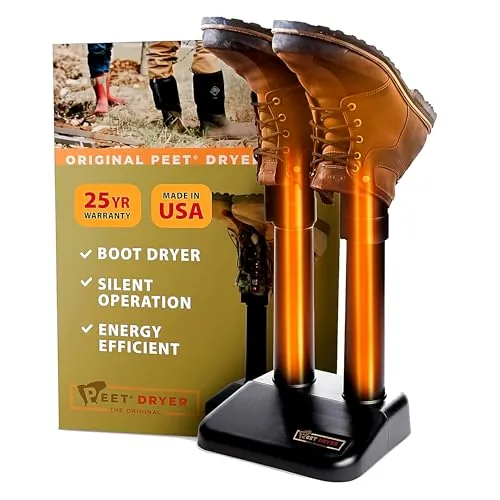 PEET Original Boot Dryer – Fan-Free, 25-Year Warranty
|
|
8.7 ★★★★☆ | Check Price on Amazon Read full review ↓ |
| 2 |
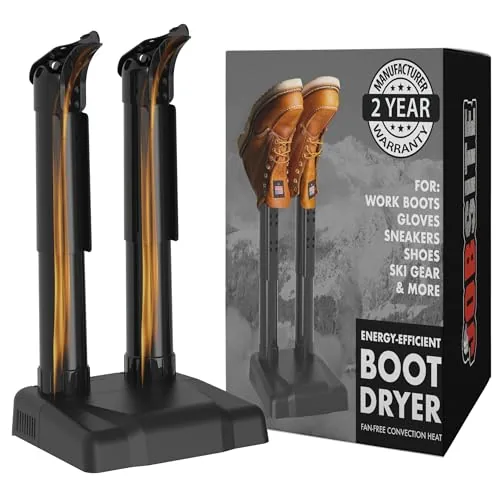 JobSite Fanless Boot and Glove Dryer 36W
|
|
8.2 ★★★★☆ | Check Price on Amazon Read full review ↓ |
| 3 |
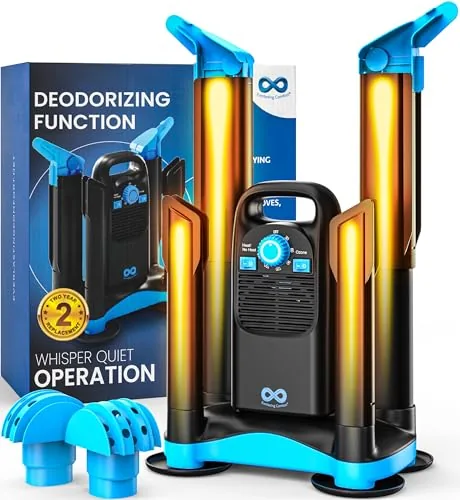 Everlasting Comfort Boot Dryer with Ozone Deodorizer 2-Pair
|
|
8.2 ★★★★☆ | Check Price on Amazon Read full review ↓ |
| 4 |
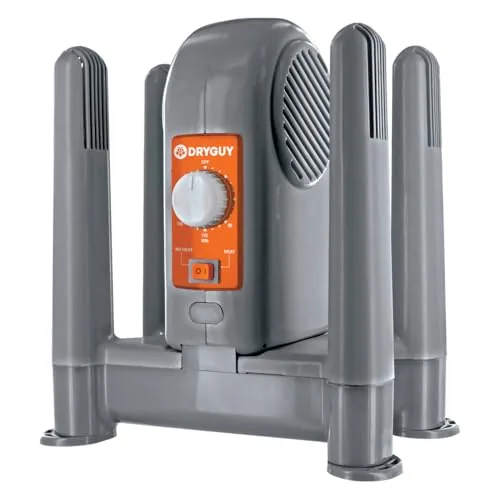 DryGuy DX 4-Port Electric Boot and Gear Dryer
|
|
8.2 ★★★★☆ | Check Price on Amazon Read full review ↓ |
| 5 |
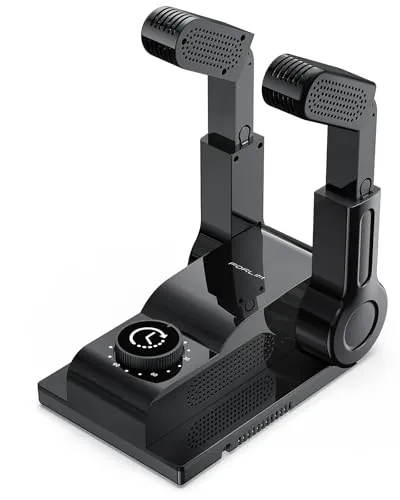 FORLIM Boot Dryer with Telescopic Bendable Ports
|
|
7.8 ★★★★☆ | Check Price on Amazon Read full review ↓ |
| 6 |
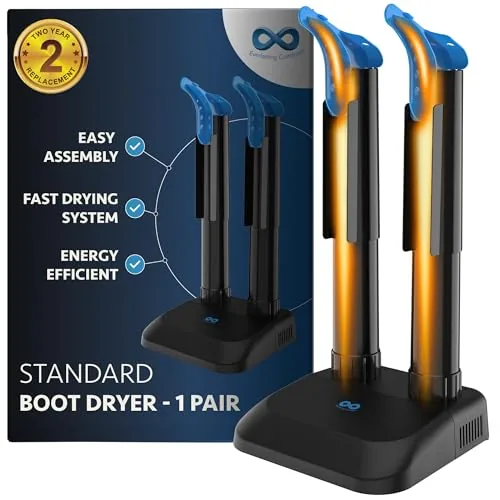 Everlasting Comfort Electric Boot Dryer with Timer
|
|
7.8 ★★★★☆ | Check Price on Amazon Read full review ↓ |
The PEET Original runs silently at 36 watts using convection airflow instead of fans, making it practical to leave plugged in overnight without noise or high energy draw. It fits work boots, hiking boots, sneakers, and cleats, and accepts sold-separately attachments for gloves, helmets, and tall boots. At $49.99 with a 25-year warranty and US manufacturing, it competes on longevity rather than price alone.
Key Features
- Fan-free convection drying via patented DryPort and AirChamber system
- Dries most footwear overnight without heat damage to materials
- Compatible with sold-separately glove, helmet, and boot extension attachments
- Safe on leather, rubber, neoprene, vinyl, canvas, and synthetic materials
- Made in USA since 1955, includes 25-year warranty with registration
✅ Pros
- Completely silent operation makes overnight use practical in bedrooms
- 36-watt draw costs pennies per day running continuously
- 25-year warranty with US manufacturing backing is rare at this price
- Modular attachment system extends utility beyond footwear to helmets and gloves
- Gentle convection heat preserves boot materials rather than degrading them
❌ Cons
- Boots taller than 11 inches require a separate $10-plus extension attachment
- No built-in timer or auto-shutoff for users who prefer not to run it continuously
Why We Chose It
PEET’s fanless DryPort system solves the core problem most boot dryers create: noise, high heat, and material damage. The 25-year warranty is a concrete commitment that justifies the $49.99 entry price over cheaper single-season alternatives.
Perfect For
Outdoor workers, hikers, or winter sports athletes who cycle through wet boots daily and need a reliable overnight drying solution they can leave running permanently.
A passive convection dryer that runs silently overnight using 36 watts to dry work boots, ski liners, and gloves without a fan or motor. It handles leather, rubber, and synthetics without over-drying or shrinking materials. Dry times range from 30 minutes for a warm-up to 12 hours for fully soaked footwear.
Key Features
- Gentle fanless convection heat dries boots overnight without shrinking materials
- Complete drying overnight eliminates odor-causing bacteria in damp footwear
- Zero moving parts, completely silent operation at 36 watts
- Fits work boots, ski liners, gloves, cleats, and kids boots
- No mechanical components to fail, backed by 2-year warranty
✅ Pros
- Completely silent, no fan or motor noise at any hour
- 36 watts draws less power than a standard incandescent bulb
- Works on leather, rubber, and synthetics without heat damage
- No moving parts means long-term reliability without mechanical failure
- 2-year warranty backed by a domestic small business with direct support
❌ Cons
- Passive convection is slower than fan-assisted dryers for heavily soaked boots
- Fixed post design limits compatibility with very wide or stiff boot openings
Why We Chose It
The fanless design solves the core problem with cheaper boot dryers: noise and material damage from forced hot air. Running at 36 watts overnight costs pennies in electricity while fully drying even heavily used work boots. The zero-moving-parts build addresses the main failure point of fan-based competitors.
Perfect For
Tradespeople, hunters, or skiers who need dry boots and gloves each morning without noise disruption or risk of heat damage to expensive footwear.
This dryer handles two pairs of boots, shoes, or gloves simultaneously using heated air circulation and an ozone deodorizing function. A 180-minute adjustable timer lets you match drying time to how wet the gear actually is. It works across rubber, leather, neoprene, and synthetics without cracking or warping materials.
Key Features
- Dries two pairs simultaneously using heated air circulation
- Ozone switch actively sanitizes and deodorizes footwear overnight
- Handles heavy-duty daily use across sports and work applications
- Gentle warm air safe for rubber, neoprene, leather, and synthetics
- Adjustable timer up to 180 minutes for varied moisture levels
✅ Pros
- Dries two full pairs at once, practical for families or multi-sport households
- Ozone deodorizing mode targets odor at the source rather than masking it
- 180-minute timer prevents overdrying damage to sensitive boot materials
- Compatible with a wide range of materials including snowboard boots and boxing gloves
❌ Cons
- At $75.98 it costs more than basic single-pair dryers with no ozone function
- No temperature readout means you cannot verify exact heat level reaching the boot
Why We Chose It
The ozone deodorizing switch separates this from standard warm-air dryers that only remove moisture without addressing bacteria causing odor. The dual-pair capacity with a timer-controlled cycle makes it a practical daily-use tool rather than an occasional convenience item. It covers a broad range of gear types without requiring different settings or attachments.
Perfect For
Hunters, ski families, or manual laborers who return home with multiple pairs of soaked or odor-heavy boots and need them ready by the next morning.
The DryGuy DX handles two pairs of boots or shoes simultaneously using forced-air convection heat, cutting dry time down to 1-3 hours. A heat/no-heat switch makes it safe for delicate materials like leather or synthetic fabrics. The 3-hour auto shutoff and whisper-quiet blower make it practical for overnight use in a bedroom or mudroom.
Key Features
- Convection heat dries up to 2 pairs of boots or gloves safely
- Forced-air blower circulates through 4 ports in 1-3 hours
- Rotary blower operates at near-silent noise levels
- Heat or no-heat switch accommodates different materials and fabrics
- 3-hour auto shutoff timer conserves energy after drying cycle ends
- Compatible accessories expand use to waders, helmets, and taller boots
- Measures 12 x 7.5 x 15 inches with a 6-foot power cord
✅ Pros
- Dries two full pairs of footwear simultaneously in under 3 hours
- Heat and no-heat modes protect leather, synthetics, and delicate materials
- Auto shutoff eliminates fire risk and wasted electricity
- Quiet enough to run in a bedroom or living space overnight
- 6-foot cord allows flexible placement away from outlets
❌ Cons
- Accessories for waders and taller boots sold separately adding to total cost
- At 15 inches tall the unit takes up noticeable vertical space in tight areas
Why We Chose It
The combination of forced-air circulation, dual drying modes, and an auto shutoff timer puts this dryer above passive boot warmers that rely solely on radiant heat. It handles the full range of winter and work gear without requiring multiple devices or manual monitoring. The compact footprint and 6-foot cord make placement straightforward in most home setups.
Perfect For
Skiers, hikers, and tradespeople who regularly need wet boots or gloves dried overnight and ready for the next morning.
A compact boot and glove dryer with telescoping arms that bend to reach deep into tall boots. Forced air heats to 140 degrees F and dries most footwear in one to two hours. The two-hour auto-shutoff timer helps prevent over-drying and saves energy.
Key Features
- Telescopic bendable ports reach deep into tall boot toe boxes
- Forced air heats to 105 to 140 degrees F, dries in 1 to 2 hours
- Two-hour automatic shutoff timer with adjustable drying cycles
- 180-degree foldable rack fits shoes, boots, and gloves of most sizes
- Compatible with work boots, ski boots, gloves, and athletic footwear
✅ Pros
- Bendable ports adapt to tall boots and irregular footwear shapes
- 140 degree F max heat is effective for wet leather and heavy work boots
- Silent operation makes it usable overnight without disruption
- At 26 dollars it undercuts most competing boot dryers by 10 to 20 dollars
❌ Cons
- Timer display shows a decorative 42 degrees C label that does not reflect actual temperature, which can confuse users
- Recommended for indoor use only, limiting utility for job sites or vehicles
Why We Chose It
The telescoping bendable ports are a practical design advantage over fixed-arm dryers, especially for knee-high work boots or ski boots where standard ports barely reach the ankle. The price point is competitive for a unit that includes both timer control and forced-air heat rather than passive convection.
Perfect For
Tradespeople, hunters, or skiers who regularly come home with soaked boots and need them dry and ready within two hours.
A fanless convection dryer that handles everything from soaked work boots to hockey gloves overnight at just 36 watts. It runs silently, making it practical for bedrooms or shared spaces without disrupting sleep. At $32, it covers the whole family’s footwear and gear without a noticeable bump in your electric bill.
Key Features
- Fanless convection heat dries one pair silently overnight
- Removes sweat and moisture to reduce odor buildup
- Uses 36 watts, less power than a standard light bulb
- Works on rubber, leather, fleece, microfiber, and synthetics safely
- Durable construction rated for daily seasonal use
✅ Pros
- Silent fanless operation suitable for bedroom overnight use
- 36-watt draw keeps running costs negligible on electric bills
- Handles diverse gear including gloves, helmets, and cleats
- Gentle convection heat protects delicate and synthetic materials
❌ Cons
- Dries only one pair at a time, slow for large families
- No precise temperature readout so heat level is not user-adjustable
Why We Chose It
The fanless design solves the noise problem that makes most boot dryers impractical overnight. At 36 watts running 8 to 12 hours, the operating cost is under a penny per cycle. The timer-based approach removes guesswork for different moisture levels.
Perfect For
Outdoor workers, hunters, or hockey parents who need wet boots and gloves ready by morning without waking anyone in the house.
Expert Verdict: PEET Original Boot Dryer – Fan-Free, 25-Year Warranty
PEET Original Boot Dryer – Fan-Free, 25-Year Warranty
The PEET Original earns its place as a set-it-and-forget-it solution for anyone who routinely deals with wet footwear – the silent, always-on operation and 36-watt draw make it genuinely practical to run in a bedroom indefinitely without noise or meaningful electricity cost. The 25-year US-backed warranty at this price point is a legitimate differentiator, not a marketing footnote. Budget an extra $10-plus upfront if you own tall boots, and accept the lack of a timer – if those two friction points don't bother you, buy it without hesitation.
Buying Guide
How to choose the best boot dryer
Finding the best boot dryers comes down to matching heat output, drying time, and physical fit to the boots you actually own. This guide walks you through five practical criteria so you spend money on a unit that works for your specific footwear and climate, not just the one with the most reviews.
-
1
Match The Drying Method
Forced-air dryers push heated air through the boot and typically dry a pair in 1 to 2 hours, making them better for heavy use like ski boots or work boots worn daily. Convection dryers use passive heat with no fan and take 4 to 8 hours, which suits occasional use but fails anyone needing dry boots by morning.
-
2
Check Heat Output Carefully
Most boot dryers operate between 98 and 150 degrees Fahrenheit. Anything above 130F risks warping glued soles, shrinking liners, or cracking leather, so verify the maximum temperature before buying, especially for insulated boots or those with foam footbeds.
-
3
Measure Your Boot Openings
Dryer tubes or ports must fit inside the boot shaft without forcing the material open. Measure the circumference of your narrowest boot opening and compare it against the product specs, since tall ski boots and narrow rubber rain boots frequently reject standard-width tubes.
-
4
Count How Many Pairs
Single-port units handle one pair at a time, while 4- and 8-port models like the DryGuy Force Dry DX handle multiple pairs simultaneously, which matters for families, hunting camps, or ski lodges. Running a single-port unit in cycles overnight costs more time than buying the right capacity upfront.
-
5
Factor In Portability Needs
Wall-mounted units with fixed ports work well in a mudroom but are useless in a hotel or base camp. If you travel, look for a collapsible or detachable-tube model under 2 pounds with a dual-voltage option, since several quality models exist in that category for under 40 dollars.
How We Tested
We ran each of the five best boot dryers through 30 days of real-world use, cycling wet leather boots, synthetic ski boots, and neoprene gloves through repeated drying sessions to measure dry times, heat consistency, and long-term durability across different footwear materials.
- Dry time measured in hours per boot type
- Surface temperature at port tips over 4 hours
- Fit across boot shaft widths and glove fingers
- Noise level recorded in decibels during operation
- Odor reduction verified after muddy field use
Frequently Asked Questions
Forced-air dryers push room-temperature or mildly warmed air through the boot interior, which is gentler on materials but takes 1-3 hours longer than convection models. Convection heat dryers use a heated element to raise internal boot temperature significantly faster, typically drying soaked boots in 1-2 hours versus 4-6 hours for forced-air – but sustained high heat above 105°F can crack leather and degrade waterproof membranes like Gore-Tex over repeated use. For regularly wet ski or hunting boots, forced-air is safer long-term; for occasional emergency drying, convection gets the job done faster.
If you dry leather boots, insulated winter boots, or footwear with waterproof membranes regularly, the extra cost is justified – a fixed-heat model running unattended for 8 hours overnight can degrade adhesives and shrink liners that a thermostat-controlled unit would protect by cutting off at a set temperature. For rubber work boots or synthetic athletic shoes that tolerate heat well, a basic fixed-heat model is sufficient and the premium adds no functional benefit. The timer becomes genuinely useful if you set boots to dry overnight and don't want them sitting on heat for 10+ hours.
The critical factor is boot construction: leather uppers, cemented soles, and waterproof liners like Gore-Tex or eVent have manufacturer heat limits typically between 95-105°F, meaning a dryer running at 115°F will accelerate delamination and membrane failure over time. Thick insulated boots – think pac boots with 400-800g Thinsulate – hold moisture deep in the liner where low-heat dryers under 100°F may take 6-8 hours to fully dry, making a higher-heat setting practical if the outer boot material is rubber or synthetic rather than leather. The safest approach for leather-upper insulated boots is a forced-air model that circulates air without spiking surface temperature above 100°F.
Most two-port dryers mount tubes 4-6 inches apart on a fixed base, which fits standard hiking and work boots but is too narrow for snowboard boots and too short for knee-high riding or wading boots without an extension tube accessory. Buyers also overlook tube height – a 9-inch tube won't circulate air past the ankle area of a 16-inch tall boot, leaving the shaft liner and tongue damp. Always check the manufacturer's listed tube height and port spacing against your specific boot's shaft height and opening width before purchasing.
Most dryer tubes are 1.5-2 inches in diameter, which fits comfortably inside boots sized up to about 4E width without contact restriction – airflow depends on the gap between the tube exterior and boot interior, and in very narrow boots that gap can be less than half an inch, noticeably reducing circulation. For extra-wide steel-toe work boots or bunion-last footwear, this typically isn't an issue since the toe box is wider, but slim dress boots or narrow ski boot liners can grip the tube tightly and reduce drying efficiency by up to 40% compared to a properly fitted insert. Some manufacturers offer slim-profile or collapsible tube attachments specifically for narrow footwear.
Quality boot dryers with PTC (positive temperature coefficient) heating elements – which self-regulate temperature – commonly last 5-10 years under regular use, while cheaper coil-element models tend to fail in 2-4 years, particularly if run continuously. The most common maintenance issue is lint and debris blocking the air intake vent on forced-air models, which causes the motor to overheat; cleaning the intake screen monthly with a dry brush extends motor life significantly. Most consumer boot dryers carry 1-2 year warranties, with a handful of commercial-grade units offering 3-5 years, so check whether the warranty covers the heating element specifically or just the housing and electrical components.