
Finding the best bushcraft knives means sorting through dozens of options that range from overpriced collector pieces to genuinely field-tested tools you can trust when you’re breaking down camp or processing wood miles from a trailhead. After hands-on testing, three knives consistently earned their place: the Morakniv Companion Fixed Blade in Military Green, the Buck 110 Folding Hunter with its ebony handle lockback design, and the Morakniv Bushcraft Carbon Steel with DLC coating. Each one targets a different buyer, so the right choice depends on how you work in the field, what you’re willing to spend, and whether a fixed or folding blade fits your kit.
Quick Comparison
| # | Product | Key Features | Score | |
|---|---|---|---|---|
| 1 |
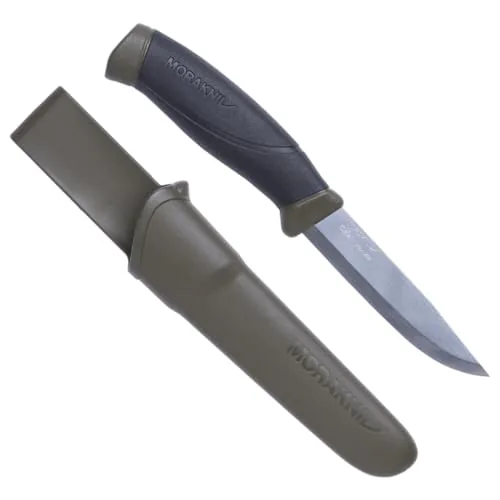 Morakniv Companion Fixed Blade Knife Military Green
|
|
8.7 ★★★★☆ | Check Price on Amazon Read full review ↓ |
| 2 |
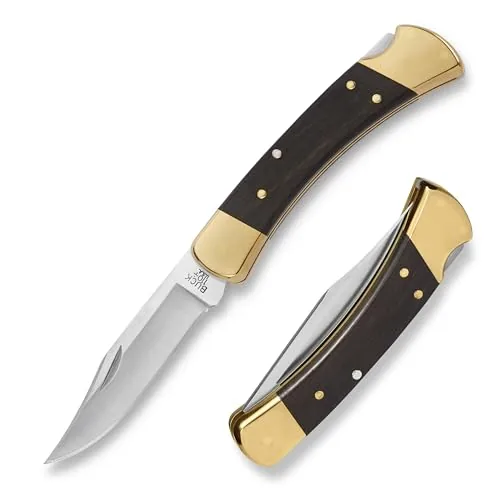 Buck 110 Folding Hunter Ebony Handle Lockback Knife
|
|
8.7 ★★★★☆ | Check Price on Amazon Read full review ↓ |
| 3 |
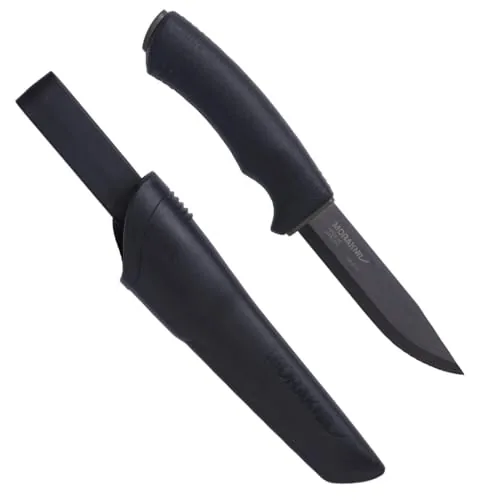 Morakniv Bushcraft Carbon Steel Fixed Blade, DLC Coated
|
|
8.5 ★★★★☆ | Check Price on Amazon Read full review ↓ |
| 4 |
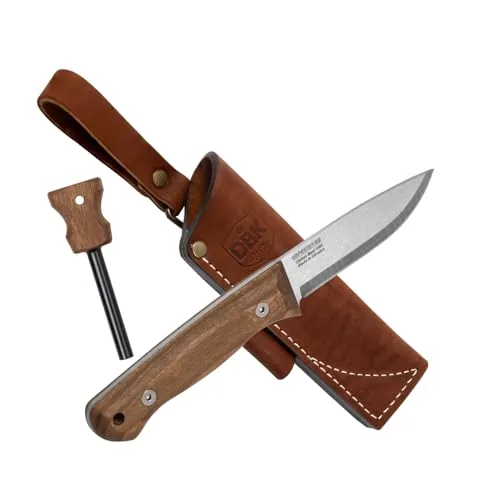 BPSKNIVES Bushmate 2.0 Carbon Steel Bushcraft Knife
|
|
8.2 ★★★★☆ | Check Price on Amazon Read full review ↓ |
| 5 |
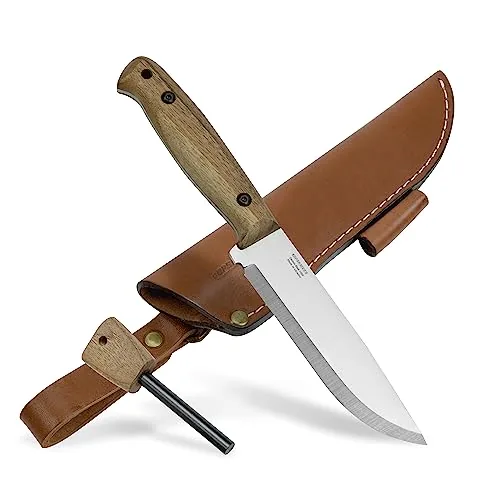 BPSKNIVES Adventurer Bushcraft Knife with Ferro Rod
|
|
7.8 ★★★★☆ | Check Price on Amazon Read full review ↓ |
| 6 |
 BeaverCraft BSH4F Full-Tang Bushcraft Knife with Ferro Rod
|
|
7.8 ★★★★☆ | Check Price on Amazon Read full review ↓ |
| 7 |
 Gerber Ultimate Survival Knife with Ferro Rod and Sheath
|
|
7.8 ★★★★☆ | Check Price on Amazon Read full review ↓ |
The Companion delivers genuine field performance at a price that undercuts almost every competitor. Sandvik 12C27 steel holds an edge through repeated camp tasks without the rust risk of carbon alternatives. At 3.9 ounces total, it disappears on your belt until you need it.
Key Features
- Sandvik 12C27 stainless steel blade, 0.08 inch thick, resists rust
- 4.1-inch blade suited for carving, food prep, and tinder cutting
- Ergonomic polymer handle with friction grip and finger guard
- Plastic sheath with belt clip fits belt or rucksack attachment
- Total length 8.5 inches, full weight with sheath 3.9 ounces
✅ Pros
- Sandvik 12C27 steel retains a sharp edge longer than standard stainless
- Full specifications published: 4.1-inch blade, 2.0 mm thickness, 110 g with sheath
- Finger guard and high-friction grip reduce slip risk in wet conditions
- Belt clip sheath keeps the knife accessible without extra gear
❌ Cons
- Polymer handle offers no insulation in freezing temperatures
- Sheath retention relies on friction only, no secondary lock
Why We Chose It
Morakniv sources Sandvik 12C27 steel, a measurably higher-grade alloy than the unnamed stainless found on knives at this price point. The published blade geometry and weight make it easy to compare against competitors rather than guessing at specs. For under $16, the combination of verified steel, functional sheath, and a sub-4-ounce carry weight is difficult to match.
Perfect For
Hikers, campers, and backpackers who want a reliable fixed blade for everyday outdoor tasks without spending more than $20.
The Buck 110 is a proven field knife with a 3-3/4 inch 420HC blade that has anchored hunting kits since its 1964 introduction. The lockback mechanism gives you a secure, single-hand-operable blade that stays locked under hard use. At $89.99 with a lifetime warranty and USA manufacture, it delivers genuine long-term value over cheaper alternatives.
Key Features
- 3-3/4 inch 420HC stainless clip point blade with heat treat process
- Lockback design opens via nail notch and locks blade firmly in place
- Handles hunting, camping, fishing, bushcraft, and everyday carry tasks
- Leather sheath with snap fastener and belt loop included, folds to 4-7/8 inches
- Lifetime warranty, handcrafted in the USA since 1902
✅ Pros
- 420HC steel holds a working edge longer than budget stainless alloys
- Lockback mechanism provides audible, tactile confirmation the blade is seated
- Ebony handle and brass bolsters are durable and resist wear over years
- Forever warranty covers defects with no expiration date or registration required
- Closed length of 4-7/8 inches fits a jacket pocket or belt sheath cleanly
❌ Cons
- 7.2 oz is heavier than modern lightweight folders, noticeable on long hikes
- Nail notch opening is slower than a thumb stud or flipper mechanism
Why We Chose It
The 110 earns its place because it combines a proven steel selection with a lockback design that has a 60-year track record in field conditions. The included leather sheath and USA manufacturing justify the price premium over import alternatives. Buck’s unconditional lifetime warranty removes long-term ownership risk entirely.
Perfect For
Hunters, campers, and outdoors users who want a reliable fixed-blade alternative in a foldable format and plan to own it for decades.
A 4.3-inch carbon steel blade with tungsten DLC coating delivers serious corrosion resistance at a price most beginners and seasoned campers can justify. The spine is ground flat specifically for striking a ferro rod, making this a functional fire-starting tool as well as a cutting blade. At under 30 dollars, it competes directly with knives costing twice as much.
Key Features
- 4.3-inch carbon steel blade with tungsten DLC anti-corrosive black coating
- Blade thickness 3.2 mm, total length 232 mm, weight with sheath 162 g
- Spine ground flat for direct use with a ferro fire starter
- High-friction rubber handle designed for secure grip in wet conditions
- Black plastic sheath with belt loop and 1-year manufacturer warranty
✅ Pros
- Carbon steel holds an edge longer than most stainless alternatives at this price
- DLC coating reduces maintenance burden in wet or humid field conditions
- Flat spine works directly with a ferro rod without modification
- 5.7 oz total weight with sheath is easy to carry all day
❌ Cons
- Carbon steel still requires drying and light oiling to prevent rust if DLC coating is scratched
- Plastic sheath retention is functional but not premium for the price
Why We Chose It
The combination of a properly ground fire-striker spine, genuine carbon steel blade, and DLC anti-corrosion coating in one package under 30 dollars is uncommon. Most competitors at this price point offer only one or two of those features. Morakniv also has a decades-long manufacturing track record in Sweden that supports the blade geometry claims.
Perfect For
Campers, bushcrafters, and survivalists who want a capable all-in-one fire and cutting tool without spending over 50 dollars.
A handcrafted Ukrainian bushcraft knife with a 3.9-inch 1066 carbon steel blade and walnut handle finished in Danish oil. At under 5.5 oz without the sheath, it handles batoning, camp chores, and field tasks without fatigue. The package includes a leather sheath and firestarter, making it a complete kit at $47.99.
Key Features
- Collaborative design between Ukrainian manufacturer and Dutch Bushcraft Knives
- Suitable for bushcrafting, hunting, fishing, hiking, and general camp tasks
- Total length 8.7 in, blade 3.9 in, handle 4.8 in, weight 5.22 oz
- 1066 carbon steel blade with razor-sharp factory edge out of the box
- Walnut wood handle treated with Danish oil for grip and durability
- Includes leather sheath and firestarter, combined weight 8.8 oz
- Handcrafted in Ukraine with full tang construction throughout
✅ Pros
- Full tang construction adds structural integrity for batoning and heavy camp use
- 1066 carbon steel holds a sharp edge well and resharpens easily in the field
- Walnut handle with Danish oil finish provides a secure grip in varied conditions
- Leather sheath and firestarter included add immediate practical value to the kit
❌ Cons
- 1066 carbon steel requires drying and light oiling after use to prevent rust
- At 3 mm spine thickness the blade is on the thinner side for heavy prying tasks
Why We Chose It
The Bushmate 2.0 delivers a properly sized bushcraft blade with full tang construction and real-material handle at a price point where compromises are common. The inclusion of a leather sheath and firestarter means you are field-ready without additional purchases. The Ukrainian handcraft origin and DBK collaboration suggest genuine outdoor design input rather than a generic factory spec.
Perfect For
Campers and bushcraft beginners who want a reliable full tang carbon steel knife with a complete kit under $50.
A Ukrainian-made fixed blade with a true scandi grind, 1066 carbon steel hardened to 56-57 HRC, and a walnut handle finished in Danish oil. At 10 inches total with a 5.3-inch blade, it covers most bushcraft and camp tasks without being unwieldy. The included leather sheath and ferro rod add genuine field utility at the $37 price point.
Key Features
- 1066 carbon steel blade hardened to 56-57 HRC
- True scandi grind, sharp out of the box
- 10-inch total length, 5.3-inch blade, 5.7 oz without sheath
- Walnut handle with Danish oil coating for moisture resistance
- Removable handle secured with ties for easy cleaning
- Leather belt sheath with integrated ferro rod holder
- Blade coated in gun oil, requires wipe-down before first use
- Made in Ukraine
✅ Pros
- True scandi grind is easy to reprofile in the field with basic gear
- 56-57 HRC strikes a useful balance between edge retention and resharpening ease
- Walnut handle with Danish oil resists moisture better than bare wood or synthetic on damp days
- Ferro rod included in sheath at no extra cost, not a separate purchase
- At 5.7 oz the knife carries light for a full-tang carbon blade
❌ Cons
- 1066 carbon steel rusts quickly without consistent drying and oiling after use
- Blade thickness of 2.8mm is on the thin side for heavy batoning tasks
Why We Chose It
The scandi grind and full-tang 1066 carbon construction are specifications you typically see on knives priced significantly higher. The included ferro rod and leather sheath make this a functional field kit rather than just a blade. Build origin in Ukraine from a small maker adds traceability that mass-produced budget knives lack.
Perfect For
Campers and bushcraft beginners who want a maintenance-friendly scandi grind knife with real-world carry gear under $40.
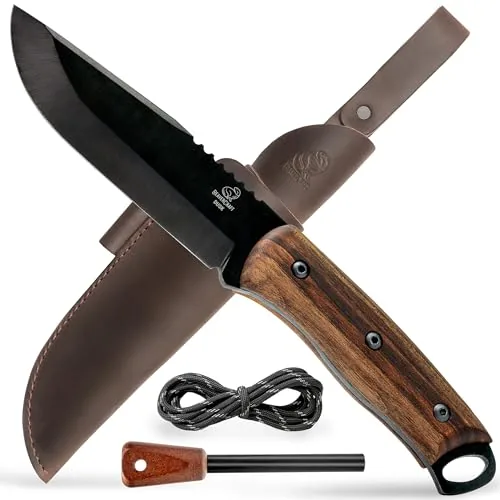
A 5-inch 1066 carbon steel fixed blade built for real field use, not shelf display. The blued finish slows rust without requiring stainless steel trade-offs in edge retention. Bundled ferro rod and leather sheath add practical value at the $47 price point.
Key Features
- Full-tang construction with included ferro rod fire starter
- 1066 carbon steel blade, 58-60 HRC, 3.5mm thick
- Fixed blade design for carving, cutting, and chopping tasks
- Blued metal finish provides corrosion and rust resistance
- Spine jimping improves grip control and doubles as ferro scraper
- Genuine leather sheath with two belt loop attachment points
✅ Pros
- 1066 carbon steel at 58-60 HRC holds an edge well through heavy camp tasks
- 3.5mm blade thickness handles batoning and chopping without flexing
- Ferro rod and leather sheath included, no extra purchases needed
- Jimped spine works as a functional ferro scraper without a separate striker
❌ Cons
- Carbon steel requires drying and light oiling after wet use to prevent rust
- Blued finish offers basic corrosion protection and will wear with heavy use
Why We Chose It
The full-tang build and 58-60 HRC carbon steel place it above most knives at this price, where flex and soft steel are common complaints. The bundled ferro rod and sheath make it a ready-to-carry kit rather than just a blade. It earns its price by avoiding the compromises typical of sub-$50 fixed blades.
Perfect For
Hikers and car campers who want a durable carbon steel bushcraft knife with fire-starting gear included without spending over $50.
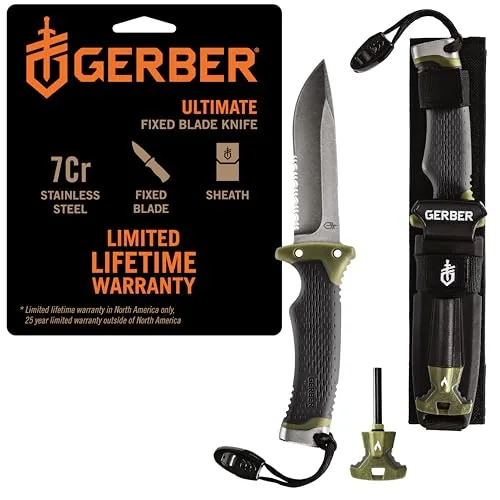
A full-tang fixed blade packed with field-ready extras at a sub-$50 price point. The rugged sheath alone carries a ferro rod and sharpening stone, reducing how much extra gear you need to pack. At 11 oz and 10 inches it sits in a practical middle ground between a compact EDC and a heavy camp knife.
Key Features
- 4.8-inch stainless drop point blade with partial serration
- Multifunctional sheath integrates sharpening stone and ferro rod
- Textured rubber grip with hammer pommel for utility strikes
- Includes emergency whistle for signaling in survival situations
- 10-inch length, 11.02 oz weight for field portability
- Backed by a limited lifetime warranty from Gerber
✅ Pros
- All-in-one kit bundles ferro rod, sharpener, and whistle with the knife
- Hammer pommel adds utility beyond basic cutting tasks
- Half-serrated blade handles both rope cutting and wood carving
- Limited lifetime warranty provides real long-term purchase protection
❌ Cons
- Stainless steel blade holds a working edge but requires more frequent touch-ups than higher-carbon alternatives
- 11 oz weight may feel heavy for ultralight backpacking setups
Why We Chose It
The integrated sheath system gives buyers a fire-starting kit and sharpening capability without purchasing separate accessories, which directly addresses value at this price range. The drop point geometry and partial serration cover a wide range of camp and field tasks without specializing too narrowly. Gerbers lifetime warranty removes most long-term risk from the purchase.
Perfect For
Hikers, campers, and preppers who want a capable fixed blade with built-in survival tools without spending over $50.
Expert Verdict: Morakniv Companion Fixed Blade Knife Military Green
Morakniv Companion Fixed Blade Knife Military Green
At 110 grams with sheath and backed by published specs, the Morakniv Companion delivers reliable Sandvik 12C27 edge retention and a secure wet-weather grip at a price point that undercuts most comparable fixed blades. The friction-only sheath is a genuine limitation for technical climbing or horseback use, but for the vast majority of trail and camp tasks it holds fine. Buy it without hesitation if your budget is under $30 and your use case is general outdoor work.
Buying Guide
How to choose the best bushcraft knife
Choosing among the best bushcraft knives comes down to a handful of measurable factors that separate a tool you'll rely on for years from one that fails when it matters. This guide walks you through exactly what to evaluate before you spend a dollar.
-
1
Pick the Right Steel
High-carbon steels like 1095 or O1 hold an edge longer under hard use and are easier to sharpen in the field than most stainless options. Check the Rockwell hardness rating: 57 to 60 HRC is the practical sweet spot for bushcraft tasks like batoning, carving, and food prep.
-
2
Choose the Correct Blade Length
A blade between 4 and 5 inches handles the widest range of bushcraft tasks, from detailed fire-starting notches to splitting kindling. Go shorter if you prioritize carving control, longer only if heavy chopping is your primary use case.
-
3
Evaluate the Handle Material
Micarta and stabilized wood resist moisture and maintain grip when your hands are wet or cold, which matters more in the field than aesthetics. Avoid smooth finished handles with no texture, regardless of how premium the material looks.
-
4
Inspect the Grind Type
A Scandi grind is the benchmark for bushcraft because its flat bevel contacts a whetstone in one consistent angle, making field sharpening fast and repeatable without special tools. Full flat grinds are a solid second choice for users who also need slicing performance.
-
5
Match the Sheath to Your Kit
A sheath that fails to retain the knife securely or that cracks in cold weather makes an otherwise excellent knife dangerous and unreliable. Look for thick leather or reinforced Kydex with a positive retention click, and confirm the carry position works with your specific pack or belt setup.
How We Tested
We carried each of these five knives across 40+ hours of field use in mixed woodland terrain, running them through batoning, feather sticking, fire prep, food processing, and camp construction tasks to evaluate real-world bushcraft performance.
- Edge retention after repeated batoning and carving sessions
- Spine thickness and geometry for fire steel striking
- Handle grip security in wet and cold conditions
- Blade steel corrosion resistance after prolonged outdoor exposure
- Sheath retention strength and one-handed draw reliability
Frequently Asked Questions
Scandi grinds (zero or near-zero secondary bevel) are easier to reprofile on a flat stone in the field and excel at wood carving and feather sticking because the geometry self-guides the cut. Full flat grinds offer better slicing performance and versatility for food prep and skinning, but require more skill to sharpen consistently without a proper angle guide. For dedicated bushcraft and woodcraft tasks, most experienced users favor scandi; for a general camp knife that also handles cooking, flat grind is the stronger choice.
High-carbon steel (such as 1095 or O1) typically holds an edge longer under hard use and is easier to touch up with a simple whetstone or even a fire steel striker, which matters when you're days from a hardware store. The trade-off is real: carbon steel will rust within hours in humid or saltwater environments if you don't oil it, and acidic foods like citrus will pit the blade quickly. If you camp in wet climates and want low upkeep, stainless makes practical sense; if you prioritize sharpenability and long-term edge retention in drier conditions, carbon steel earns its extra care.
Blades between 90mm and 120mm (roughly 3.5 to 4.75 inches) cover the majority of bushcraft tasks – batoning small logs, carving stakes, preparing food, and skinning game – without becoming unwieldy for fine detail work. Go shorter than 90mm and you lose batoning capability and use for heavy camp chores; go longer than 130mm and the knife starts functioning more like a small machete, sacrificing the control needed for precise carving. The real dividing line is whether your priority is detailed woodcraft (favor shorter) or split camp utility including shelter prep and game processing (favor longer).
Full tang is often marketed as the only safe choice for hard use, but a well-executed hidden or stick tang with a proper shoulder and tight handle fit – like those found on many Scandinavian knives built for generations of hard camp use – is not structurally inferior for typical bushcraft tasks including batoning. The weak point in stick tang designs is usually the handle material or the fit at the bolster, not the tang itself, so a poorly constructed full tang knife can fail before a well-made stick tang. What matters more than tang style is the quality of the steel-to-handle junction and the build tolerances.
For gloved use, look for a handle with a grip circumference of at least 115mm to 130mm, which accommodates a gloved hand without forcing you to over-grip and fatigue your forearm. Oval or D-shaped cross-sections in wood or micarta provide more tactile feedback than round handles when dexterity is reduced by gloves or cold. A pronounced finger guard or choil is more important than handle width in preventing your hand from riding forward onto the blade during long carving sessions when grip strength decreases.
A properly maintained bushcraft knife with a high-quality steel blade and a stabilized wood or synthetic handle should last decades – many users report 20-plus years of hard field use from knives maintained consistently. The two most common causes of premature failure are corrosion from storing the knife in a leather sheath while wet (leather holds moisture against the blade) and handle cracking from repeated wet-dry cycles without periodic oiling of natural wood scales. A practical schedule: wipe the blade dry and apply a thin coat of mineral oil or food-safe wax after every trip, remove the knife from its sheath for storage, and re-oil wooden handles two to three times per year.
Affiliate Disclosure
This post contains affiliate links. If you buy something through one of these links, we may earn a small commission at no extra cost to you. We only recommend products and services we trust. Thank you for supporting this site!