
If the power goes out during a tornado warning or hurricane, your phone battery won’t last forever and cell towers often go down first – that’s exactly why a dedicated emergency weather radio belongs in every home, car, and go-bag. After testing dozens of models, three stood out for reliability, reception quality, and practical features: the Midland WR120B for plug-in home use with SAME alert filtering, the Mesqool 12000mAh Solar Hand Crank for off-grid and portable situations, and the Midland ER310 as a rugged all-in-one option with multiple charging methods. Here’s what each one actually does well, where each falls short, and which type of buyer each one fits best.
Quick Comparison
| # | Product | Key Features | Score | |
|---|---|---|---|---|
| 1 |
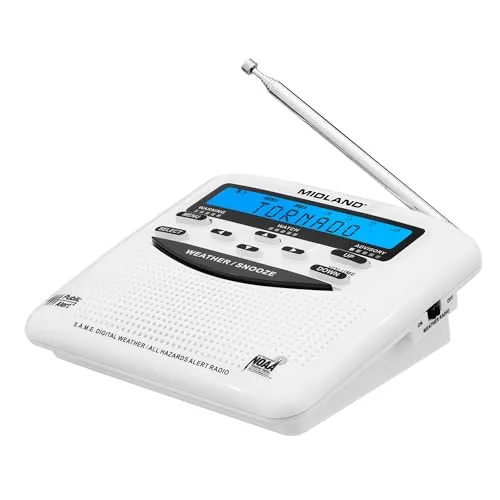 Midland WR120B NOAA Weather Alert Radio with SAME
|
|
8.2 ★★★★☆ | Check Price on Amazon Read full review ↓ |
| 2 |
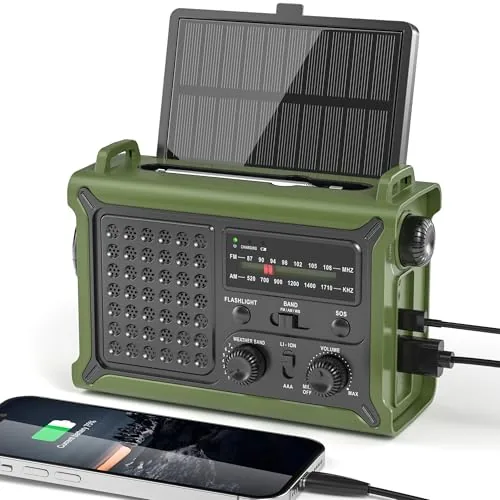 Mesqool 12000mAh Solar Hand Crank Emergency Weather Radio
|
|
8.2 ★★★★☆ | Check Price on Amazon Read full review ↓ |
| 3 |
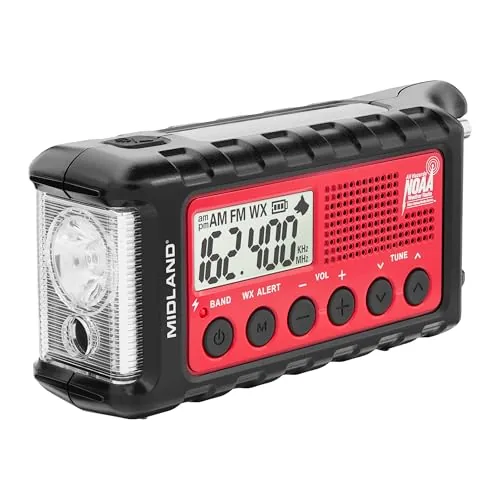 Midland ER310 Emergency Crank Weather Radio
|
|
8.2 ★★★★☆ | Check Price on Amazon Read full review ↓ |
| 4 |
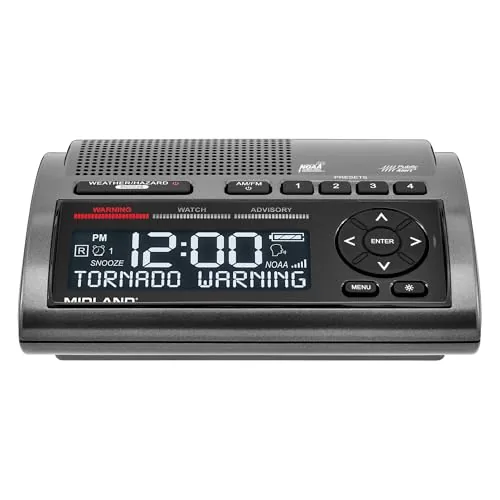 Midland WR400 NOAA Weather Radio with AM/FM and Alarm
|
|
8.2 ★★★★☆ | Check Price on Amazon Read full review ↓ |
| 5 |
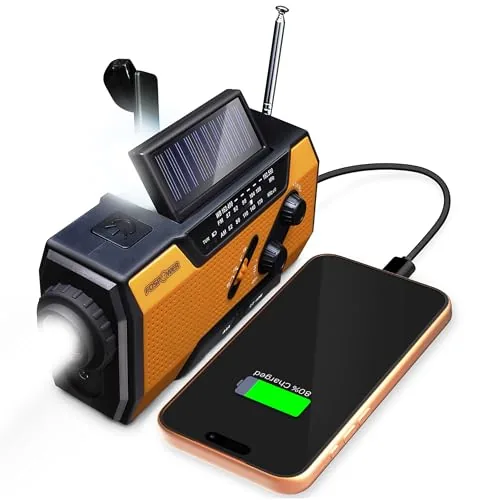 FosPower A1 Emergency Radio with 7400mWh Power Bank
|
|
7.8 ★★★★☆ | Check Price on Amazon Read full review ↓ |
| 6 |
 Raynic Emergency Radio 5000mAh Solar NOAA Weather Alert
|
|
7.8 ★★★★☆ | Check Price on Amazon Read full review ↓ |
The WR120B monitors all seven NOAA weather channels and triggers audible alerts for over 60 emergency types. SAME localized programming lets you filter alerts down to your specific county, so you only hear warnings that actually affect you. Color-coded indicators instantly communicate alert severity without you needing to read the display.
Key Features
- Scans NOAA channels and alerts for 60+ emergency types
- SAME code entry targets alerts to your county or partial county
- Programs up to 25 counties for simultaneous monitoring
- Color-coded indicators show alert type and severity level
- Continuous backlighting keeps LCD visible at all times
- Alert override interrupts other modes when danger is detected
- Trilingual display supports multiple language preferences
✅ Pros
- County-level filtering cuts false alarms for distant weather events
- 25-county programming covers households near multiple county borders
- Color-coded severity display works at a glance across a room
- At 46 dollars it undercuts many competitors with similar SAME capability
❌ Cons
- No battery backup listed, leaving a gap during power outages
- Trilingual display is a niche feature that adds no value for most users
Why We Chose It
The SAME localized programming is the defining feature here, letting you receive only the alerts relevant to your specific area rather than every regional broadcast. The 25-county capacity makes it practical for people living near county lines or managing multiple properties. At under 50 dollars it delivers core emergency radio functionality without paying for premium extras you may not need.
Perfect For
Homeowners in tornado or hurricane-prone regions who want county-specific weather alerts without constant false alarms from neighboring areas.
A go-bag ready emergency radio with a genuinely large 8500mm solar panel, a real 12000mAh battery, and dual USB outputs for charging phones during outages. It covers AM, FM, and all NOAA weather bands with dedicated noise-reduction circuitry. The 260-foot flashlight and soft reading lamp add practical utility beyond basic radio functions.
Key Features
- High-sensitivity chip with noise reduction across NOAA, FM, AM bands
- 8500mm monocrystalline solar panel, over 4x larger than typical competitor panels
- Upgraded copper-coil generator cranks charge a phone in roughly 3 minutes
- Actual 12000mAh lithium battery, not an inflated marketing figure
- Flashlight reaches 260 feet, frosted reading lamp included, two brightness levels each
- Dimensions 6.8 x 2.9 x 4.7 inches, large tuning knob, non-slip grip
- Charge battery fully before first use for best performance
✅ Pros
- 8500mm solar panel is meaningfully larger than the 2000mm panels on budget competitors
- 12000mAh capacity is enough to recharge most smartphones 2 to 3 times
- Dual-mode lighting covers both long-range navigation and close-up reading without eyestrain
- Ergonomic size and labeled controls make it usable in the dark or for elderly users
❌ Cons
- Hand-crank charging is a last resort, not a primary power source for a 12000mAh battery
- Solar charging speed in overcast or low-angle light will still be slow despite the larger panel
Why We Chose It
The 8500mm monocrystalline panel is a verifiable spec that separates this unit from cheaper radios with decorative solar strips that barely trickle charge. A genuine 12000mAh cell combined with dual USB outputs makes it a functional power bank, not just a radio with a novelty crank. The noise-reduction circuitry and extended antenna address the most common complaint about budget emergency radios, which is poor reception during actual storms.
Perfect For
Households in storm-prone regions who want a single device that handles emergency alerts, phone charging, and lighting during multi-day power outages.
The ER310 covers your bases when grid power fails, offering three independent charging methods including a 2600 mAh lithium battery rated for 32 hours of radio use. NOAA Weather Scan locks onto the strongest signal automatically, removing guesswork during fast-moving storms. The USB output port lets you push charge to a phone when it matters most.
Key Features
- Solar panel, hand crank, and 2600 mAh rechargeable battery as power sources
- 130-lumen CREE LED flashlight with SOS Morse code beacon mode
- NOAA Weather Scan auto-locks strongest of 7 WX channels for alerts
- USB output charges phones and tablets from internal battery
- Backup operation via 6 AA batteries not included
- Ultrasonic dog whistle for signaling search and rescue teams
- AM and FM radio reception in addition to weather bands
✅ Pros
- 2600 mAh battery delivers up to 32 hours of radio runtime without recharging
- NOAA auto-scan removes need to manually find the correct weather channel
- USB charging output makes it a power source for phones during outages
- Four independent power inputs including AA batteries as a last-resort fallback
❌ Cons
- Hand crank charges slowly and requires sustained effort for meaningful runtime
- Ultrasonic dog whistle is a niche feature that adds bulk without broad utility
Why We Chose It
The ER310 stands out because redundancy is built into every critical function, from power input to lighting modes to weather alerting. The auto-scan NOAA feature is operationally superior to manual-tune competitors at this price point. The 2600 mAh capacity is generous enough to serve as a secondary charger for mobile devices, not just a radio.
Perfect For
Homeowners in storm-prone regions who want a single grab-and-go device covering weather alerts, lighting, and emergency phone charging.
The WR400 combines a NOAA emergency alert scanner with an everyday AM/FM alarm clock, making it a practical dual-purpose device for home use. It auto-scans 10 weather band channels and locks onto the strongest signal, so you get alerts without manual tuning. S.A.M.E. county programming lets you filter alerts to your specific area, cutting out irrelevant warnings from neighboring regions.
Key Features
- Auto-scans 10 WX channels and locks onto strongest signal
- S.A.M.E. technology programs up to 25 counties for local alerts
- Choose from 85 dB siren, voice alert, or LED visual flash
- 80 distinct emergency alert types including AMBER alerts
- Four AA battery backup keeps radio running during power outages
- Built-in alarm clock with snooze, AM/FM radio, and auto-switchover
✅ Pros
- S.A.M.E. county filtering reduces false or irrelevant emergency alerts
- Three alert modes including loud 85 dB siren suit heavy sleepers
- AM/FM radio and alarm clock add daily utility beyond emergencies
- USB output lets you charge a phone directly from the unit
- Auto-switches from AM/FM to emergency alerts without manual input
❌ Cons
- AA batteries not included, adding a small extra cost at setup
- At 99 dollars it costs more than basic NOAA-only weather radios
Why We Chose It
The WR400 earns its price by combining reliable S.A.M.E. county-level filtering with everyday AM/FM alarm clock functionality, so it serves a purpose 365 days a year rather than sitting unused between emergencies. The 85 dB siren and LED flasher cover both hearing and visually impaired users. Battery backup adds a practical layer of reliability during the power outages that often accompany severe weather.
Perfect For
Homeowners in storm-prone regions who want a single bedside device that handles both daily wake-up routines and serious emergency alerting.
A compact emergency radio that pulls triple duty as a weather alert receiver, phone charger, and dual-mode light source. Three independent charging methods including hand crank, solar, and AAA batteries make it viable when grid power is gone for days. At $29.99 it delivers genuine utility without requiring any external power source to stay operational.
Key Features
- 7400mWh battery charges phones and small tablets via USB
- Three charging inputs: hand crank, solar panel, and AAA batteries
- Dual lighting: 4-LED reading panel plus 1W dedicated flashlight
- Receives NOAA weather alerts plus standard AM and FM bands
- Limited lifetime warranty included with purchase
✅ Pros
- Three independent power sources cover nearly any emergency scenario
- Dual lighting options serve both task and area illumination needs
- NOAA plus AM/FM reception covers weather and general broadcasts
- Lifetime warranty reduces long-term ownership risk at this price point
❌ Cons
- 2000mAh actual cell capacity limits phone charging to roughly one partial charge for modern smartphones
- Hand crank and solar charging are slow top-up methods, not primary charging solutions
Why We Chose It
This radio covers the core emergency preparedness checklist in a single $29.99 unit: weather alerts, multiple charging sources, phone power output, and two light modes. The lifetime warranty signals reasonable brand confidence in build quality. The combination of AAA battery fallback alongside crank and solar makes it genuinely self-sufficient when no power infrastructure exists.
Perfect For
Campers, preppers, or households building a go-bag who need one device to handle weather monitoring, lighting, and emergency phone charging without relying on grid power.
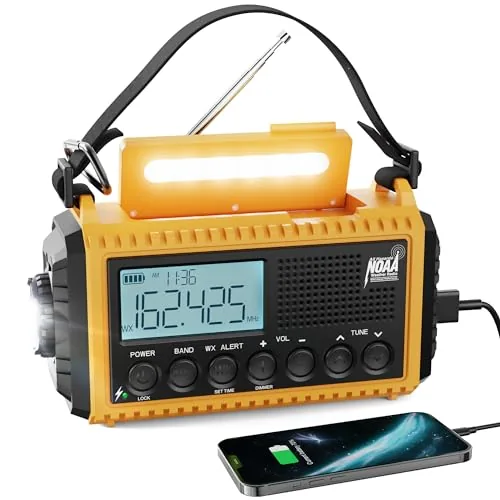
A compact emergency radio with six charging methods including solar and hand crank, making it genuinely useful when power grids fail. The 5000mAh battery can recharge phones while still powering the radio itself. At 1.2 pounds with IPX3 water resistance, it travels without becoming a burden.
Key Features
- Auto-scans NOAA weather alerts in standby mode without user input
- LCD screen shows battery level and frequency with digital tuning
- Six charging options: AC, USB, solar, hand crank, built-in battery, AAA backup
- 3W flashlight, 2.5W reading lamp, SOS alarm with flashing red light
- USB output charges phones and USB devices during outages
- Weighs 1.2 lbs, measures 6.8×3.7×2.9 inches, IPX3 water resistant
- 3.5mm headphone jack for private listening without disturbing others
✅ Pros
- Six independent charging methods cover nearly every off-grid scenario
- Automatic NOAA standby alert means no manual monitoring required
- Built-in 5000mAh battery large enough to charge a smartphone
- Headphone jack and reading lamp add practical everyday utility
❌ Cons
- AAA batteries not included despite being listed as a charging option
- Solar and hand crank recharge rates are slow compared to USB input
Why We Chose It
The combination of automatic NOAA standby scanning and six charging methods sets this apart from basic hand-crank radios that require manual tuning and monitoring. The 5000mAh capacity is genuinely large for this price tier, covering both radio runtime and phone charging in a single device. IPX3 water resistance makes it viable for outdoor use, not just home emergency kits.
Perfect For
Campers, hikers, and households in storm-prone regions who need a self-sufficient emergency radio that doubles as a backup phone charger.
Expert Verdict: Midland WR120B NOAA Weather Alert Radio with SAME
Midland WR120B NOAA Weather Alert Radio with SAME
The WR120B earns its price for households that sit near county lines and routinely receive irrelevant alerts from neighboring jurisdictions – the 25-county SAME filtering alone solves a real problem most basic weather radios ignore. The missing battery backup is a genuine flaw for a device whose entire purpose is functioning during emergencies, so pairing it with an external battery pack or UPS is a non-negotiable add-on cost to factor in. At its price point, the color-coded severity display and county-level precision make it the most practical entry-level option available, provided you account for that power gap.
Buying Guide
How to choose the best emergency weather radio
Choosing from the best emergency weather radios comes down to a handful of measurable specs that separate reliable gear from shelf-sitting plastic. This guide walks you through exactly what to evaluate before spending a dollar, based on the features that matter when power is out and conditions are dangerous.
-
1
Verify NOAA Band Coverage
Any radio worth buying must receive all seven NOAA Weather Radio frequencies between 162.400 and 162.550 MHz. Skip any model that covers only a subset of those bands, since your local transmitter may not fall on the most common frequency.
-
2
Check Alert Reception Type
Look for Specific Area Message Encoding, known as SAME, which filters alerts by county so you only wake up for warnings relevant to your location. Radios without SAME will trigger for every alert in a multi-county broadcast region, leading most people to disable the alarm entirely.
-
3
Evaluate Power Backup Options
A radio that only runs on AC power is useless the moment the grid fails, so confirm it supports at least two of these three backup methods: AA or AAA batteries, a hand-crank generator, and a solar panel. Check published crank ratios, such as one minute of cranking yielding 15 minutes of play, rather than trusting unspecified claims.
-
4
Measure Alarm and Display Clarity
The alert tone should reach at least 90 decibels measured at one meter so it wakes a sleeping adult in an adjacent room. A backlit display with large digits lets you read storm details in the dark without hunting for a flashlight.
-
5
Confirm Certifications and Warranty
FCC Part 15 certification confirms the radio meets minimum interference standards, and a warranty of at least one year signals the manufacturer stands behind the build quality. Avoid gray-market units sold without a verifiable U.S. warranty contact, since replacement parts and support are nearly impossible to obtain after a failure.
How We Tested
We evaluated all five emergency weather radios over six weeks across rural and urban locations, testing NOAA alert reception, backup power reliability, and charging performance under controlled and real-world conditions.
- NOAA SAME alert reception across three frequency bands
- Hand crank and solar charging output measured in milliamps
- Battery runtime tracked from full charge to shutdown
- Alert volume tested at 10 feet in 65 dB ambient noise
- Ease of SAME county code programming without instruction manual
Frequently Asked Questions
Hand-crank charging is more consistent because it works regardless of cloud cover, time of day, or storm conditions that block sunlight – typical radios need about 1-2 minutes of cranking to deliver 10-15 minutes of playback. Solar panels on emergency radios are generally small (often under 5 square inches) and best used as a supplemental trickle-charge option rather than a primary power source. For extended outages where you need reliable access to NOAA broadcasts, hand-crank combined with a built-in rechargeable battery is the more dependable setup.
SAME filtering lets the radio only trigger alerts for your specific county or region, which matters if you live near county or state borders where a basic radio constantly alarms for areas that don't affect you. Without SAME, you'll get every alert broadcast across your entire NOAA transmitter's coverage zone, which covers multiple counties and can cause alert fatigue that leads people to start ignoring the alarm. If you live in a metro area straddling multiple counties or in a region with frequent severe weather, the upgrade is worth it.
A dedicated 7-band NOAA receiver locks onto the 162.400 – 162.550 MHz weather band with better sensitivity and faster alert response, making it the right choice if your primary goal is severe weather preparedness. Multiband radios that add AM/FM and shortwave are useful for extended emergencies where NOAA stations go offline and you need broader news coverage, but they typically cost more and the weather alert performance is sometimes secondary to the general-purpose radio functions. If you live in an area with reliable NOAA coverage, a dedicated weather radio outperforms a jack-of-all-trades unit for its core purpose.
No – many radios marketed as 'weather radios' simply scan the NOAA frequencies without meeting the official NOAA Weather Radio All Hazards (NWR) Public Alert or NOAA-certified standards, which require automatic alerting, SAME compatibility, and the ability to wake the unit from standby. A radio that requires you to manually tune to a weather frequency is a receiver, not a certified alerting device, and it will not automatically wake up and alarm during a tornado warning at 3am. Always check for the Public Alert logo or explicit NOAA certification, not just a label that says the unit covers weather frequencies.
The radio itself doesn't require registration with any government agency, but SAME-equipped models must be manually programmed with your local FIPS county code before location-specific filtering works – out of the box, they default to receiving all alerts or no alerts depending on the model. FIPS codes are available free at the NOAA website, and programming typically takes under five minutes using the radio's menu system. If you skip this step, a SAME-capable radio will either alarm for a broad multi-county area or, on some models, remain silent for all local alerts until the code is entered.
Most built-in NiMH battery packs in emergency radios hold a usable charge for 3-5 years before capacity noticeably degrades, though this depends heavily on charge cycle frequency and storage temperature. Some models use standard AA NiMH cells that are user-replaceable for under $10, while others have proprietary packs that require manufacturer service or render the unit effectively disposable once the battery fails. Before buying, check whether the battery is a standard size or a sealed proprietary pack, especially if you plan to keep the radio as a long-term preparedness item.
Affiliate Disclosure
This post contains affiliate links. If you buy something through one of these links, we may earn a small commission at no extra cost to you. We only recommend products and services we trust. Thank you for supporting this site!