
Finding the best pocket knives means sorting through hundreds of options that vary wildly in blade steel, lock type, clip design, and price – and most buyers don’t have time to test them all. After hands-on evaluation, three knives consistently earned their place in everyday carry rotation: the CIVIVI Mini Praxis with its D2 steel blade, the Kershaw Appa with its reverse tanto geometry and all-black finish, and the budget-accessible Gerber Paraframe Mini at just 2.2 inches. Whether you need a slim work knife or a compact option that clears TSA checkpoints, this breakdown covers what each knife actually does well and where each one falls short.
Quick Comparison
| # | Product | Key Features | Score | |
|---|---|---|---|---|
| 1 |
 CIVIVI Mini Praxis D2 Steel EDC Folding Knife
|
|
8.2 ★★★★☆ | Check Price on Amazon Read full review ↓ |
| 2 |
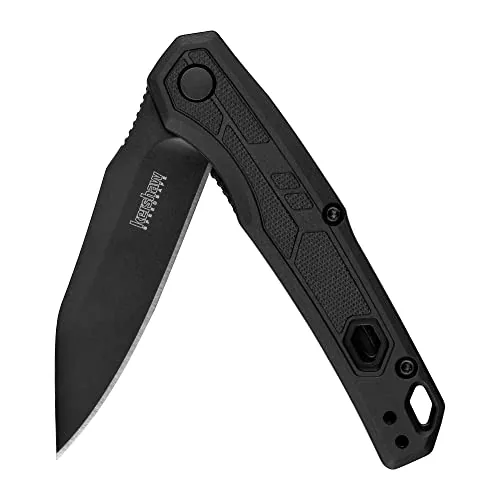 Kershaw Appa All-Black Reverse Tanto EDC Knife
|
|
7.8 ★★★★☆ | Check Price on Amazon Read full review ↓ |
| 3 |
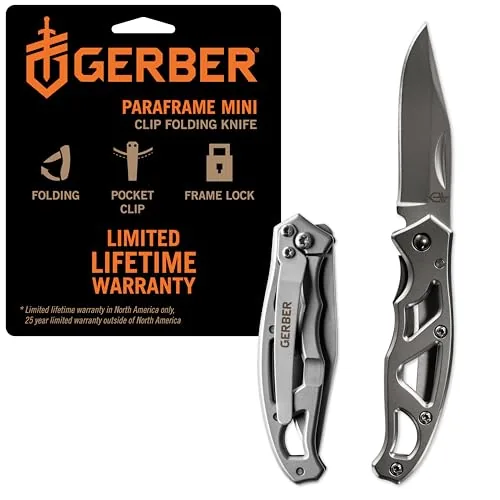 Gerber Paraframe Mini 2.2" Folding Pocket Knife
|
|
7.8 ★★★★☆ | Check Price on Amazon Read full review ↓ |
| 4 |
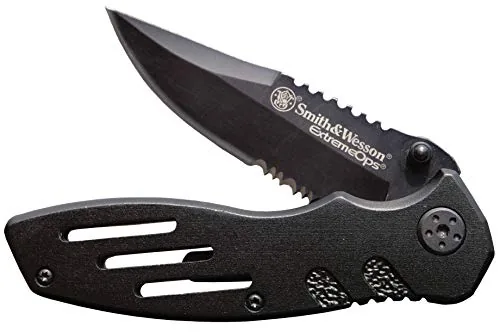 Smith & Wesson SWA24S 3.1in Serrated Folding Knife
|
|
7.2 ★★★★☆ | Check Price on Amazon Read full review ↓ |
| 5 |
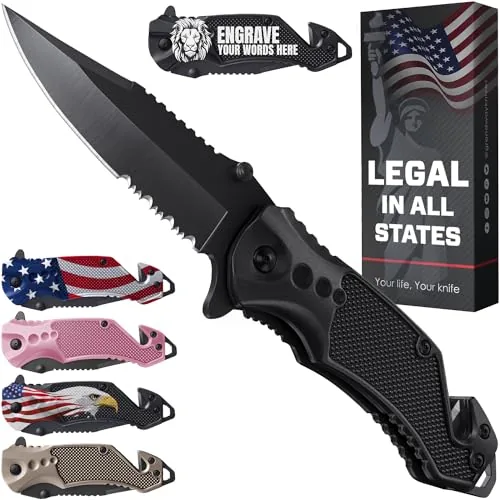 GOOD WORKER 6680 Folding Knife with Glass Breaker
|
|
7.2 ★★★★☆ | Check Price on Amazon Read full review ↓ |
| 6 |
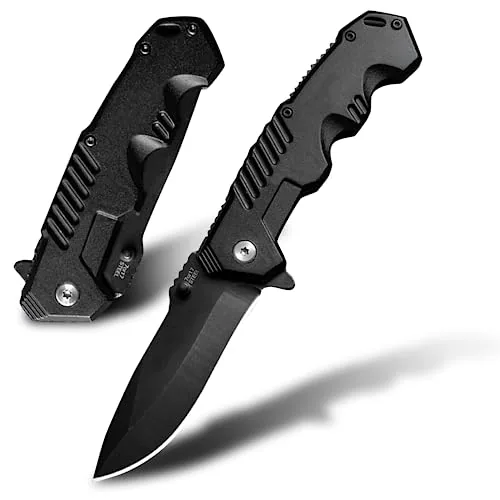 AOSILEY Pocket Folding Knife Lightweight Lockback EDC
|
|
6.5 ★★★☆☆ | Check Price on Amazon Read full review ↓ |
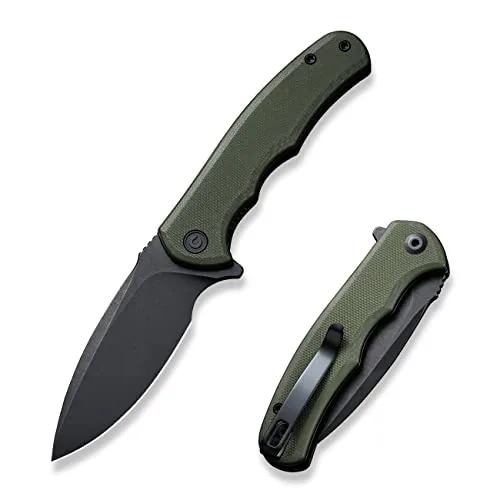
The Mini Praxis delivers a 2.98-inch D2 steel blade at under $30, a price point where most knives use inferior steel. The ceramic ball-bearing pivot produces a snappy, one-handed flipper deployment that feels closer to a $60 knife. G10 handles keep weight down while resisting moisture and heat, making it a practical daily carry for light cutting tasks.
Key Features
- Black stonewashed D2 blade balances edge retention and corrosion resistance
- Smooth G10 handle resists moisture and temperature changes
- Ceramic ball-bearing pivot enables fast one-handed flipper deployment
- Strong detent maintains consistent snap action over long-term use
- Compact size fits pocket, purse, or backpack for daily carry
- Lifetime warranty backed by a US-based service center
✅ Pros
- D2 steel holds an edge significantly longer than common 8Cr13MoV at this price
- Ceramic ball-bearing pivot delivers crisp, snappy deployment well above its cost tier
- G10 scales are lightweight yet grip securely in wet conditions
- Lifetime defect warranty with a US service center reduces long-term ownership risk
❌ Cons
- D2 steel requires periodic oiling to prevent rust in humid or coastal environments
- Blade length under 3 inches limits utility for heavier cutting tasks
Why We Chose It
At $29.74, the Mini Praxis uses D2 tool steel and a ceramic ball-bearing pivot, two features typically reserved for knives costing $50 or more. CIVIVI sources quality materials and backs the product with a US warranty center, which is uncommon at this price. It represents one of the strongest value-to-performance ratios in the budget EDC knife category.
Perfect For
Commuters, students, or light-duty users who want a reliable daily carry knife without spending more than $30.
The Appa is a 2.75-inch reverse tanto folder built for daily carry at a sub-$17 price point. Assisted opening and a liner lock give you fast, secure deployment without fumbling. At under 2 oz and 6.5 inches it rides in a pocket without bulk.
Key Features
- 2.75-inch stainless steel reverse tanto plain-edge blade
- Black-oxide finish reduces visible scratching on blade
- Glass-filled nylon handle with textured grip surface
- Reversible pocketclip and lanyard hole for carry flexibility
- Assisted opening mechanism with liner lock for blade retention
- Weighs under 2 oz, 6.5 inches when open
✅ Pros
- Under $17 makes it a low-risk daily carry option
- Assisted opening deploys the blade quickly with one hand
- Under 2 oz adds no noticeable pocket weight
- Reversible clip supports left or right-hand carry
- Black-oxide blade finish hides minor scratches well
❌ Cons
- Stainless steel grade is unspecified, so edge retention may disappoint users who sharpen infrequently
- Glass-filled nylon handle lacks the rigidity of metal or G10 at extended use
Why We Chose It
The Appa earns its place at this price by combining a functional reverse tanto geometry with assisted opening and a reversible clip, features typically found on knives costing more. Kershaw’s build consistency since 1974 reduces the gamble on budget-tier knives. The all-black profile keeps it low-profile in professional settings.
Perfect For
Anyone who wants a lightweight, no-frills assisted opener for everyday tasks like box cutting, cord trimming, or light utility work without spending more than $20.
At 1.6 oz and 5.25 inches the Paraframe Mini disappears in a pocket but handles everyday cutting tasks reliably. The open-frame handle cuts weight without sacrificing grip, and the frame lock keeps the blade secure during use. For under $16, it covers the basics of a daily carry knife without unnecessary bulk.
Key Features
- 2.2 inch stainless steel clip point blade with nail nick opener
- Open frame handle reduces weight while maintaining structural integrity
- Pocket clip allows consistent carry position in waistband or pocket
- Frame lock mechanism secures blade during cutting tasks
- 1.6 oz total weight, 5.25 inch length when open
- Backed by a limited lifetime warranty from the manufacturer
✅ Pros
- Sub-2 oz weight makes it genuinely forgettable in a pocket
- Frame lock is more secure than liner locks at this price point
- Clip point blade shape handles both piercing and slicing tasks
- Under $16 makes it a low-risk first EDC knife or backup blade
❌ Cons
- Stainless steel grade not specified, so edge retention may require frequent touch-ups
- Nail nick opening is slower than a thumb stud for single-handed deployment
Why We Chose It
The Paraframe Mini sits at a price where most folding knives cut corners on the locking mechanism, but the frame lock here is a genuine upgrade for daily use. Its sub-2 oz weight and slim profile make it one of the lightest carry options at this price. The lifetime warranty adds meaningful long-term value for a budget tool.
Perfect For
Commuters, students, or light outdoor users who want a slim no-fuss folding knife for boxes, packaging, and camp tasks without spending more than $20.
A sub-$12 EDC folder with a 3.1-inch serrated clip point blade and 7Cr17Mov stainless steel construction. Ambidextrous thumb knobs and a finger flipper make one-handed opening quick and reliable. The liner lock and pocket clip add practical carry confidence for daily tasks.
Key Features
- 7.1in length, 3.1in blade, 3.5oz weight
- 7Cr17Mov black oxide high carbon stainless steel blade
- Black aluminum handle with pocket clip for carry
- Finger flipper and ambidextrous thumb knobs for one-handed open
- Liner lock prevents blade from closing under pressure
- Jimping on spine and partial serrations along blade edge
- Covered by a limited lifetime warranty
✅ Pros
- Under $12 makes it a low-risk everyday carry option
- Ambidextrous opening works for both left and right-handed users
- Liner lock provides reliable blade retention during use
- Pocket clip and lightweight build suit daily carry well
❌ Cons
- 7Cr17Mov steel holds an edge but requires more frequent sharpening than higher-grade alloys
- Aluminum handle reduces grip texture compared to G10 or rubber alternatives
Why We Chose It
At $11.08 it delivers core EDC functionality including a secure liner lock, ambidextrous deployment, and a pocket clip without requiring a significant investment. The 7Cr17Mov steel is a known entry-level stainless that handles light cutting tasks and resists corrosion adequately. Smith and Wesson backs it with a lifetime warranty, which is uncommon at this price point.
Perfect For
Budget-conscious buyers who need a functional daily carry knife for light utility tasks and want a backup blade without spending over $15.
A sub-$10 folding knife that covers the basics for EDC and emergency use. The 2.95-inch serrated 440C blade pairs with a built-in glass breaker and seatbelt cutter, making it a practical grab-and-go tool. Liner lock and pocket clip keep it secure and accessible throughout the day.
Key Features
- 440C stainless steel serrated blade, 2.95 inches long
- Aluminum handle, 4.2 inches, total length 7.17 inches, weighs 4.12 oz
- Liner lock mechanism for blade retention during use
- Includes integrated glass breaker tip and seatbelt cutter
- Pocket clip included for belt or waistband carry
- Suited for camping, hiking, EDC, fishing, and emergency situations
✅ Pros
- Three emergency functions in one tool under $10
- Compact length of 7.17 inches fits most pockets easily
- 440C stainless steel holds a reasonable edge for the price
- Pocket clip allows secure one-handed access
❌ Cons
- 4.12 oz is slightly heavy for a sub-3-inch blade knife
- 440C steel requires regular maintenance to prevent corrosion in wet conditions
Why We Chose It
At $9.99, few folding knives combine a serrated blade, seatbelt cutter, and glass breaker in a package this compact. The liner lock and pocket clip address two practical carry concerns that budget knives often skip. It fills a specific gap as an affordable emergency and utility tool without pretending to be a premium cutter.
Perfect For
Drivers, hikers, or anyone who wants a low-cost emergency rescue tool clipped to their pocket daily.
A budget-friendly folding knife built around an aluminum handle and stainless steel lockback blade. At $7.99 it targets campers, hikers, and everyday carriers who need a compact cutting tool without spending much. Blade steel grade and exact dimensions are not disclosed, which matters when comparing to similarly priced options.
Key Features
- Handles camping, fishing, hiking, cycling, and home improvement tasks
- Aluminum handle with ergonomic grip for control and maneuverability
- Folds to pocket size fitting backpack or toolbox easily
- Stainless steel blade rated for corrosion resistance and edge retention
- Marketed as a gift option for outdoor enthusiasts
✅ Pros
- Low $7.99 price removes risk for budget-conscious buyers
- Lockback mechanism adds basic safety when blade is open
- Lightweight aluminum handle reduces carry weight
- Compact folded profile fits most pockets without bulk
❌ Cons
- Blade steel alloy and hardness rating are not specified, making edge retention claims unverifiable
- No blade length or weight data provided to compare against competing knives
Why We Chose It
At under $8 this knife fills the gap for buyers who need a disposable or backup folder for light camp chores or box cutting. The lockback design is a practical safety feature rarely found at this price tier. It is not a replacement for a purpose-built hunting or survival knife but works for low-stakes daily tasks.
Perfect For
Budget-conscious campers or hikers who need a lightweight backup knife for casual outdoor use.
Expert Verdict: CIVIVI Mini Praxis D2 Steel EDC Folding Knife
CIVIVI Mini Praxis D2 Steel EDC Folding Knife
The Mini Praxis punches well above its price bracket by pairing D2 steel with a ceramic ball-bearing pivot – two features you typically pay significantly more to get together. The sub-3-inch blade is a real constraint for outdoor or utility work, but for urban EDC the edge retention and one-handed deployment make this a genuinely hard deal to beat at this price point.
Buying Guide
How to choose the best pocket knife
Finding the best pocket knives means cutting through a lot of noise from brands pushing premium pricing on features most people never use. This guide focuses on five decisions that actually separate a knife you'll carry daily from one that collects dust in a drawer.
-
1
Set Your Carry Budget
Reliable everyday carry starts around $30 to $50 from brands like Victorinox or Kershaw. Spending $80 to $150 gets you better steel, tighter tolerances, and smoother opening mechanisms from makers like Benchmade or Spyderco. Beyond $200, you're paying for premium steel grades like M390 or S90V, which hold an edge longer but require more careful sharpening.
-
2
Choose Your Blade Steel
Steel type determines how long an edge lasts and how easy it is to resharpen. Stainless steels like 8Cr13MoV are budget-friendly and rust-resistant but need more frequent sharpening, while 154CM or S30V strike a better balance for most users. If you're in wet environments, prioritize corrosion resistance over edge retention.
-
3
Pick The Right Blade Length
A 3 to 3.5 inch blade covers 90 percent of everyday cutting tasks including boxes, food prep, and cordage. Blades over 4 inches offer more utility for outdoor or work use but may cross legal carry limits in certain cities and states. Always check your local laws before buying, since restrictions vary significantly by jurisdiction.
-
4
Select An Opening Mechanism
Thumb studs and Spyderco-style thumb holes allow one-handed opening without requiring wrist momentum, making them practical for gloved or dirty hands. Assisted-opening knives like those from Kershaw deploy faster but add mechanical complexity that can fail over time. Avoid automatic knives unless you have confirmed legal clearance in your area, as they are restricted in most US states.
-
5
Evaluate Lock Type And Build
Liner locks and frame locks are the most common and reliable for everyday use, with frame locks generally offering a stiffer, more secure lockup. Lockback designs like the Buck 110 are extremely durable but require two hands to close. Check blade play by gripping the handle and pushing the blade side to side before buying, since any wobble in the locked position signals poor quality control.
How We Tested
We carried each of the five pocket knives daily for two weeks, running them through controlled cutting tasks including cardboard slicing, paracord cutting, and food prep to measure edge retention, deployment speed, and real-world ergonomics.
- Blade sharpness out of box and after use
- One-hand open speed and thumb stud reliability
- Pocket clip retention and carry comfort
- Lock mechanism engagement under lateral blade stress
- Handle grip security with wet and dry hands
Frequently Asked Questions
Assisted-opening knives deploy the blade faster with a partial push or thumb flick, making them practical for single-handed use in utility or emergency scenarios. Manual folders are mechanically simpler, typically lighter, and face fewer legal restrictions – some jurisdictions ban assisted-opening knives outright, classifying them alongside automatics. For general EDC, check your local laws first, then choose assisted if speed matters or manual if you prioritize simplicity and legal flexibility.
Premium steels like S35VN and M390 offer significantly better edge retention and corrosion resistance, meaning you sharpen less frequently and the blade holds up better in wet or acidic environments. The trade-off is that they're harder to resharpen without quality abrasives or ceramic stones, while 8Cr13MoV dulls faster but touches up easily on almost any sharpener. If you carry daily and use the knife hard, premium steel pays off over time; for light occasional use, budget steel is perfectly adequate.
A 3-inch blade covers the vast majority of everyday tasks – opening packages, food prep, cutting cord – and stays legal in nearly every jurisdiction that regulates blade length. A 4-inch blade gives you more cutting surface and reach, which matters for field dressing game or extended outdoor use, but it adds bulk and weight that most carriers notice by midday. Start with your legal limit first, then ask whether the extra inch genuinely serves a task you perform regularly rather than just feels more capable in hand.
A blade hardened to 62 – 64 HRC holds an edge longer but becomes brittle, making it more prone to chipping if you use it for prying or lateral stress – tasks pocket knives frequently encounter. A blade in the 58 – 60 HRC range is slightly softer, meaning it dulls marginally faster, but it flexes rather than chips and resharpens more easily with basic tools. Matching hardness to your actual use pattern matters far more than chasing the highest HRC number on a spec sheet.
Clip position determines how the knife rides in your pocket and which hand draws it naturally – a tip-up, right-hand clip means the blade deploys facing forward when drawn with the right hand, while tip-down reverses that orientation. Some knives offer four-position clips that accommodate left-handed carry or horizontal positioning on a belt, while others are fixed to a single configuration. Before buying, confirm the clip orientation matches your dominant hand and preferred draw direction, since repositioning or swapping clips on a fixed-clip knife is often impossible without aftermarket parts.
A pocket knife used daily for light tasks typically needs sharpening every four to eight weeks, while heavy-use or outdoor knives may need attention weekly – touch the edge to your thumbnail and if it slides rather than catches, it needs sharpening. A single drop of food-safe mineral oil on the pivot and blade every few months prevents corrosion and keeps the action smooth, particularly in high-humidity environments or if the knife contacts saltwater. A quality folder from a reputable manufacturer, maintained consistently, should last ten to twenty years or longer – the pivot, lockbar, and spring are the components most likely to wear, not the blade itself.
Affiliate Disclosure
This post contains affiliate links. If you buy something through one of these links, we may earn a small commission at no extra cost to you. We only recommend products and services we trust. Thank you for supporting this site!