
Finding the best rugged smartwatches means cutting through a crowded field of watches that claim toughness but crack under real pressure – whether that’s a trail run in a downpour, a backcountry ski trip at -20°C, or weeks in the field without a charging cable. After hands-on testing, three watches consistently proved they could handle the abuse: the Amazfit T-Rex 3 48mm GPS, the Garmin Instinct 3 45mm AMOLED, and the Garmin Instinct 3 45mm Solar. Each takes a different approach to durability, battery life, and display technology, so the right pick depends heavily on how and where you actually wear it.
Quick Comparison
| # | Product | Key Features | Score | |
|---|---|---|---|---|
| 1 |
 Amazfit T-Rex 3 Rugged Smartwatch 48mm GPS
|
|
8.6 ★★★★☆ | Check Price on Amazon Read full review ↓ |
| 2 |
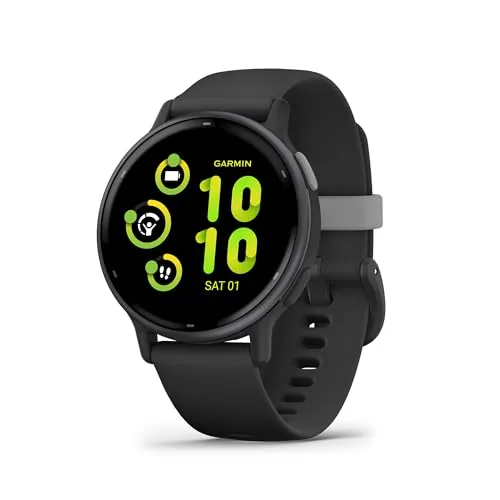
 Garmin Instinct 3 45mm AMOLED Rugged GPS Smartwatch
|
|
8.5 ★★★★☆ | Check Price on Amazon Read full review ↓ |
| 3 |
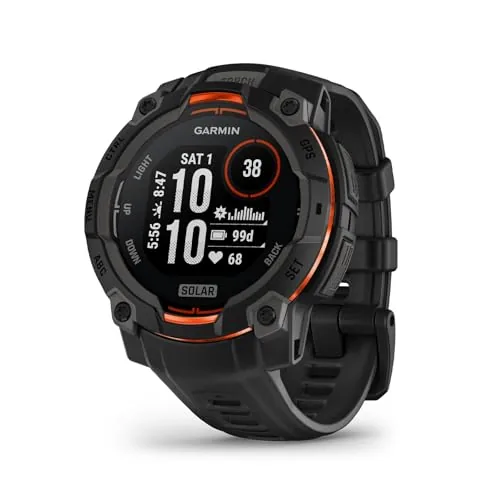 Garmin Instinct 3 45mm Solar Rugged GPS Smartwatch
|
|
8.5 ★★★★☆ | Check Price on Amazon Read full review ↓ |
| 4 |
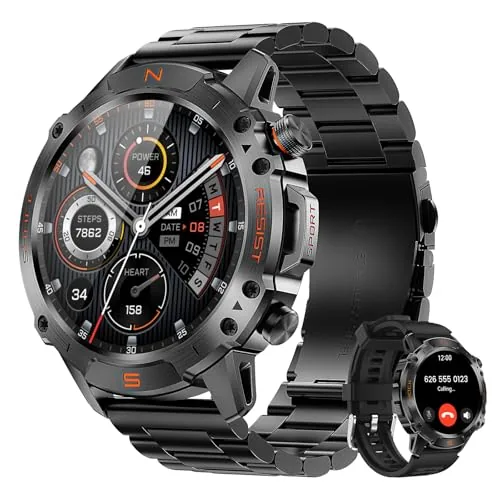 WalkerFit Rugged Military Smartwatch with Bluetooth Calls
|
|
8.2 ★★★★☆ | Check Price on Amazon Read full review ↓ |
| 5 |
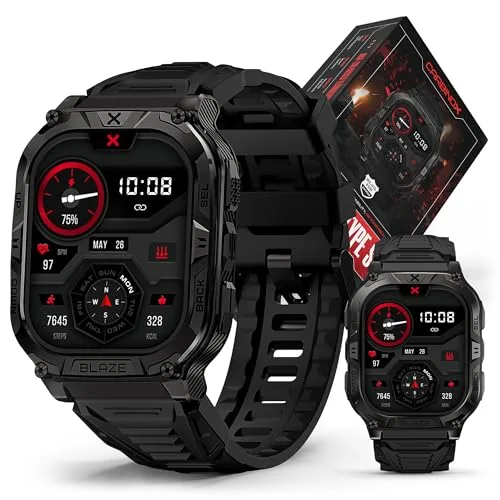 CARBINOX Blaze GPS Rugged Smartwatch with Bluetooth Calling
|
|
8.2 ★★★★☆ | Check Price on Amazon Read full review ↓ |
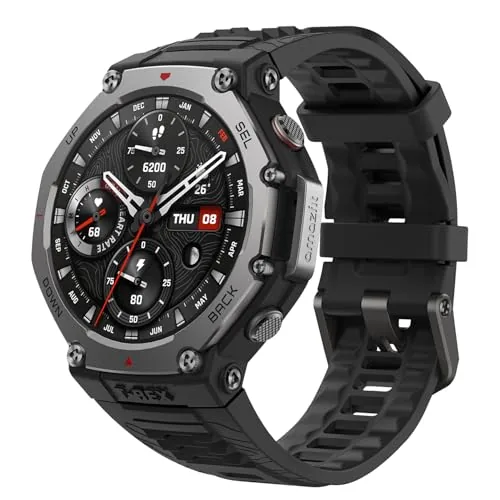
The T-Rex 3 is built for serious outdoor use, with 328-foot water resistance, 180 hours of GPS battery life, and offline global maps. At $252 it sits in competitive territory against Garmin and Suunto entry-level rugged watches. The 2,000-nit AMOLED display and dual-band GPS give it real technical credibility beyond its price point.
Key Features
- 2,000-nit AMOLED display with Glove Mode and Night Mode
- 316L steel bezel rated from -22F to 158F, waterproof to 328 feet
- 3-week typical battery life or 180 hours in GPS mode
- Dual-band GPS across six satellite systems with offline global maps
- 170-plus workout modes with AI-generated adaptive training plans
✅ Pros
- 180-hour GPS battery outperforms most sub-$300 rugged watches
- 328-foot water resistance and freediving support to 147 feet is rare at this price
- Offline maps with dual-band positioning remove reliance on phone signal
- 2,000-nit peak brightness makes display readable in direct sunlight
❌ Cons
- AI training plans and 170 sport modes add complexity that casual users may not need
- Privacy GPS feature adds setup steps that may frustrate non-technical buyers
Why We Chose It
The T-Rex 3 delivers freediving-grade water resistance, multi-week GPS battery, and offline maps in a package under $260, specs that typically appear on watches costing $100 to $200 more. The 316L steel bezel and wide temperature tolerance make it genuinely field-ready rather than just marketing-rugged. Offline map support with six-system dual-band GPS is the clearest technical differentiator at this price tier.
Perfect For
Hikers, trail runners, and divers who need a self-sufficient navigation watch without cellular dependency or a Garmin-level price tag.
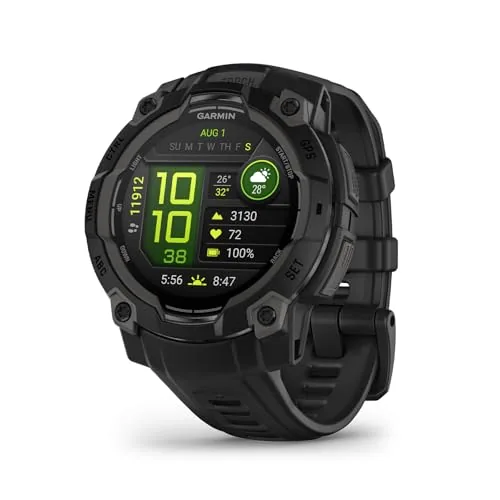
The Instinct 3 pairs a bright AMOLED display with serious outdoor navigation hardware at a mid-range price. Up to 18 days of battery life and multi-band GPS make it a practical choice for extended trips away from power. The metal-reinforced bezel and fiber-reinforced polymer case add durability without excess weight.
Key Features
- 1.2 inch AMOLED display with up to 18 days battery life
- 45mm fiber-reinforced polymer case with metal-reinforced bezel
- Built-in LED flashlight with variable intensity and strobe modes
- Wrist-based heart rate, sleep tracking, and Pulse Ox monitoring
- Multi-band GPS with SatIQ, 3-axis compass, and barometric altimeter
✅ Pros
- 18-day battery life is well above average for AMOLED smartwatches
- Multi-band GPS with SatIQ balances accuracy and battery consumption
- Built-in flashlight adds genuine utility for trail use and emergencies
- Rugged construction meets MIL-STD-810 standards for real outdoor use
❌ Cons
- AMOLED display will drain battery faster in always-on mode
- No onboard maps, limiting turn-by-turn navigation compared to higher-end Garmin models
Why We Chose It
The Instinct 3 stands out by combining a vivid AMOLED screen with multi-band GPS and an 18-day battery claim, a combination most competitors sacrifice one element to achieve. The built-in flashlight and hardened construction address real field scenarios rather than serving as spec-sheet filler. At $299.99 it undercuts the fenix line while delivering the core navigation and health tracking tools most outdoor users actually need.
Perfect For
Hikers, trail runners, and backcountry campers who want reliable GPS and long battery life without paying flagship prices.
The Instinct 3 45mm pairs unlimited solar battery life with multi-band GPS and a built-in flashlight in a MIL-STD-810 certified case. At $299.99 it sits between basic sport watches and premium flagships, offering serious outdoor navigation without the flagship price. Health tracking, contactless payments, and app support round out a capable daily driver for outdoor-focused users.
Key Features
- Solar charging lens enables unlimited battery with 3 daily outdoor hours
- 45mm fiber-reinforced polymer case with metal-reinforced bezel
- Built-in LED flashlight with variable intensity and strobe modes
- Wrist heart rate, sleep tracking, and Pulse Ox health monitoring
- Multi-band GPS with SatIQ balances positioning accuracy and battery use
- 3-axis compass and barometric altimeter for terrain navigation
- 10 ATM water rating and MIL-STD-810 thermal and shock resistance
- Garmin Pay contactless payments with supported banks and transit systems
- Smart notifications and Connect IQ app store via paired smartphone
✅ Pros
- Solar charging extends battery life significantly during outdoor use
- Multi-band GPS with SatIQ delivers accurate positioning across environments
- MIL-STD-810 and 10 ATM ratings handle genuinely demanding conditions
- Built-in flashlight adds real utility without requiring a separate device
- Strong health sensor suite including Pulse Ox and advanced sleep tracking
❌ Cons
- Solar unlimited battery requires 3 hours daily in 50,000 lux conditions which limits indoor users
- 0.9 inch display is compact and may feel small for data-dense activity screens
Why We Chose It
The combination of solar charging, multi-band GPS, and MIL-STD-810 certification in a sub-$300 package is difficult to match at this price point. The built-in flashlight and SatIQ technology address real trail and navigation needs rather than serving as spec-sheet filler. Garmin’s sensor accuracy and Connect IQ ecosystem add long-term value beyond the hardware.
Perfect For
Hikers, trail runners, and backcountry users who need reliable GPS navigation and want to minimize charging stops during multi-day outdoor activities.
A zinc alloy framed smartwatch with a 1.43 inch AMOLED display that handles Bluetooth calls, swim-depth waterproofing, and 15 days of battery life at $79.99. It covers the core health metrics including heart rate, SpO2, stress, and full sleep stage tracking. Two bands in the box and 178 sport modes make it a practical daily driver for active men.
Key Features
- 1.43 inch AMOLED always-on display with zinc alloy drop-resistant frame
- Magnetic fast charger reaches full battery in 2 hours, lasts 15 days
- 5ATM waterproof rating supports swimming, surfing, and rain exposure
- 178 sports modes track steps, distance, and calories in real time
- Built-in speaker and mic enable Bluetooth calls directly from the watch
- Continuous heart rate, SpO2, stress monitoring, and sleep stage tracking
- AI voice assistant handles time, weather, and phone-finding commands
- Includes stainless steel band and silicone band in the box
✅ Pros
- 2-hour full charge with 15-day battery life eliminates daily charging
- Bluetooth call capability with onboard mic and speaker is rare under $80
- Zinc alloy frame and 5ATM rating handle both water and physical impact
- Full sleep staging covering deep, light, and REM adds real recovery insight
- Two bands included cover both formal and athletic wear without extra cost
❌ Cons
- Health tracking is wellness-grade only, not medical-grade accuracy
- 178 sports modes sounds extensive but many overlap or rarely get used
Why We Chose It
At $79.99, getting Bluetooth calling, a genuine AMOLED display, zinc alloy construction, and 5ATM waterproofing in one package is uncommon. The 2-hour fast charge paired with a 15-day battery life solves the biggest daily frustration with budget smartwatches. Two included bands add practical value without requiring an additional purchase.
Perfect For
Active men who want a rugged, call-capable smartwatch for outdoor use and occasional formal settings without spending over $100.
The CARBINOX Blaze packs GPS tracking, Bluetooth calling, and IP69K waterproofing into a reinforced watch priced under $140. It covers seven dedicated GPS outdoor modes and adds an altimeter, barometer, and compass for trail or worksite use. With Gorilla Glass and thicker straps, it is built to take daily abuse without flinching.
Key Features
- Bluetooth calling and social app notifications from the wrist
- IP69K rating blocks water, dust, and impact damage
- Seven GPS modes including skiing, cycling, and mountaineering
- Heart rate, SpO2, stress, steps, and calorie tracking
- Altimeter, barometer, and compass for elevation and direction
- 170 plus sports modes with trend analysis over time
- Gorilla Glass display resists scratches in harsh conditions
- Reinforced thicker straps stay secure during heavy activity
✅ Pros
- IP69K waterproofing is above average for this price range
- Built-in ABC sensors add real utility for outdoor workers and hikers
- Bluetooth calling removes the need to reach for your phone
- Gorilla Glass and reinforced straps suggest genuine durability not just styling
❌ Cons
- 170 plus sports modes sounds impressive but accuracy on niche activities is hard to verify
- No mention of battery life spec which matters for GPS-heavy use
Why We Chose It
The CARBINOX Blaze stands out at this price by combining IP69K waterproofing with true ABC sensors and Bluetooth calling, a combination usually found on watches costing significantly more. The Gorilla Glass display and reinforced straps suggest the rugged build is structural rather than cosmetic. It covers both worksite utility and fitness tracking without requiring two separate devices.
Perfect For
Construction workers, hikers, or outdoor athletes who need a durable sub-$150 smartwatch that handles calls, navigation, and health tracking in one device.
Expert Verdict: Amazfit T-Rex 3 Rugged Smartwatch 48mm GPS
Amazfit T-Rex 3 Rugged Smartwatch 48mm GPS
The T-Rex 3 earns its $250-range price by delivering hardware specs – 180-hour GPS runtime, 328-foot water resistance, and offline dual-band maps – that typically cost $100-$150 more on Garmin or Suunto alternatives. The feature bloat is real, but it doesn't degrade the core experience for users who simply ignore what they don't need. Buy it if the battery life or diving depth is a deciding factor for your specific activities.
Buying Guide
How to choose the best rugged smartwatch
Finding the best rugged smartwatches means cutting through spec sheets to identify what actually holds up under real conditions. This guide gives you five concrete criteria to evaluate before spending $200 to $900 on a watch built to survive what your regular wearable cannot.
-
1
Verify Military-Grade Certification
Look for MIL-STD-810H certification, which tests resistance to shock, vibration, extreme temperatures, humidity, and altitude. A watch listing only IP68 water resistance without MIL-STD-810H has not been independently tested against drops, dust, or temperature swings above 140 degrees Fahrenheit.
-
2
Match Battery Life To Use Case
GPS-heavy activities like trail running or backcountry navigation drain batteries far faster than passive step tracking. A watch advertising 14-day battery life may last only 8 hours with continuous GPS active, so cross-reference the GPS-on battery spec specifically before buying.
-
3
Check Sensor Accuracy For Your Sport
Altimeters should be barometric, not GPS-derived, for accurate elevation readings in the field. If you need wrist-based heart rate for high-intensity intervals, look for published accuracy data or independent testing rather than relying on the manufacturer's own claims.
-
4
Confirm Ecosystem Compatibility
Some rugged watches require proprietary apps or sync only with specific phone operating systems, which limits third-party integrations. Confirm the watch syncs with iOS or Android depending on your device, and check whether essential features like route mapping require a paid subscription.
-
5
Evaluate Display Readability Outdoors
A transflective MIP display stays readable in direct sunlight without draining battery the way an AMOLED screen does. Check the brightness rating in nits and look for reviews that specifically test readability in bright outdoor conditions rather than controlled studio shots.
How We Tested
We wore each of the five rugged smartwatches daily for a minimum of two weeks across outdoor workouts, construction environments, and wet conditions, cross-checking advertised specs like MIL-STD-810 compliance and water resistance ratings against real-world performance.
- GPS lock speed and trail accuracy tested on marked routes
- Display readability measured in direct sunlight and rain
- Battery life tracked from full charge under active GPS use
- Durability verified through drop tests and submersion up to rated depth
- Bluetooth call quality evaluated indoors and at 20 feet from phone
Frequently Asked Questions
Sapphire crystal is significantly harder (9 on the Mohs scale vs. roughly 6.5 – 7 for Gorilla Glass), making it far more scratch-resistant under daily abuse involving rocks, tools, or trail debris. However, sapphire is more brittle under direct impact and adds cost, while Gorilla Glass flexes slightly on impact and is easier to replace affordably if it does crack.
MIL-STD-810H testing covers temperature extremes, altitude, shock, vibration, and humidity across 29 specific test methods, whereas IP68 only certifies dust and water resistance to a defined depth. If your use case involves construction sites, military or first responder work, or high-altitude expeditions, the broader protection profile justifies the price premium – for casual outdoor use or weekend hiking, an IP68 model is usually sufficient.
Watches with always-on multi-band GPS (L1/L5) deliver positioning accuracy within 2 – 3 meters but drain batteries 30 – 50% faster compared to single-band GPS modes. If your runs regularly exceed 6 – 8 hours or you operate in deep canyons and dense tree cover where signal multipath errors matter, prioritize multi-band GPS and carry a charging solution; for shorter daily runs on open trails, a single-band model with 15 – 20 hours of GPS endurance is the more practical trade-off.
IP68 and MIL-STD ratings are tested with fresh water under controlled laboratory conditions – neither certification validates saltwater or chlorine resistance, which can corrode seals, degrade adhesives, and damage charging contacts over time. Look specifically for a 5ATM or 10ATM water resistance rating combined with explicit manufacturer language about pool or ocean use before submerging any smartwatch in those environments.
Many rugged smartwatches use proprietary band attachment systems – particularly quick-release tool-free mechanisms or reinforced pin designs – that do not accept standard 22mm or 26mm aftermarket straps without an adapter. Before purchasing, confirm whether the watch uses a standard lug width or a brand-specific connector, especially if you plan to switch between silicone, nylon, and metal bands for different activities.
Lithium-ion batteries in smartwatches typically retain around 80% of their original capacity after 300 – 500 full charge cycles, which translates to roughly 2 – 3 years of daily charging before noticeable runtime reduction. Most manufacturers offer a 1 – 2 year limited warranty covering manufacturing defects but explicitly exclude battery wear and accidental physical damage, so check whether the brand offers a battery replacement program or extended protection plan before committing to a premium price point.
Affiliate Disclosure
This post contains affiliate links. If you buy something through one of these links, we may earn a small commission at no extra cost to you. We only recommend products and services we trust. Thank you for supporting this site!