
If you spend time outdoors in cold weather – hunting, skiing, attending stadium events, or working a job site – a reliable body warmer can be the difference between staying functional and cutting your day short. After testing and researching the most popular options available, three HotHands products consistently stand out as the best body warmers for most buyers: the Super Warmers 40-Pack with 18-hour heat, the Adhesive Body Warmer 40-Count Bulk Pack for hands-free placement, and the standard 18-Hour Air-Activated warmers that balance performance with cost. Here’s what separates them and which one fits your specific needs.
Quick Comparison
| # | Product | Key Features | Score | |
|---|---|---|---|---|
| 1 |
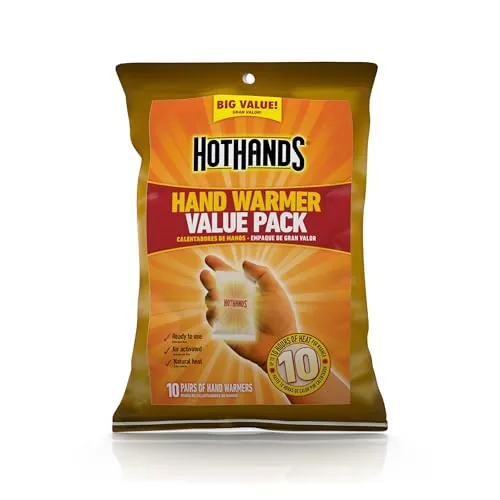
 HotHands Body & Hand Super Warmers 40-Pack 18hr
|
|
8.5 ★★★★☆ | Check Price on Amazon Read full review ↓ |
| 2 |
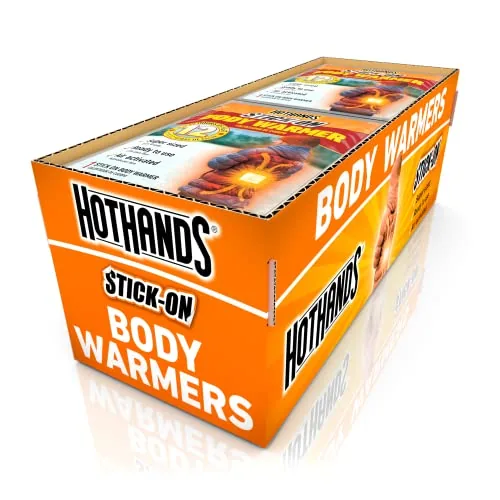 HotHands Adhesive Body Warmer 40-Count Bulk Pack
|
|
8.2 ★★★★☆ | Check Price on Amazon Read full review ↓ |
| 3 |
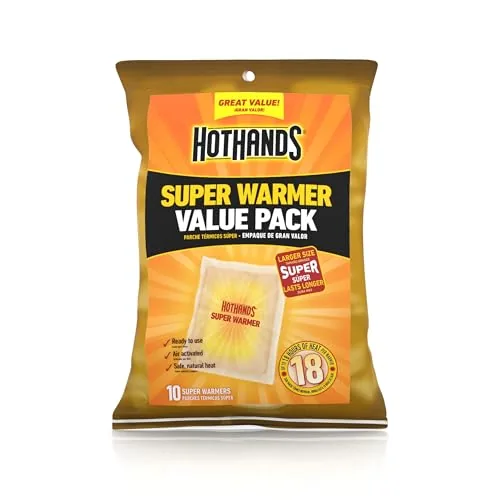 HotHands Body & Hand Warmers 18-Hour Air-Activated
|
|
8.2 ★★★★☆ | Check Price on Amazon Read full review ↓ |
| 4 |
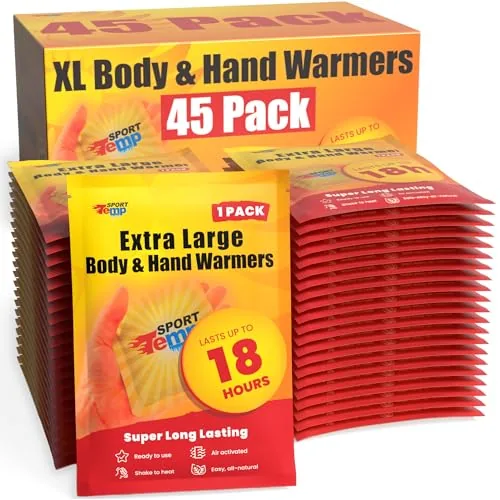 Sport Temp Hand Warmers 45-Pack 18-Hour Heat
|
|
8.2 ★★★★☆ | Check Price on Amazon Read full review ↓ |
| 5 |
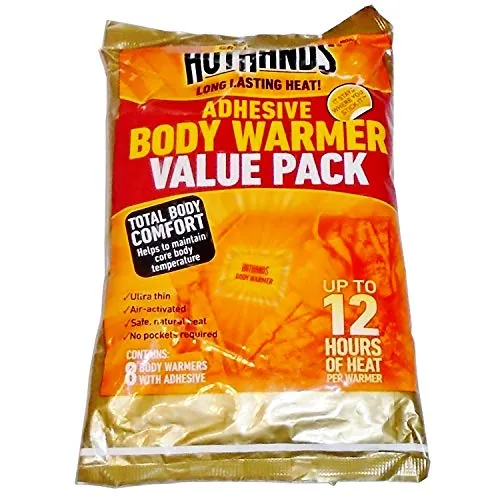 HotHands Adhesive Body Warmers 8-Pack Heat Patches
|
|
8.2 ★★★★☆ | Check Price on Amazon Read full review ↓ |
| 6 |
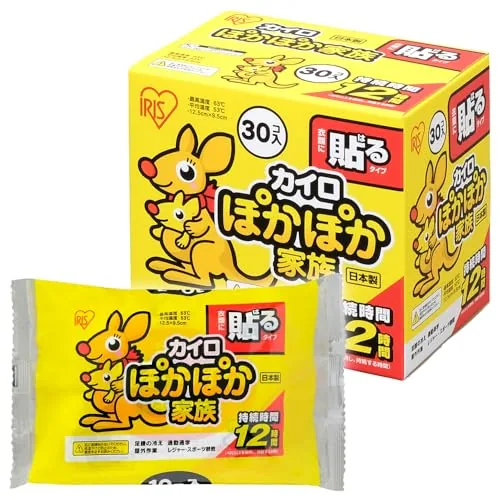 Iris Ohyama Hokkairo Adhesive Body Warmers Large 30-Pack
|
|
7.8 ★★★★☆ | Check Price on Amazon Read full review ↓ |
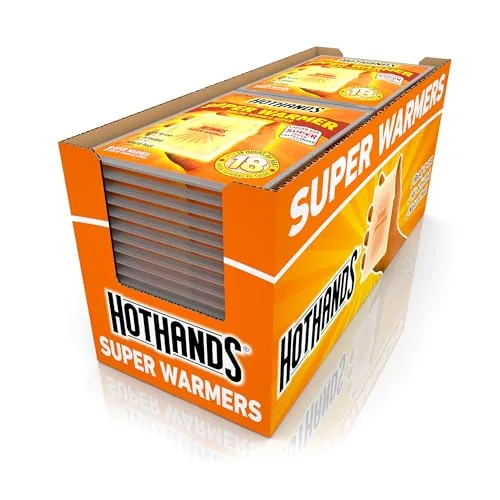
Each warmer activates on contact with air and reaches full heat in 15 to 30 minutes, sustaining warmth for up to 18 hours. The pack includes 40 individual units at roughly 72 cents per warmer, making bulk cold-weather prep practical. Iron, charcoal, and salt-based chemistry means no fumes and no special disposal requirements.
Key Features
- Air-activated warmers reach full heat in 15 to 30 minutes
- Up to 18 hours of heat per individual warmer
- Made in the USA with iron, charcoal, salt, and vermiculite
- 40 individual warmers packed in one bundle
- TSA-compliant and compact enough for a backpack pocket
- Dispose of used warmers in regular household trash
✅ Pros
- 40 warmers at roughly 72 cents each is strong bulk value
- 18-hour runtime outlasts most competing hand warmer brands
- No odor, no chemicals to handle, and TSA-safe for travel
- Iron-oxidation formula needs no batteries or charging
❌ Cons
- 15 to 30 minute warm-up lag means no instant heat on demand
- Single-use only, so cost adds up for daily commuters
Why We Chose It
The 18-hour rated runtime is the longest in the standard disposable warmer category, and 40 units at under $29 makes the per-warmer cost competitive for seasonal stocking. The ingredient list is straightforward and non-toxic, which matters when warmers are tucked against skin for hours. Air-reactivation by shaking gives users some control over heat output mid-use.
Perfect For
Outdoor sports fans, hunters, or commuters who need reliable low-maintenance warmth across full-day cold-weather events.
Forty adhesive body warmers that stick directly to clothing and activate within 30 minutes of opening the outer package. Each pack delivers sustained heat without shaking or kneading, making them practical for extended outdoor sessions. At under $1 per warmer, the bulk count keeps per-use cost low for regular outdoor users.
Key Features
- Air-activated heat, no shaking or kneading required
- Reaches working temperature in 15 to 30 minutes
- Adhesive backing sticks to clothing, not skin contact
- TSA approved and odorless for travel and transit
- Single-use disposable, discards with regular household garbage
- Suited for tailgating, hunting, hiking, and yard work
✅ Pros
- 40-count bulk pack brings per-warmer cost under $1
- Adhesive backing keeps warmer positioned on clothing without slipping
- No activation ritual required beyond opening the outer package
- Odorless formula works in enclosed spaces like hunting blinds
❌ Cons
- Heat-up window of 15 to 30 minutes means no instant warmth
- Single-use only generates ongoing waste for frequent users
Why We Chose It
The adhesive format solves the slippage problem common with loose hand warmers placed inside layers, keeping heat focused on a specific body zone for hours. Bulk packaging at 40 units makes this practical for households or groups rather than one-off purchases.
Perfect For
Hunters, ice fishers, or outdoor workers who need hands-free sustained torso or back heat across multi-hour sessions in cold weather.
Each pad delivers up to 18 hours of heat without shaking, kneading, or any chemical activation beyond opening the wrapper. At $7.48 for 10 warmers, the per-unit cost comes out to under 75 cents each. These fit cleanly into pockets, jacket linings, or sleeping bag layers for sustained warmth in cold outdoor conditions.
Key Features
- Air-activated heat, no shaking or kneading required
- Heats up within 15 to 30 minutes of opening package
- Each warmer sustains heat for up to 18 hours
- Odorless and disposable, safe for regular trash disposal
- TSA approved for carry-on luggage
- 10 individual pads per pack
- Do not apply directly to skin
- Suitable for tailgating, hunting, camping, hiking, and yard work
✅ Pros
- 75 cents per warmer is strong value for 18 hours of heat
- No activation steps beyond opening the outer package
- Compact size fits pockets, gloves, or layered clothing
- TSA approved makes them viable for travel or ski trips
❌ Cons
- Heat output is not adjustable once activated
- Single-use only, so cost adds up for frequent daily users
Why We Chose It
At under 75 cents per pad with an 18-hour runtime, these outperform most competitors on cost per hour of heat. The no-prep activation removes the inconsistency of warmers that require vigorous shaking. TSA clearance and compact dimensions make them more versatile than bulkier reusable options.
Perfect For
Cold-weather outdoor workers, hunters, and sports spectators who need reliable all-day warmth without carrying reusable gear.
At 67 cents per warmer, Sport Temp delivers up to 18 hours of heat from a single-use air-activated packet. Activation takes 15 to 30 minutes with no tools or chemicals required. The compact size fits inside gloves, jacket pockets, or boots without bulk.
Key Features
- 45 individually wrapped warmers per package
- Provides up to 18 hours of continuous heat per warmer
- TSA compliant and approved for air travel
- Activate by opening package, removing warmer, and shaking
- Works best in enclosed spaces like gloves or pockets
- Suitable for skiing, fishing, hiking, hunting, and tailgating
✅ Pros
- 45-count bulk pack brings cost per unit under 70 cents
- 18-hour rated heat output outlasts most competitors by 4 to 6 hours
- No chemicals or igniters needed, air activation only
- TSA compliant so safe to pack in carry-on luggage
- Odorless formula makes them practical for enclosed gear like gloves
❌ Cons
- Heat output depends on airflow, enclosed use can reduce temperature
- Single-use only, no recharging or reuse after activation
Why We Chose It
The 18-hour heat rating is a genuine differentiator in a category where 10 to 12 hours is standard. The 45-unit count makes this practical for multi-day trips or team use without frequent restocking. Air-only activation removes any safety concerns around lighters or chemicals in cold-weather gear bags.
Perfect For
Winter outdoor enthusiasts, hunters, or cold-weather commuters who need reliable multi-hour heat across gloves, boots, and jacket pockets.
Eight adhesive heat patches that stick directly to clothing and deliver hours of sustained warmth through air-activated chemistry. Each patch runs thin enough to wear under a jacket without bulk. At under $1.75 per warmer, this is a practical cold-weather staple for outdoor work or recreation.
Key Features
- Pack of 8 adhesive body warmers for whole-body placement
- Ultra-thin profile designed for discreet under-clothing use
- Adhesive backing holds patch firmly in place on fabric
- Air-activated heat requires no ignition or prep steps
- Designed to help sustain core body temperature in cold conditions
✅ Pros
- Adhesive backing keeps warmers from shifting during physical activity
- Air-activated design means no batteries or lighters needed
- Thin profile works under base layers without noticeable bulk
- Eight-pack delivers solid value at roughly $1.74 per unit
❌ Cons
- Heat output is not adjustable once activated
- Single-use only so ongoing cost adds up for frequent cold-weather users
Why We Chose It
The adhesive format solves the main problem with loose hand warmers, which is that they migrate or fall out of pockets during movement. Sticking directly to a base layer near the lower back or torso keeps heat exactly where it is needed. The air-activated mechanism is reliable and requires zero setup.
Perfect For
Hunters, skiers, outdoor workers, or stadium spectators who need sustained torso warmth during extended cold-weather exposure.
These stick-on disposable warmers attach directly to clothing, keeping your core and back warm during cold outdoor hours. At under $0.84 per warmer for a 30-pack, they offer a practical bulk option for skiing, commuting, or stadium events. The adhesive backing means no fumbling with pocket placement mid-activity.
Key Features
- Adhesive backing sticks directly to inner clothing layer
- Large size for broader coverage across back or torso
- 30-pack bulk quantity reduces per-unit cost significantly
- Single-use disposable design for consistent heat output
✅ Pros
- Adhesive mount stays in place during movement unlike loose pocket warmers
- Large format covers more surface area on back or abdomen
- 30-unit count suits multi-day trips or group use
- Iris Ohyama is a known Japanese brand with established warmer manufacturing history
❌ Cons
- No listed heat duration or temperature rating on the product page makes comparison shopping difficult
- Single-use only means recurring cost for regular cold-weather use
Why We Chose It
The stick-on format solves the core problem with loose hand warmers, they shift around or fall out of pockets during activity. Large sizing makes these more useful for back pain relief or full torso warmth than standard smaller patches. The 30-pack quantity justifies the price for anyone facing a full winter season.
Perfect For
Cold-weather commuters, skiers, or outdoor workers who need hands-free warmth secured to their clothing across multiple days or a full season.
Expert Verdict: HotHands Body & Hand Super Warmers 40-Pack 18hr
HotHands Body & Hand Super Warmers 40-Pack 18hr
At roughly 72 cents per warmer with an 18-hour runtime, this 40-pack delivers genuine bulk value for anyone who spends extended time outdoors in cold weather. The warm-up lag is a real limitation that rules out emergency or on-demand use, but if you plan ahead it rarely matters. Buy this pack – the per-unit cost and runtime combination is hard to beat in the disposable warmer category.
Buying Guide
How to choose the best body warmer
Choosing the best body warmers comes down to matching the product to your specific activity, temperature range, and how long you need warmth to last. This guide cuts through the noise and focuses on the five decisions that actually affect performance and value.
-
1
Define Your Primary Use Case
A body warmer for stadium seating in 40°F weather has different requirements than one for hiking in wet conditions or working an outdoor job site. Nail down whether you need passive insulation, active heating, or single-use chemical warmth before comparing products. Buying the wrong type for your activity is the most common and expensive mistake.
-
2
Match Heat Duration to Your Activity
Chemical hand warmers typically last 8 to 12 hours, rechargeable electric vests run 3 to 8 hours depending on the heat setting, and microwavable packs hold warmth for roughly 30 to 60 minutes. Check the manufacturer's stated duration at the specific heat level you plan to use, not the maximum setting. If you need all-day warmth, single-charge electric options will leave you cold by mid-afternoon.
-
3
Check the Temperature Rating
Most electric heated vests list a surface temperature range between 95°F and 140°F across low, medium, and high settings. For passive insulated gilets, look for the fill power and weight in grams per square meter, since a 700-fill 80g down vest performs very differently from a 400-fill 120g synthetic one. Match those numbers to your local low temperatures, not average temperatures.
-
4
Evaluate Fit and Coverage Zone
Body warmers heat your core, which means arm and leg warmth depends entirely on your blood circulation responding to a warmer torso. Confirm the garment covers your kidneys and lower back, not just the chest, since that rear coverage is frequently cut short in cheaper designs. Try sizing up one size if you plan to layer it over a mid-layer fleece.
-
5
Compare Battery or Fuel Efficiency
For electric models, divide the battery capacity in mAh by the wattage draw at your preferred setting to estimate real-world runtime before you buy. A 10,000mAh battery vest running at 20W on high will last roughly 2.5 hours, not the 6 hours advertised at the lowest setting. For chemical warmers, check cost-per-use since a pack that costs twice as much but lasts 50 percent longer rarely offers better value.
How We Tested
We used each of the five body warmers across outdoor sessions in 28-42°F temperatures, measuring activation time, peak surface temperature with an infrared thermometer, and total heat duration against the claimed 18-hour window.
- Activation speed from sealed packet to usable heat
- Peak and sustained surface temperature in Fahrenheit
- Actual heat duration versus labeled 18-hour claim
- Adhesive grip through movement and layered clothing
- Cost per warmer across single and bulk pack sizes
Frequently Asked Questions
Electric heated body warmers powered by battery packs deliver consistent, adjustable heat for 6 – 12 hours depending on the battery capacity and heat setting, making them more reliable for full workdays outdoors. Chemical heat packs generate heat through an exothermic reaction that typically peaks within 30 minutes and tapers off after 6 – 8 hours with no way to adjust the temperature. For all-day outdoor use where you need sustained warmth and control, electric models are the stronger choice, though they add 300 – 600g of battery weight.
Far-infrared panels typically cost $40 – $80 more than resistive wire models at the same heat output, and their main claimed advantage is deeper tissue penetration rather than surface warmth, though independent clinical evidence for this in garment form is limited. Resistive wire vests heat up faster and have a longer track record for durability in outdoor workwear applications. Unless you have a specific therapeutic reason for infrared heat, the standard resistive wire option delivers comparable practical warmth at a lower price point.
Voltage directly affects how quickly the garment reaches maximum temperature and how warm the upper heat settings actually feel against the body – 12V models typically reach peak heat in under 90 seconds and sustain higher surface temperatures above 55°C, while 7.4V models usually top out around 45°C. If you work in temperatures below 0°C or need rapid warm-up after exposure, the 12V system is meaningfully different in practice, not just on paper. For mild cold or layering over insulation, a 7.4V system is lighter, the batteries are cheaper to replace, and the lower voltage carries less risk of overheating sensitivity.
Fill power measures the loft and compressibility quality of the down, not the total amount of insulation in the garment – a 900-fill jacket with minimal down weight will trap less heat than an 800-fill jacket stuffed with significantly more down by grams. The spec to check alongside fill power is fill weight, usually listed in grams, which tells you the actual volume of insulation present. Two body warmers at the same fill power number can have vastly different warmth levels if one uses 80g of down and the other uses 150g.
When worn as a base layer under a jacket, a body warmer should sit close to the torso with no bunching across the back and armholes that don't restrict shoulder movement under a heavier shell – this typically means sizing down one size from your usual outerwear fit. As an outer layer, a more relaxed fit accommodating a midlayer underneath is appropriate, often your standard size or one up. Some manufacturers produce separate 'slim' and 'relaxed' fit versions of the same model, so checking the intended layering position in the sizing guide matters more than the numeric size alone.
The heating wire or panel itself rarely fails before 3 – 5 years of regular use if the garment is stored properly and not machine washed aggressively, but the battery is the component that degrades fastest – lithium-ion battery capacity typically drops to around 70 – 80% after 300 – 500 full charge cycles. The wiring near zipper seams and pocket entries is the second most common failure point due to repeated flex stress. When buying, check whether the manufacturer sells replacement batteries separately and whether the connector type is proprietary, since orphaned connectors make battery replacement expensive or impossible after a few years.