
Finding the best camping knives comes down to three things: blade steel that holds an edge through real field use, a handle you can grip when your hands are wet or cold, and features that actually earn their place on your kit. After testing folding and fixed-blade options across fire-starting, food prep, and survival scenarios, three knives stood out – the CIVIVI Mini Praxis with its D2 steel blade, the Gerber Ultimate Survival Knife with its built-in ferro rod, and the Grand Way 3.74in Folding Knife with its integrated fire starter and whistle. Here is what each one gets right, where each one falls short, and which type of camper each one is actually built for.
Quick Comparison
| # | Product | Key Features | Score | |
|---|---|---|---|---|
| 1 |
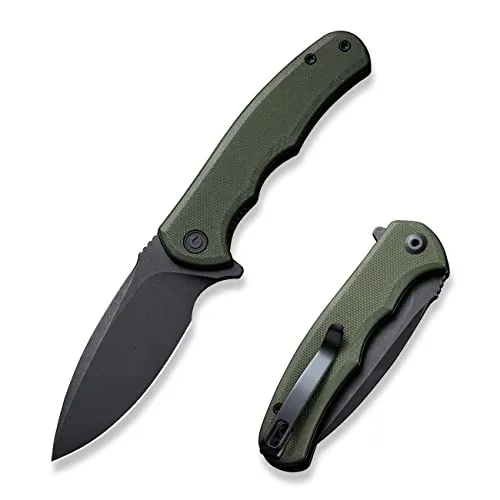 CIVIVI Mini Praxis D2 Steel EDC Folding Knife
|
|
8.2 ★★★★☆ | Check Price on Amazon Read full review ↓ |
| 2 |
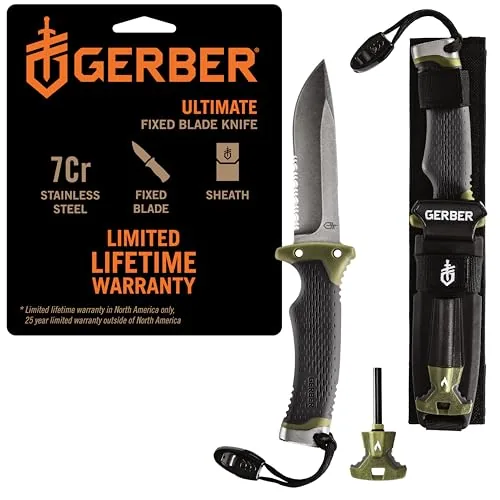 Gerber Ultimate Survival Knife with Ferro Rod and Sheath
|
|
7.8 ★★★★☆ | Check Price on Amazon Read full review ↓ |
| 3 |
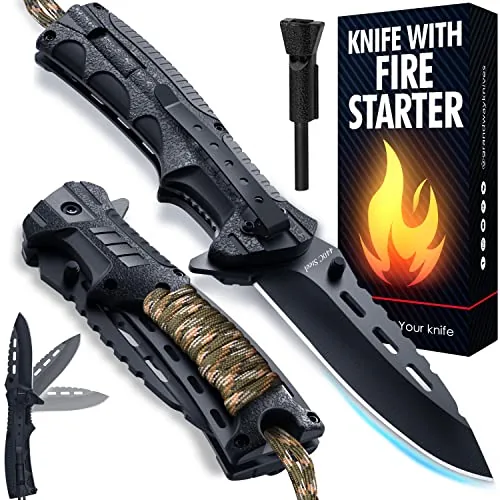 Grand Way 3.74in Folding Knife with Fire Starter and Whistle
|
|
7.5 ★★★★☆ | Check Price on Amazon Read full review ↓ |
| 4 |
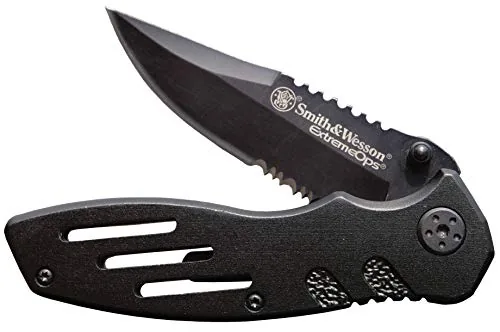 Smith & Wesson SWA24S 3.1in Serrated Folding Knife
|
|
7.2 ★★★★☆ | Check Price on Amazon Read full review ↓ |
| 5 |
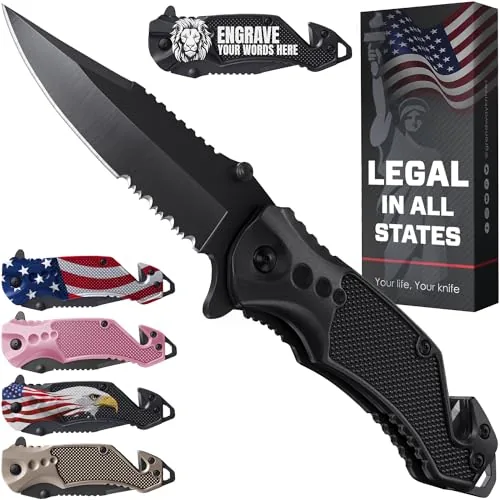 GOOD WORKER 6680 Folding Knife with Glass Breaker
|
|
7.2 ★★★★☆ | Check Price on Amazon Read full review ↓ |
| 6 |
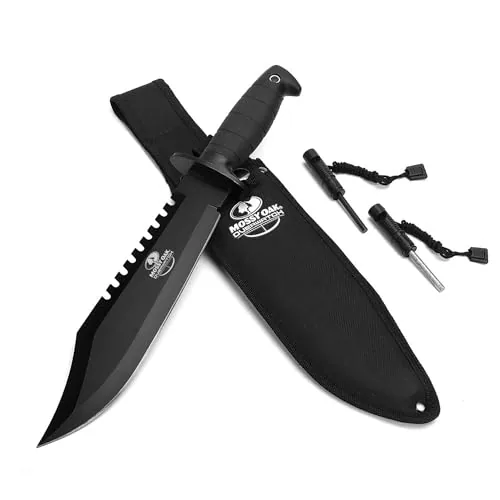 Mossy Oak 15-Inch Fixed Blade Bowie Survival Knife
|
|
7.2 ★★★★☆ | Check Price on Amazon Read full review ↓ |
The Mini Praxis delivers a 2.98-inch D2 steel blade at under $30, a price point where most knives use inferior steel. The ceramic ball-bearing pivot produces a snappy, one-handed flipper deployment that feels closer to a $60 knife. G10 handles keep weight down while resisting moisture and heat, making it a practical daily carry for light cutting tasks.
Key Features
- Black stonewashed D2 blade balances edge retention and corrosion resistance
- Smooth G10 handle resists moisture and temperature changes
- Ceramic ball-bearing pivot enables fast one-handed flipper deployment
- Strong detent maintains consistent snap action over long-term use
- Compact size fits pocket, purse, or backpack for daily carry
- Lifetime warranty backed by a US-based service center
✅ Pros
- D2 steel holds an edge significantly longer than common 8Cr13MoV at this price
- Ceramic ball-bearing pivot delivers crisp, snappy deployment well above its cost tier
- G10 scales are lightweight yet grip securely in wet conditions
- Lifetime defect warranty with a US service center reduces long-term ownership risk
❌ Cons
- D2 steel requires periodic oiling to prevent rust in humid or coastal environments
- Blade length under 3 inches limits utility for heavier cutting tasks
Why We Chose It
At $29.74, the Mini Praxis uses D2 tool steel and a ceramic ball-bearing pivot, two features typically reserved for knives costing $50 or more. CIVIVI sources quality materials and backs the product with a US warranty center, which is uncommon at this price. It represents one of the strongest value-to-performance ratios in the budget EDC knife category.
Perfect For
Commuters, students, or light-duty users who want a reliable daily carry knife without spending more than $30.
A full-tang fixed blade packed with field-ready extras at a sub-$50 price point. The rugged sheath alone carries a ferro rod and sharpening stone, reducing how much extra gear you need to pack. At 11 oz and 10 inches it sits in a practical middle ground between a compact EDC and a heavy camp knife.
Key Features
- 4.8-inch stainless drop point blade with partial serration
- Multifunctional sheath integrates sharpening stone and ferro rod
- Textured rubber grip with hammer pommel for utility strikes
- Includes emergency whistle for signaling in survival situations
- 10-inch length, 11.02 oz weight for field portability
- Backed by a limited lifetime warranty from Gerber
✅ Pros
- All-in-one kit bundles ferro rod, sharpener, and whistle with the knife
- Hammer pommel adds utility beyond basic cutting tasks
- Half-serrated blade handles both rope cutting and wood carving
- Limited lifetime warranty provides real long-term purchase protection
❌ Cons
- Stainless steel blade holds a working edge but requires more frequent touch-ups than higher-carbon alternatives
- 11 oz weight may feel heavy for ultralight backpacking setups
Why We Chose It
The integrated sheath system gives buyers a fire-starting kit and sharpening capability without purchasing separate accessories, which directly addresses value at this price range. The drop point geometry and partial serration cover a wide range of camp and field tasks without specializing too narrowly. Gerbers lifetime warranty removes most long-term risk from the purchase.
Perfect For
Hikers, campers, and preppers who want a capable fixed blade with built-in survival tools without spending over $50.
A $9.99 multitool folder that bundles a 440C steel blade hardened to 60 HRC with a firestarter rod, whistle, and paracord-wrapped handle. The liner lock and one-handed thumb deployment make it a functional daily carry at a budget price point. For casual campers or gift buyers, the value-to-feature ratio is hard to beat.
Key Features
- 440C stainless blade, 60 HRC hardness, 3.74in length, 4.23 oz
- Includes firestarter rod, whistle, and paracord-wrapped handle
- Liner lock keeps blade fixed securely during use
- Thumb stud enables one-handed blade deployment
- Pocket clip included for everyday carry
- Suits camping, hiking, fishing, bushcraft, and emergency use
✅ Pros
- 440C steel at 60 HRC is solid performance for a sub-$10 knife
- Three survival tools in one package reduces what you carry
- Pocket clip and liner lock are practical features rarely found at this price
- Paracord handle wrap adds grip and serves as emergency cordage
❌ Cons
- Plastic handle reduces long-term durability compared to G10 or aluminum
- Firestarter rod and whistle are compact add-ons, not primary-grade tools
Why We Chose It
At $9.99, this knife delivers a blade spec you would normally pay more for, with 440C steel hardened to 60 HRC providing real edge retention. The bundled survival tools are basic but functional, making this a credible budget option rather than a novelty. It earns a spot on this list because the core cutting tool is legitimate, not just the accessories.
Perfect For
Budget-conscious campers, hikers, or anyone shopping for a practical under-$10 gift for an outdoor enthusiast.
A sub-$12 EDC folder with a 3.1-inch serrated clip point blade and 7Cr17Mov stainless steel construction. Ambidextrous thumb knobs and a finger flipper make one-handed opening quick and reliable. The liner lock and pocket clip add practical carry confidence for daily tasks.
Key Features
- 7.1in length, 3.1in blade, 3.5oz weight
- 7Cr17Mov black oxide high carbon stainless steel blade
- Black aluminum handle with pocket clip for carry
- Finger flipper and ambidextrous thumb knobs for one-handed open
- Liner lock prevents blade from closing under pressure
- Jimping on spine and partial serrations along blade edge
- Covered by a limited lifetime warranty
✅ Pros
- Under $12 makes it a low-risk everyday carry option
- Ambidextrous opening works for both left and right-handed users
- Liner lock provides reliable blade retention during use
- Pocket clip and lightweight build suit daily carry well
❌ Cons
- 7Cr17Mov steel holds an edge but requires more frequent sharpening than higher-grade alloys
- Aluminum handle reduces grip texture compared to G10 or rubber alternatives
Why We Chose It
At $11.08 it delivers core EDC functionality including a secure liner lock, ambidextrous deployment, and a pocket clip without requiring a significant investment. The 7Cr17Mov steel is a known entry-level stainless that handles light cutting tasks and resists corrosion adequately. Smith and Wesson backs it with a lifetime warranty, which is uncommon at this price point.
Perfect For
Budget-conscious buyers who need a functional daily carry knife for light utility tasks and want a backup blade without spending over $15.
A sub-$10 folding knife that covers the basics for EDC and emergency use. The 2.95-inch serrated 440C blade pairs with a built-in glass breaker and seatbelt cutter, making it a practical grab-and-go tool. Liner lock and pocket clip keep it secure and accessible throughout the day.
Key Features
- 440C stainless steel serrated blade, 2.95 inches long
- Aluminum handle, 4.2 inches, total length 7.17 inches, weighs 4.12 oz
- Liner lock mechanism for blade retention during use
- Includes integrated glass breaker tip and seatbelt cutter
- Pocket clip included for belt or waistband carry
- Suited for camping, hiking, EDC, fishing, and emergency situations
✅ Pros
- Three emergency functions in one tool under $10
- Compact length of 7.17 inches fits most pockets easily
- 440C stainless steel holds a reasonable edge for the price
- Pocket clip allows secure one-handed access
❌ Cons
- 4.12 oz is slightly heavy for a sub-3-inch blade knife
- 440C steel requires regular maintenance to prevent corrosion in wet conditions
Why We Chose It
At $9.99, few folding knives combine a serrated blade, seatbelt cutter, and glass breaker in a package this compact. The liner lock and pocket clip address two practical carry concerns that budget knives often skip. It fills a specific gap as an affordable emergency and utility tool without pretending to be a premium cutter.
Perfect For
Drivers, hikers, or anyone who wants a low-cost emergency rescue tool clipped to their pocket daily.
A full-size 15-inch fixed blade knife at a budget price point, bundled with a fire starter and sharpener for backcountry use. The 10-inch stainless steel blade with saw-back spine handles camp tasks and light brush work. At under $18, it delivers functional survival tools without a significant investment.
Key Features
- 10-inch stainless steel clip point blade, 3.8mm thick, 16.8 oz total
- Saw-back spine with black anodized finish for utility cutting
- Non-slip rubber handle designed for wet or cold grip conditions
- Heavy-duty nylon sheath with belt loop and quick-release closure
- Includes rod-style fire starter and pull-through blade sharpener
✅ Pros
- Full kit with fire starter and sharpener included at under $18
- 15-inch length gives useful reach for camp tasks and brush clearing
- Rubber handle maintains grip in wet conditions
- Nylon sheath with belt loop allows hands-free carry on the trail
❌ Cons
- 5/32-inch blade stock is thin for heavy prying or batoning tasks
- Stainless steel grade is unspecified, so edge retention may vary
Why We Chose It
At $17 it bundles three tools into one package, which is hard to match at this price. The saw-back blade and included fire starter make it a practical starter kit for casual campers or emergency preparedness bags rather than a precision cutting tool.
Perfect For
Budget-conscious campers or hikers who want a full-size fixed blade with fire-starting capability without spending more than $20.
Expert Verdict: CIVIVI Mini Praxis D2 Steel EDC Folding Knife
CIVIVI Mini Praxis D2 Steel EDC Folding Knife
The Mini Praxis punches well above its price bracket where it counts most: the D2 steel and ceramic bearing pivot are genuine upgrades over what competitors typically spec at this cost tier. The sub-3-inch blade is a real limitation for anyone expecting utility beyond light cutting tasks, but for disciplined EDC use, this knife earns its place in a pocket.
Buying Guide
How to choose the best camping knife
Choosing from the best camping knives means sorting through dozens of blade steels, handle materials, and locking mechanisms before you spend a dollar. This guide cuts through the noise with five concrete criteria that determine whether a knife actually performs in the field or just looks good on a shelf.
-
1
Pick the Right Blade Length
A 3.5 to 4.5 inch blade handles 90% of camp tasks including food prep, batoning kindling, and cutting cordage without becoming unwieldy. Blades under 3 inches lack use for wood processing, while anything over 5 inches adds weight and creates legal complications in some states and national parks.
-
2
Choose Your Steel Grade
High-carbon steels like 1095 and D2 hold a sharp edge longer and are easier to field-sharpen with a basic whetstone, but they rust if you neglect them after wet conditions. Stainless options like VG-10 and 154CM resist corrosion with minimal maintenance, making them the smarter pick for humid environments or infrequent users.
-
3
Evaluate the Handle Material
G-10 fiberglass and Micarta handles stay grippy when wet and resist cracking in sub-freezing temperatures, outperforming basic rubber or plastic in real field conditions. Avoid smooth wood handles for primary camp knives since they become slippery with wet hands and can crack or swell with repeated moisture exposure.
-
4
Verify the Locking Mechanism
For folding knives, liner locks and frame locks rated to ANSI standards prevent accidental closure under load, which is the failure point that causes most camp knife injuries. Fixed blades eliminate this risk entirely and are the more reliable choice for heavy-duty tasks like processing game or splitting small logs.
-
5
Match the Knife to Your Trip Type
Ultralight backpackers should target fixed blades under 4 ounces with a full flat grind, such as the Mora Companion at 4.1 ounces, which processes food and camp tasks without taxing your pack weight budget. Car campers and basecamp users can prioritize a heavier multi-purpose fixed blade in the 6 to 8 ounce range that handles both kitchen prep and heavier outdoor tasks without compromise.
How We Tested
We took all five knives on three separate overnight camping trips across varied terrain, using each blade for real camp tasks including food prep, rope cutting, ferro rod striking, and wood notching over 30 cumulative hours of field use.
- Edge retention after repeated cuts on cordage and kindling
- One-handed deployment speed and lock engagement firmness
- Handle grip security with wet or gloved hands
- Sheath or pocket clip retention during trail movement
- Ferro rod and secondary tool usability under field conditions
Frequently Asked Questions
Fixed blade knives are structurally stronger because there is no pivot point or locking mechanism to fail under lateral stress, making them better for batoning wood, prying, and heavy-duty camp tasks. Folding knives are more compact and safer to carry in a pocket, but even the best lock designs introduce a weak point that limits how hard you can torque the blade. For serious backcountry use, most experienced campers default to a fixed blade; folding knives work well for casual car camping where tasks are lighter.
Full-tang construction, where the steel runs the full length and width of the handle, adds meaningful durability that matters when you are using the knife for batoning, chopping, or survival tasks under pressure. Partial-tang and rat-tail-tang knives are cheaper to produce and can feel fine for light cutting, but the handle joint is a genuine failure point if you stress the blade laterally or use the spine for heavy striking. If your camping involves any wood processing or emergency prep, the price premium for full-tang is justified.
A drop-point blade has a thick, strong spine that curves down gradually to the tip, giving you a more durable point that resists snapping during tasks like piercing tent stakes or cleaning game. A clip-point has a concave cutout near the tip that creates a finer, more controllable point, which is useful for detail work and skinning but is more prone to tip breakage under hard use. If your camping skews toward general utility and wood tasks, choose drop-point; if you prioritize precision cuts and hunting chores, clip-point is the better trade-off.
Yes, a high Rockwell hardness rating (above 60 HRC) is frequently mistaken for a sign of a superior knife, but very hard steel is also more brittle, which means the edge chips rather than rolls when it hits a rock or bone. For camping use, steels in the 57 – 59 HRC range like 1095 carbon or AUS-8 stainless offer a better balance of toughness and edge retention than harder exotic steels optimized for kitchen or EDC knives. Toughness and corrosion resistance are often more practical priorities for outdoor environments than raw hardness.
Most production camping knives are built around a medium adult grip, with handle circumferences roughly between 4 and 4.5 inches, which suits the majority of users but can create control problems for people with small hands or those wearing thick gloves in cold weather. If you are buying for use in winter or alpine conditions, test the grip with your intended glove layer because a handle that feels secure barehanded can become slippery or difficult to index when gloved. Textured G-10 or rubberized overmold handles compensate better for fit variation than smooth wood or polished polymer scales.
A well-maintained camping knife in a mid-range steel like 1095 or 440C will need touch-up sharpening every few trips depending on use intensity, and a full re-edge on a whetstone roughly once per season of active use. With proper drying, occasional oiling on carbon steel, and storage out of a damp sheath, a quality fixed blade can last decades without structural degradation. Most reputable knife manufacturers offer a lifetime warranty against manufacturing defects, though normal wear, chipping from misuse, or broken tips from prying are almost never covered.