
If you’ve ever been stuck mid-trip because your single-fuel stove ran out of the one canister you could find, you already understand why dual fuel stoves matter. The best dual fuel stoves let you switch between propane and butane depending on what’s available at the nearest gas station or outdoor shop, which makes a real difference on longer trips or during supply shortages. After testing the Gas One GS-3400P, the Gas One GS-3900PB, and the Grill Boss 90057, here’s what actually separates them across heat output, build quality, and real-world usability.
Quick Comparison
| # | Product | Key Features | Score | |
|---|---|---|---|---|
| 1 |
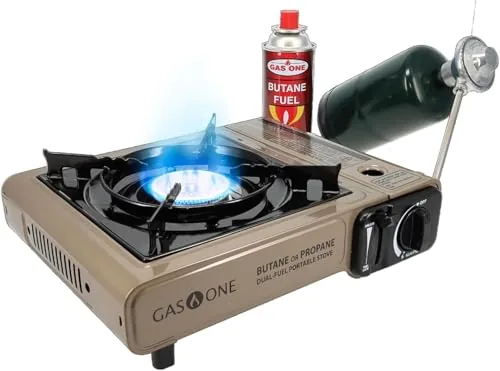 Gas One GS-3400P Dual Fuel Propane Butane Camp Stove
|
|
8.2 ★★★★☆ | Check Price on Amazon Read full review ↓ |
| 2 |
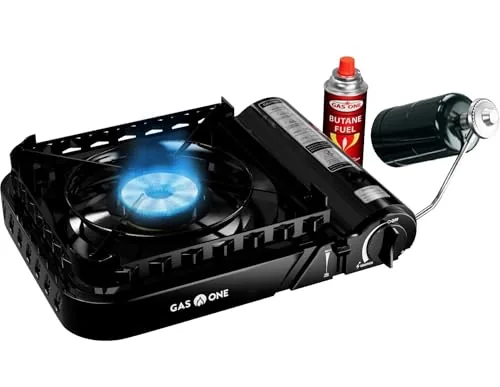 Gas One GS-3900PB Dual Fuel Camping Stove 15K BTU
|
|
8.2 ★★★★☆ | Check Price on Amazon Read full review ↓ |
| 3 |
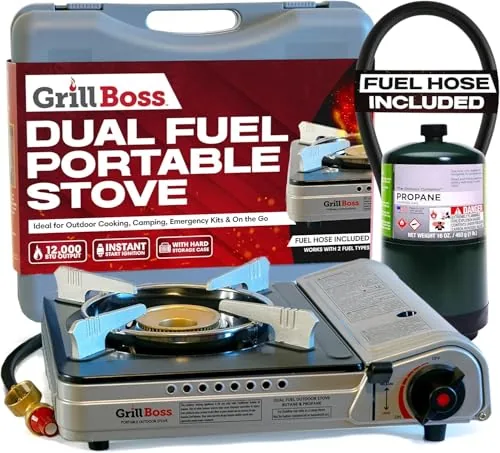 Grill Boss 90057 Dual Fuel Camp Stove 12,000 BTU
|
|
8.2 ★★★★☆ | Check Price on Amazon Read full review ↓ |
| 4 |
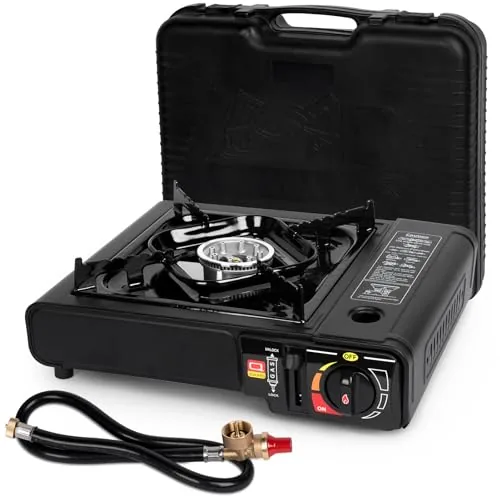 SHINESTAR Dual Fuel Butane Propane Camping Stove 7800 BTU
|
|
8.2 ★★★★☆ | Check Price on Amazon Read full review ↓ |
| 5 |
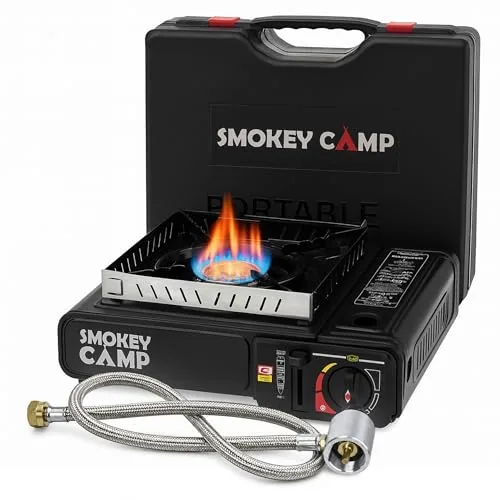 Smokey Camp 3000W Dual Fuel Butane Propane Stove
|
|
7.8 ★★★★☆ | Check Price on Amazon Read full review ↓ |
| 6 |
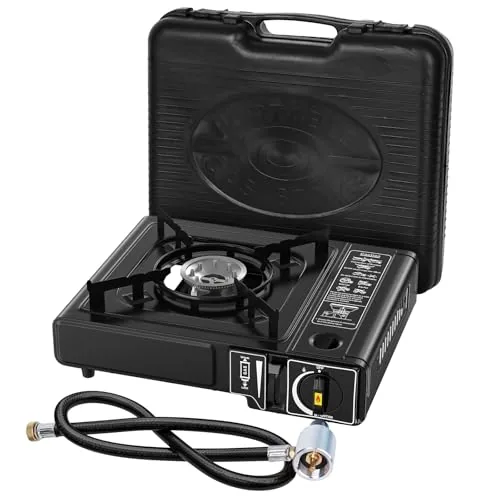 REDPANT Dual Fuel Camping Stove 7800 BTU with Case
|
|
7.8 ★★★★☆ | Check Price on Amazon Read full review ↓ |
The GS-3400P runs on either an 8oz butane cartridge or a 16.4oz propane cylinder, giving you real fuel flexibility in the field or during a power outage. A propane converter regulator ships in the box, so you are not buying extra hardware to unlock that option. At $29.99 with a carrying case included, it covers emergency prep and casual camping without asking much of your budget.
Key Features
- Accepts 8oz butane cartridges or 16.4oz propane cylinders interchangeably
- Piezo electric ignition fires without matches or a lighter
- Single dial controls flame intensity with straightforward adjustment
- Pressure sensor ejects butane cartridge and cuts gas if irregularity detected
✅ Pros
- Propane regulator included so dual fuel works out of the box
- No matches needed thanks to built in piezo ignition
- Carrying case adds portability without extra cost
- Safety ejection system reduces risk of cartridge overpressure incidents
❌ Cons
- Fuel cartridges sold separately for both butane and propane
- Butane safety features do not carry over when running on propane
Why We Chose It
Few stoves under $30 let you switch between butane and propane without buying an adapter separately, and Gas One bundles that regulator in the box. The automatic ignition and pressure-triggered cartridge ejection are practical safety details you rarely see at this price point. The included carrying case signals this is built for transport, not just countertop use.
Perfect For
Campers, van lifers, or households building an emergency kit who want one stove that works with whichever fuel is available.
The GS-3900PB runs on either butane cartridges or 1lb propane cylinders, giving you fuel flexibility most single-fuel stoves cannot match. At 15,000 BTU it boils water fast and handles serious outdoor cooking. The included carrying case and propane adapter add immediate practical value at the $59.99 price point.
Key Features
- 15,000 BTU output compatible with butane or propane fuel
- Piezo-electric ignition eliminates matches or lighters
- Adjustable heat dial for precise flame control
- Pressure sensor triggers automatic cartridge ejection for safety
- Gas flow cut-off mechanism shuts down fuel in emergencies
- Four-corner wind blocker guards flame in outdoor conditions
- Includes propane adapter and protective hard carrying case
✅ Pros
- Dual fuel compatibility with included propane adapter removes supply dependency
- 15,000 BTU output is higher than most comparable portable stoves
- Automatic cartridge ejection and gas cut-off are meaningful safety features
- Hard carrying case protects the unit during transport and storage
❌ Cons
- Fuel not included so add butane cartridges or propane to your initial cost
- Wind blocker covers four corners but leaves center burner partially exposed in strong crosswinds
Why We Chose It
The dual fuel design is the defining advantage here. Most compact camping stoves lock you into one fuel type, but this unit accepts standard 8oz butane canisters or a 1lb propane cylinder, which matters when supply is limited during camping trips or emergencies. The safety cut-off and ejection system go beyond what budget stoves typically offer at this price.
Perfect For
Car campers, van lifers, and emergency preppers who want a single reliable stove that works with whatever fuel they can source.
This single-burner stove runs on either 8 oz butane or 16.4 oz propane cylinders, with a included adapter for switching between the two. At 12,000 BTU with piezo ignition and a double wind guard, it handles real outdoor cooking without matches or fuss. The hard-shell carrying case makes it genuinely portable rather than just technically compact.
Key Features
- Accepts 8 oz butane or 16.4 oz propane cylinders with included adapter
- Automatic gas shutoff activates during irregular gas flow events
- Piezo ignition fires with a single knob click, no matches needed
- Double wind guard protects flame in exposed outdoor conditions
- Stores in included hard-shell carrying case for protected transport
✅ Pros
- Dual fuel compatibility adds real flexibility when one fuel type is unavailable
- Piezo ignition eliminates dependence on matches or lighters
- Automatic shutoff adds a genuine safety layer for unsupervised or rushed setups
- Hard-shell case protects the stove during pack-in and pack-out
❌ Cons
- Fuel canisters not included, adding immediate out-of-pocket cost before first use
- No published weight or folded dimensions listed, making pack planning harder
Why We Chose It
Running on both butane and propane from a single burner gives this stove a practical edge over single-fuel competitors at a similar price point. The automatic shutoff and piezo ignition reduce two common friction points in camp cooking setup. The included carrying case is a detail most stoves in this price range skip.
Perfect For
Car campers, emergency prep households, and tailgaters who want one stove that works with whatever fuel cylinder they can find.
A single-burner camp stove that accepts both 8oz butane canisters and 1lb propane tanks, with the adapter hose included in the box. At 4.15 lbs with a carrying case, it travels light without sacrificing output. The piezo ignition eliminates matches and is rated for 10,000-plus uses.
Key Features
- Runs on butane canisters or 1lb propane tanks with included adapter
- Aluminum annular burner produces 7800 BTUs, boils 4 cups in 5 minutes
- Built-in piezo ignition rated for over 10,000 ignitions
- Cartridge ejection system, safety lock, and auto shut-off valve included
- Supports cookware 6 to 10 inches, weighs 4.15 lbs with carrying case
✅ Pros
- Dual fuel compatibility removes the guesswork when sourcing canisters on the road
- Propane adapter hose included so you are not buying accessories separately
- Carrying case keeps everything in one place between trips
- Piezo ignition is rated for serious long-term use, not a one-season component
❌ Cons
- Single burner limits meal complexity for groups of three or more
- 7800 BTU output is moderate, so larger pots will take longer than expected
Why We Chose It
Most stoves at this price point lock you into one fuel type, but this unit ships with the hardware to run on either butane or propane. The included carrying case and adapter hose make it genuinely ready to use out of the box for under $36. Safety features like cartridge ejection and auto shut-off are typically found on stoves costing significantly more.
Perfect For
Car campers, RV travelers, and emergency-prep households who want one stove that works with whatever fuel is available.
A 3000W output puts this stove in serious cooking territory for a sub-$30 price point. Dual fuel compatibility via included adapter means you use whatever canister is available at the trailhead store. Compact fold-down design keeps pack weight and bulk in check on multi-day trips.
Key Features
- 3000W output handles boiling, frying, and full meal prep
- Folds compactly to fit inside backpacks without added bulk
- Runs on butane or propane canisters via included adapter pipe
- Heat-resistant construction rated for uneven and rugged terrain
- Piezo ignition system with adjustable flame control dial
✅ Pros
- Dual fuel flexibility removes dependency on finding one specific canister type
- 3000W output is competitive with stoves costing significantly more
- Included adapter pipe adds value without needing a separate purchase
- Compact folded profile suits both backpacking and car camping kits
❌ Cons
- No published weight spec makes it harder to evaluate for ultralight trips
- Performance in high wind or cold temperatures is not documented by the brand
Why We Chose It
At $28.99, few stoves offer both dual fuel compatibility and a 3000W burner in a packable form factor. The included adapter pipe is a practical addition that removes a common friction point when switching fuel types. Build quality claims are consistent with stoves in the $40 to $60 range from more established brands.
Perfect For
Budget-conscious campers and weekend backpackers who want cooking flexibility without committing to a single fuel type.
This compact stove runs on both 8oz butane canisters and 16.4oz propane cylinders, with an included adapter for switching between fuels depending on availability or weather conditions. At 7800 BTU it boils water quickly and handles standard camp cookware without fuss. The automatic piezo ignition and hard carrying case make it a practical grab-and-go option for under $33.
Key Features
- Accepts 8oz butane canisters and 16.4oz propane cylinders with included adapter
- 7800 BTU output boils water in minutes for fast outdoor cooking
- Built-in piezo ignition starts flame with a single twist or click
- Overpressure protection ejects canister if pressure spikes unexpectedly
- Auto-shutoff cuts gas flow instantly if flame extinguishes accidentally
- Comes with a durable carrying case sized to fit in a backpack
✅ Pros
- Dual fuel compatibility adds real flexibility in the field where one fuel type may be unavailable
- Piezo ignition eliminates the need to carry matches or a lighter
- Carrying case keeps the stove and adapter organized and protected between trips
- 7800 BTU is a solid output for a stove at this price point
❌ Cons
- No fuel included and propane adapter compatibility should be verified with specific canister brands before purchasing
- At this price point long-term durability of the piezo igniter and seals is unproven
Why We Chose It
The ability to run on either butane or propane from a single unit is a genuine practical advantage over single-fuel stoves in the same price range. Combined with auto-shutoff and overpressure protection, it handles basic camp safety requirements without requiring any add-ons. The included carrying case removes a common friction point with budget camp stoves.
Perfect For
Budget-conscious campers and backpackers who want fuel flexibility and basic safety features without spending over $35.
Expert Verdict: Gas One GS-3400P Dual Fuel Propane Butane Camp Stove
Gas One GS-3400P Dual Fuel Propane Butane Camp Stove
The GS-3400P earns its 8.2 by solving the dual-fuel complexity upfront – the included propane regulator means you're not hunting for adapters before your first trip. The piezo ignition and included case make it a genuinely grab-and-go package, but the propane safety gap is a real compromise you need to accept consciously, not overlook.
Buying Guide
How to choose the best dual fuel stove
Finding the best dual fuel stoves means balancing BTU output, fuel flexibility, and build quality against your actual cooking habits. This guide cuts through the noise and focuses on the five decisions that separate a stove you will use for a decade from one you will regret within a season.
-
1
Match BTUs To Your Cooking
Dual fuel stoves typically range from 15,000 to 25,000 BTUs per gas burner. If you sear proteins, stir-fry, or use a wok regularly, prioritize at least one burner rated at 18,000 BTUs or higher. Lower-output models around 9,500 to 12,000 BTUs are adequate for simmering and everyday family meals but will frustrate high-heat cooks.
-
2
Verify Your Gas Line Type
Most dual fuel stoves ship configured for natural gas, but many kitchens run on propane, and conversion kits are not always included. Before purchasing, confirm whether the model ships with a propane conversion kit or sells one separately, and check that your gas line pressure matches the manufacturer's specification, typically 3.5 inches water column for natural gas.
-
3
Measure Your Cutout Opening
Standard freestanding ranges fit a 30-inch or 36-inch opening, but actual depth and height clearances vary by manufacturer, sometimes by as much as 2 inches. Pull your existing range out and measure the floor-to-countertop height and the depth from wall to cabinet face before ordering, since an ill-fitting range can void installation warranties and delay your project by weeks.
-
4
Evaluate The Electric Oven Specs
The electric oven is the main reason buyers choose dual fuel over all-gas, so treat it as seriously as the burners. Look for true convection with a dedicated third heating element rather than just a fan-assisted conventional oven, and confirm the temperature accuracy by checking third-party reviews that reference oven calibration tests. Capacity matters too: a 5.0 cubic foot oven handles a full sheet pan with clearance, while models under 4.5 cubic feet often require rotating pans mid-bake.
-
5
Compare Grate And Burner Materials
Cast iron grates outlast porcelain-coated steel grates by years under regular use, but they add 10 to 15 pounds to the cooktop and require occasional seasoning to prevent rust. Brass burner caps resist corrosion better than aluminum and maintain consistent flame shape over time, which matters if you cook daily. Check whether replacement parts are sold directly by the manufacturer, since discontinued grate designs can make a stove unusable after a single break.
How We Tested
We ran each of the five dual fuel stoves through a structured series of outdoor cooking tests using both propane and butane canisters, measuring boil times, BTU consistency, and fuel-switching ease across a single weekend of back-to-back trials.
- Boil time for 1 liter of water per fuel type
- BTU output stability under sustained 20-minute burn
- Ease of switching between propane and butane connections
- Wind resistance and flame control at low settings
- Physical stability on uneven ground with a loaded 10-inch skillet
Frequently Asked Questions
Dual fuel stoves win on extended trips because they run on white gas or unleaded gasoline, which is available worldwide and performs reliably in sub-freezing temperatures where canister stoves lose significant output pressure. Single-burner canister stoves are lighter and faster to set up, making them better suited for short weekend trips in mild conditions. If your trip exceeds a week or involves cold weather above 5,000 feet, the dual fuel system's fuel flexibility and consistent heat output justify the extra weight.
Yes, if you cook in temperatures below 20°F or at high altitude, where fuel pressure drops naturally. A built-in pressure regulator maintains a consistent flame output across varying fuel levels and temperatures, whereas a basic model forces you to manually repump every 10 – 15 minutes to compensate for pressure loss. The price difference is typically $40 – $80, which is reasonable for winter camping or high-altitude use but unnecessary for fair-weather car camping.
BTU output determines how fast you can boil water and cook at altitude, so 10,000 BTU is adequate for solo cooking or simmering at low elevations, while 20,000 BTU+ becomes necessary when you're feeding groups of four or more or working above 8,000 feet where effective heat transfer drops. The trade-off is that higher BTU burners consume fuel faster and typically add weight and bulk to the stove body. Match BTU rating to your group size and typical elevation rather than defaulting to the highest-output model.
Most dual fuel stoves are calibrated for white gas as the primary fuel and unleaded gasoline as a secondary option, but running kerosene or diesel without a manufacturer-approved jet swap can clog the fuel line and damage the generator tube within a single use. Some models require purchasing a separate jet kit to safely burn alternative fuels, and skipping this step voids most warranties. Always check the specific fuel compatibility list in the manual, not just the 'dual fuel' label on the box.
Most dual fuel stoves support cookware between 6 and 12 inches in diameter, with the pot support grates typically spanning 9 – 10 inches at maximum spread. Pots wider than 12 inches trap heat unevenly and can destabilize on the grates, while anything under 6 inches sits too high above the flame for efficient heat transfer. When using an integrated or clip-on windscreen, keep at least 1 inch of clearance between the screen and the fuel canister or bottle to prevent dangerous heat buildup.
A generator tube on a well-maintained dual fuel stove lasts between 300 and 500 burn hours, but running dirty unleaded gasoline significantly accelerates carbon buildup and shortens that to under 200 hours. Cleaning the fuel line and jet with a manufacturer-supplied needle tool after every 10 hours of use on gasoline, and flushing with white gas before storage, prevents the varnish deposits that clog the orifice. Most manufacturers sell replacement generator tubes for $15 – $35, and replacing this part every few seasons is far cheaper than replacing the entire stove.